check

check

check

check

check

check
In the realm of precision measurement and industrial automation, the demand for accurate, reliable, and versatile sensing technology is paramount. Among the array of advanced tools available, the mirror-reflective laser rangefinder sensor stands out as a cornerstone technology, driving efficiency and accuracy in numerous applications. This innovative device represents a significant leap forward from conventional measurement methods, offering unparalleled performance in challenging environments.
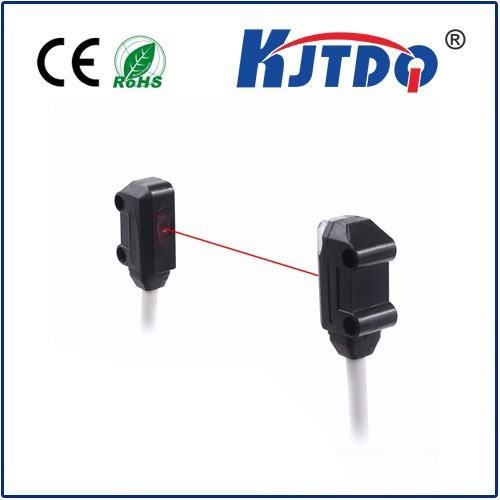
At its core, a mirror-reflective laser rangefinder sensor operates on the principle of time-of-flight or phase-shift measurement using laser beams. The "mirror-reflective" component is key to its enhanced functionality. Unlike standard diffuse reflection sensors that rely on light scattering off a rough surface, this sensor is designed to work specifically with a reflective target, typically a retro-reflector or a mirror. The sensor emits a focused laser pulse towards the mirror. The light beam is then coherently reflected directly back to the sensor's receiver with minimal scatter and signal loss. This targeted approach allows for extreme precision over very long distances, even in conditions where the target object itself has poor reflective properties or is located in a dusty, humid, or otherwise optically obstructive setting.
The advantages of implementing a mirror-reflective laser rangefinder are substantial. First and foremost is its exceptional range and accuracy. By utilizing a cooperative target (the mirror), the system maintains a strong return signal, enabling measurements over hundreds of meters with millimeter-level precision. This makes it indispensable in large-scale industrial settings such as crane positioning, shipbuilding, and warehouse automation, where knowing the exact position of a gantry or container is critical for safety and operational flow.
Secondly, its reliability in harsh environments is a game-changer. In applications like mining, tunneling, or outdoor logistics, ambient light, dust, fog, and rain can severely hamper the performance of standard optical sensors. The focused beam and strong return signal of the mirror-reflective system effectively penetrate these interferences, providing consistent and dependable data where other technologies fail. This robustness translates directly into reduced downtime and maintenance costs.
Furthermore, the versatility of these sensors is remarkable. They are not limited to simple distance measurement. Advanced models integrate the data into complex control systems for tasks like level monitoring in silos, guidance of automated guided vehicles (AGVs) along a mirrored path, and precise alignment in manufacturing assembly lines. The ability to provide continuous, real-time feedback allows for dynamic adjustments and process optimization, enhancing overall productivity.
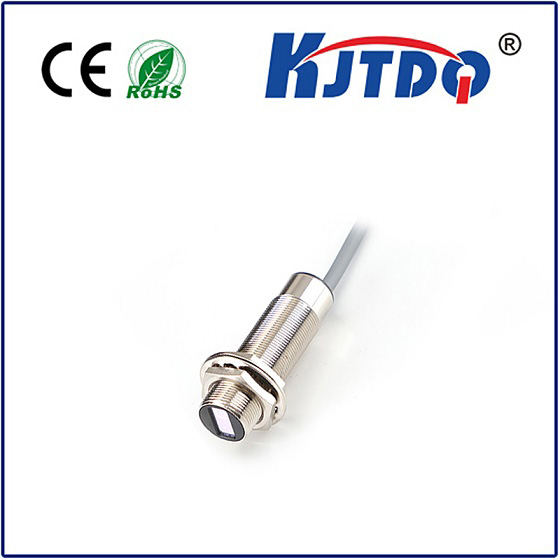
The integration of such a sensor, often referred to by the model identifier KJTDQ, into a system is designed for simplicity. Modern units feature user-friendly interfaces, robust communication protocols (like IO-Link, Ethernet/IP, or Profinet), and compact, rugged housings rated for industrial protection standards. This ease of integration accelerates deployment and minimizes the learning curve for technicians and engineers.
Consider a practical application in a modern automated storage and retrieval system (AS/RS). Here, a mirror-reflective laser sensor is mounted on a moving shuttle. A long, vertical strip of retro-reflective tape is installed along the racking structure. As the shuttle moves, the sensor continuously measures its distance from the tape with high precision, allowing the control system to pinpoint its location within the aisle accurately. This enables the shuttle to stop at the exact bin location for retrieval or storage, maximizing throughput and minimizing errors—a task that would be far less reliable with other sensing technologies.
In conclusion, the mirror-reflective laser rangefinder sensor is more than just a measuring device; it is a critical enabler of precision, reliability, and automation in the industrial world. Its unique working principle, centered on cooperation with a reflective target, solves longstanding challenges in distance measurement. For engineers and system integrators seeking a robust solution for long-range, high-accuracy, and environmentally resilient sensing, this technology, exemplified by the KJTDQ series, offers a proven and powerful answer. It redefines what is possible in measurement and control, paving the way for smarter, safer, and more efficient operations across a diverse spectrum of industries.