check

check

check

check

check

check
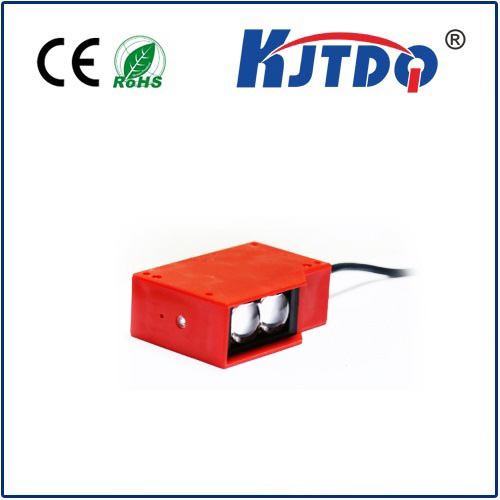
In the rapidly evolving landscape of industrial automation and smart systems, the demand for reliable, non-contact measurement solutions has never been higher. Among the frontrunners in this technological race are laser proximity sensors. These sophisticated devices represent a pinnacle of precision, offering unparalleled accuracy in detecting the presence, absence, or position of an object without any physical contact. This guide delves into the core principles, diverse applications, and critical advantages of laser proximity sensors, illustrating why they are indispensable in modern manufacturing, robotics, and beyond.
At its heart, a laser proximity sensor operates by emitting a focused beam of light—typically from a laser diode—towards a target. The sensor then analyzes the reflected light. Different technologies are employed to interpret this reflection. Time-of-Flight (ToF) sensors measure the time it takes for the light pulse to return, calculating distance with extreme accuracy. Triangulation-based sensors use a position-sensitive detector to determine distance based on the angle of the reflected beam, ideal for very small distances and high precision. Regardless of the method, the core outcome is a highly accurate digital or analog signal representing the target's distance or presence.
The applications for these sensors are vast and transformative. In automated assembly lines, they ensure components are perfectly positioned for robotic arms, guaranteeing consistent product quality. They are the "eyes" of autonomous mobile robots (AMRs), enabling safe navigation and obstacle avoidance in dynamic environments. In the semiconductor industry, where tolerances are microscopic, laser sensors provide the sub-micron level measurements necessary for fabrication. From controlling roll diameters in printing and packaging to monitoring fill levels in opaque containers, their non-contact nature prevents product damage and reduces maintenance downtime.
Choosing the right laser proximity sensor hinges on several key specifications. The sensing range is paramount, varying from a few millimeters to several meters. Resolution, or the smallest detectable change in distance, determines the sensor's precision. The response time dictates how quickly the sensor can react to changes, a critical factor in high-speed production. Environmental factors cannot be overlooked; industrial settings may require sensors with robust housings resistant to dust, water (IP ratings), and electrical noise. Furthermore, the target's properties—its color, material, and surface texture—can affect reflectivity and must be considered during selection.
When compared to other proximity sensor technologies like inductive, capacitive, or ultrasonic sensors, laser sensors offer distinct benefits. Their primary advantage is exceptional accuracy and resolution over longer ranges. They can detect virtually any material, regardless of its conductive or capacitive properties. The small, focused laser spot allows for the detection of very small objects or precise measurements on specific features. However, it's important to note that environmental conditions like heavy dust, fog, or direct ambient light interference can sometimes pose challenges, though many modern models are designed to compensate for these factors.
The integration of laser proximity sensors with the Industrial Internet of Things (IIoT) is unlocking new potentials. Modern sensors come equipped with smart features like IO-Link communication, which allows for parameter setting, remote monitoring, and predictive maintenance data exchange. This connectivity transforms raw distance data into actionable intelligence, enabling system-wide optimization and reducing unplanned stoppages.
In conclusion, laser proximity sensors are far more than simple detection devices. They are enablers of precision, efficiency, and intelligence in automated processes. By providing fast, accurate, and reliable non-contact measurement, they form a critical backbone for industries striving for higher quality, increased safety, and greater operational agility. As technology advances, we can expect these sensors to become even more compact, intelligent, and resilient, further solidifying their role as a cornerstone of industrial innovation.