check

check

check

check
check
check
check
check

check
check
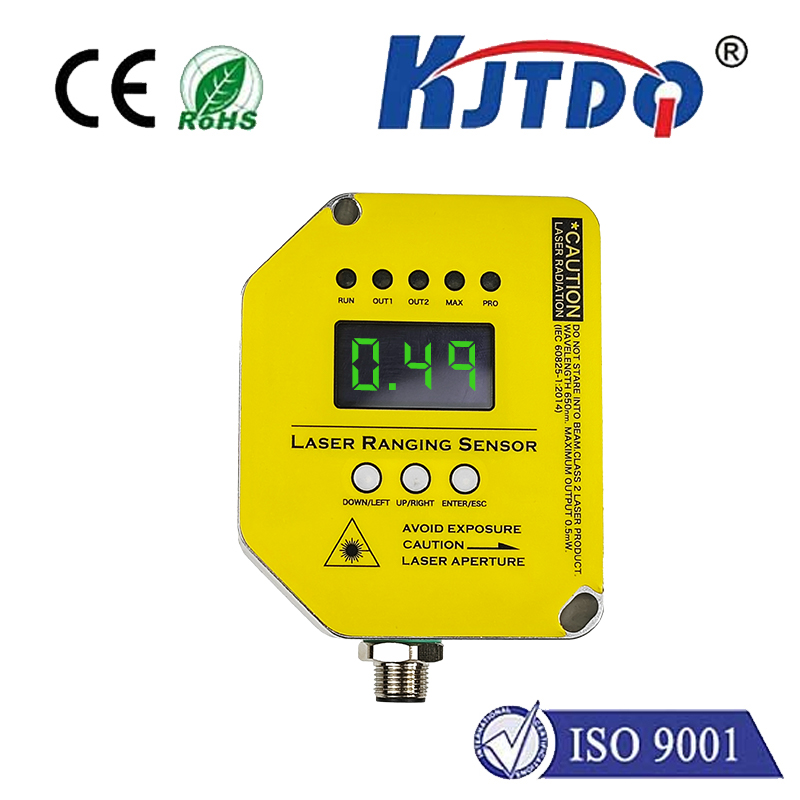
In today's fast-paced technological landscape, the demand for accurate distance measurement solutions spans across numerous industries, from construction and surveying to robotics and consumer electronics. At the heart of this capability lies advanced sensor technology, specifically the laser rangefinder sensor. These devices have revolutionized how professionals and systems perceive and interact with their environment by providing non-contact, high-precision distance data.
The fundamental principle behind a laser rangefinder sensor involves emitting a focused beam of light, typically from a laser diode, towards a target. The sensor then measures the time it takes for the reflected light to return, a method known as time-of-flight (ToF). By calculating this interval with extreme accuracy and knowing the constant speed of light, the sensor can determine the distance to the target with remarkable precision, often down to millimeter-level accuracy. Modern iterations of these sensors incorporate sophisticated algorithms and signal processing to filter out noise and environmental interference, ensuring reliable performance even in challenging conditions like bright sunlight or adverse weather.
The applications for this technology are vast and growing. In the construction industry, professionals rely on laser rangefinders for quick and accurate measurements of land, buildings, and interior spaces, significantly reducing human error and project timelines. Forestry and agriculture utilize these sensors for terrain mapping and inventory management. Perhaps one of the most transformative applications is in the field of autonomous systems. Self-driving vehicles, drones, and automated guided vehicles (AGVs) depend heavily on laser rangefinder sensors, often integrated into LiDAR systems, to create real-time, high-resolution 3D maps of their surroundings. This is critical for navigation, obstacle avoidance, and safe operation.
Beyond industrial use, the technology has trickled down to consumer products. Golfers use handheld laser rangefinders to gauge distances on the course, while hunters employ them for ethical and precise shot placement. Modern smartphones are beginning to incorporate miniature versions of this technology for enhanced photography features and augmented reality applications. The miniaturization and cost reduction of laser components have been key drivers in this democratization of precision measurement.
When evaluating a laser rangefinder sensor, several key specifications are paramount. Measurement range defines the minimum and maximum distances the device can accurately cover. Accuracy and resolution indicate how close the reading is to the true distance and the smallest detectable change, respectively. The measurement rate, or how many readings per second the sensor can take, is crucial for dynamic applications like robotics. Furthermore, factors like beam divergence, wavelength, and environmental ratings (IP codes for dust and water resistance) determine the sensor's suitability for specific operational environments.
The integration of a laser rangefinder sensor into a larger system requires careful consideration. Power consumption, data output interface (such as UART, I2C, or analog voltage), physical dimensions, and mounting options must align with the host system's design. Manufacturers are continuously innovating to produce sensors that are not only more accurate and longer-ranging but also more energy-efficient, compact, and robust. The emergence of solid-state LiDAR, which uses no moving parts, points to a future where these sensors become even more reliable and seamlessly integrated into our daily tools and machines.
In conclusion, the laser rangefinder sensor stands as a cornerstone of modern measurement and perception systems. Its ability to deliver swift, contactless, and highly accurate distance data empowers a wide spectrum of industries to operate with greater efficiency, safety, and intelligence. As the technology continues to evolve, becoming more accessible and capable, its role in shaping automated and data-driven solutions will only expand, solidifying its position as an indispensable tool for the future.