check

check

check

check
check
check
check
check

check

check
In the realm of industrial automation, robotics, and quality control, the demand for non-contact, high-precision measurement is paramount. Two pivotal technologies at the forefront of this demand are the Laser Displacement Sensor and the Rangefinder Sensor. While often mentioned in the same breath due to their shared use of laser technology, they serve distinct yet sometimes overlapping purposes, each engineered to solve specific measurement challenges with remarkable accuracy and reliability.
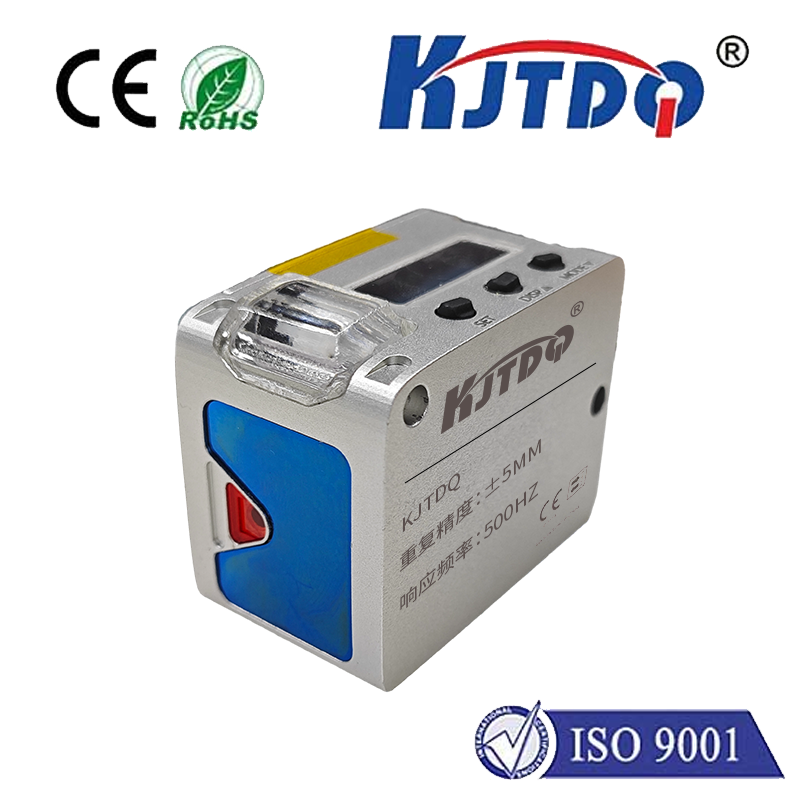
A Laser Displacement Sensor is fundamentally designed to measure the precise distance, or displacement, of a target surface from a fixed reference point. It operates on the principle of triangulation or time-of-flight. In the common triangulation method, a focused laser beam is projected onto the target. The reflected light is captured by a receiving lens at a known angle and focused onto a position-sensitive detector. Any minute change in the target's distance causes a measurable shift in the position of the light spot on the detector, allowing for micron-level resolution. These sensors excel in applications requiring exact dimensional checks, such as measuring thickness, warpage, vibration, or the profile of components on a production line. Their high sampling speed and stability make them indispensable for real-time monitoring and feedback in dynamic manufacturing environments.
On the other hand, a Rangefinder Sensor, often referred to as a laser rangefinder or distance sensor, is primarily optimized for measuring longer distances to a target. It commonly utilizes the time-of-flight principle, where the sensor calculates distance by measuring the time it takes for a laser pulse to travel to the target and back. Some advanced models use phase-shift analysis of modulated laser beams for enhanced accuracy at shorter ranges. Rangefinders are the workhorses for applications like vehicle navigation, aerial surveying, construction layout, forestry, and sports. They provide robust, single-point distance measurements over extended ranges, from several meters to kilometers, with a focus on portability, environmental durability, and ease of use.
The convergence of these technologies is where innovation thrives. Modern advanced sensors often blend these capabilities. For instance, a long-range displacement sensor might employ time-of-flight for coarse measurement with triangulation for fine resolution. The core differentiator often lies in the intended application: displacement sensors prioritize microscopic precision at close range for industrial automation, while rangefinders prioritize longer reach and operational simplicity for field use.
Selecting the right sensor hinges on a clear understanding of your application requirements. Key parameters to consider include measurement range, resolution, accuracy, sampling speed, target surface properties (color, material, reflectivity), and environmental conditions (ambient light, dust, temperature). For a robotic arm needing to precisely pick and place electronic components with sub-micron repeatability, a high-speed laser displacement sensor is non-negotiable. For an autonomous mobile robot navigating a warehouse by mapping its surroundings, a lidar system, which is essentially a scanning laser rangefinder, is the ideal solution.
The evolution of these sensors is tightly linked to advancements in laser diodes, optics, and computational power. Today's sensors are smarter, smaller, and more integrated. They feature built-in processors for edge computing, enabling direct output of analyzed data like peak/valley detection or waveform analysis. Connectivity through IO-Link, Ethernet/IP, or PROFINET allows for seamless integration into Industry 4.0 and IoT frameworks, facilitating predictive maintenance and data-driven optimization.
In conclusion, both Laser Displacement Sensors and Rangefinder Sensors are critical tools in the measurement toolkit. The former is the specialist for ultra-precise, close-range dimensional analysis, and the latter is the expert for reliable, long-distance ranging. By understanding their distinct principles and strengths, engineers and system integrators can harness their power to enhance efficiency, ensure quality, and enable automation across a vast spectrum of industries, from micro-electronics manufacturing to large-scale civil engineering. The future points towards even greater integration, intelligence, and accessibility, continuing to redefine the boundaries of what we can measure and control.