check

check

check

check

check

check
In the world of industrial automation, robotics, and advanced manufacturing, achieving precise and reliable distance measurements is not just a convenience—it's a critical necessity. This is where the Laser Ranging Sensor steps into the spotlight, a cornerstone technology that has revolutionized how machines perceive and interact with their environment. Unlike traditional mechanical or ultrasonic methods, laser sensors offer unparalleled accuracy, speed, and versatility, making them indispensable in a vast array of applications.
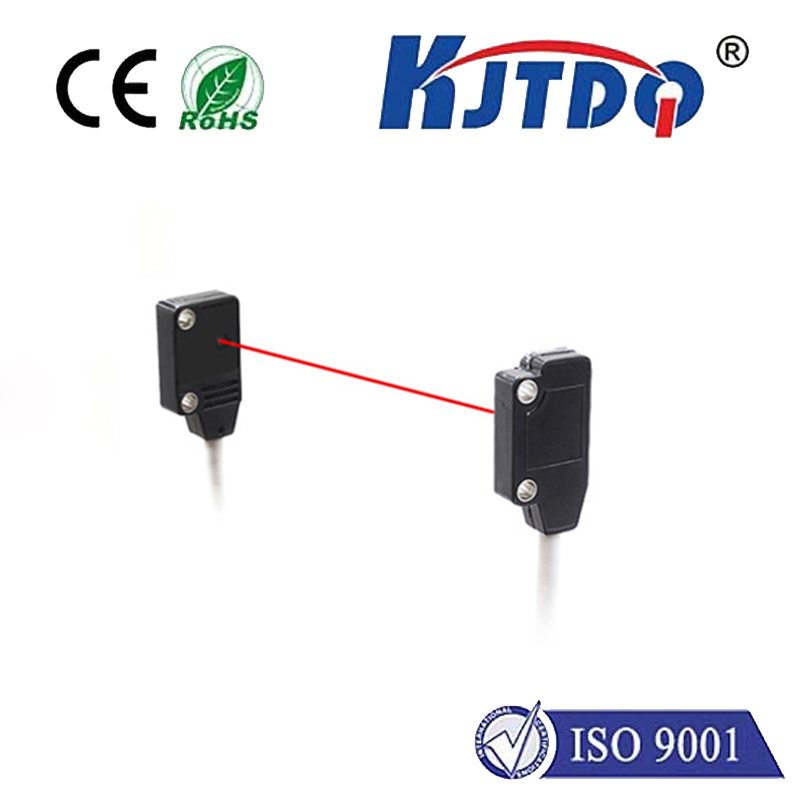
At its core, a Laser Ranging Sensor operates on the principle of time-of-flight or phase-shift measurement. It emits a focused beam of laser light towards a target. The sensor then precisely calculates the time it takes for the light to reflect back to its receiver. This time interval, when combined with the known constant speed of light, yields an extremely accurate distance reading. This non-contact method eliminates wear and tear, allows for measurements of moving or delicate objects, and functions effectively in challenging environments where other sensors might fail.
The advantages of implementing a high-quality Laser Ranging Sensor are manifold. First and foremost is precision. Modern sensors can achieve sub-millimeter accuracy over significant distances, ensuring consistent quality control in production lines. Speed is another key benefit; measurements are taken in microseconds, enabling real-time feedback for dynamic systems like autonomous guided vehicles or high-speed sorting machines. Furthermore, their compact size and robust designs allow for easy integration into existing setups, from factory floors to outdoor construction sites.
Practical applications are diverse and growing. In logistics, these sensors are used for palletizing, dimensioning packages, and guiding forklifts with pinpoint accuracy. The automotive industry relies on them for assembly line robot guidance, gap and flush measurement, and vehicle positioning. In agriculture, they assist in terrain mapping and automated harvesting. Even in consumer electronics, they enable features like autofocus in cameras and gesture recognition. The KJTDQ series of Laser Ranging Sensors, for instance, is engineered to meet these rigorous demands, offering enhanced signal processing algorithms for stable performance even on low-reflectivity surfaces and in varying ambient light conditions.
Selecting the right sensor requires careful consideration of several parameters. The measuring range must suit the application, from a few centimeters to several hundred meters. Resolution and linearity define the sensor's accuracy. The response time must be fast enough for the process speed. Environmental factors like temperature fluctuations, dust, moisture, and potential exposure to vibrations are crucial; look for sensors with high IP ratings and robust housings. Output options (analog, digital, IO-Link) should be compatible with your control system.
Looking ahead, the evolution of Laser Ranging Sensor technology continues. Trends point towards even smaller form factors, lower power consumption for portable and battery-operated devices, and enhanced intelligence with built-in data processing capabilities. The integration of multi-echo technology allows a single sensor to detect multiple objects in its beam path, opening doors for more complex applications like level measurement in transparent containers or seeing through dust and steam. As Industry 4.0 and smart factories become the norm, these sensors will play an even more pivotal role as the "eyes" of intelligent systems, providing the critical data needed for autonomous decision-making and optimized operations.