check

check

check

check

check

check
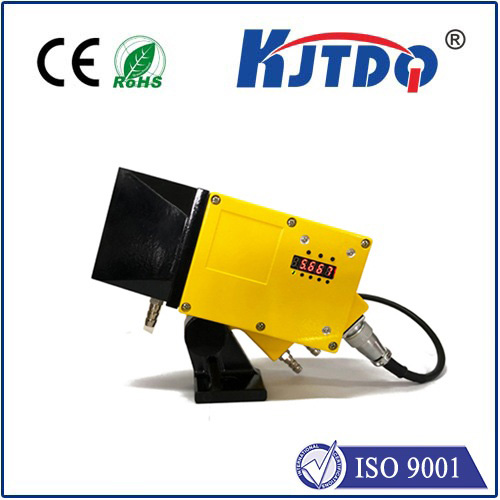
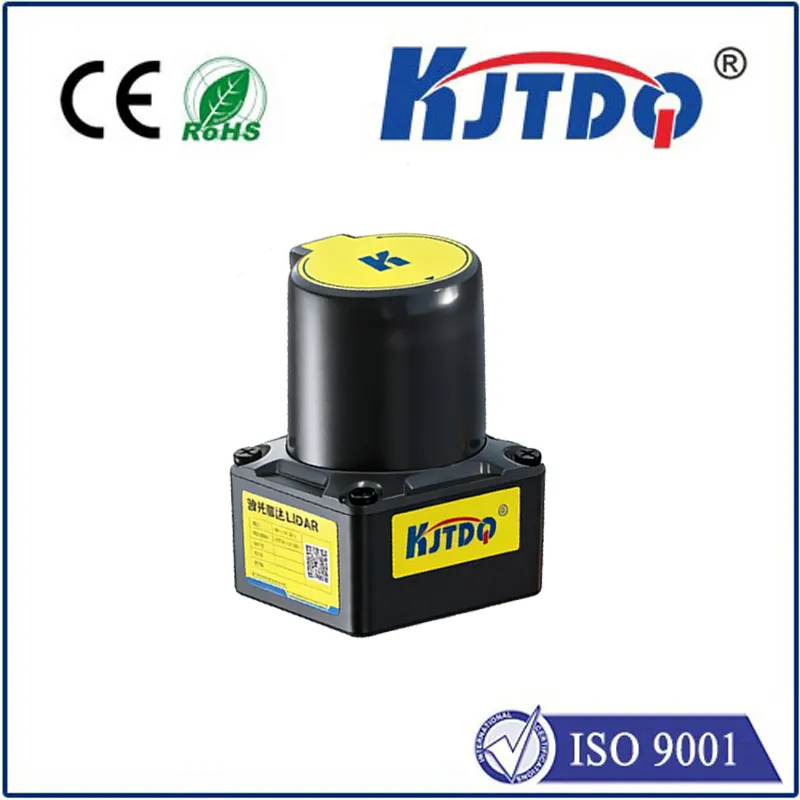
In the demanding world of modern manufacturing, construction, and quality control, the margin for error is vanishingly small. Achieving unparalleled precision is not just a goal; it's a fundamental requirement. This is where advanced testing and inspection laser rangefinder sensors come into play, revolutionizing how professionals measure distance, volume, and area with speed and astounding accuracy. Unlike traditional measuring tapes or rudimentary ultrasonic sensors, these sophisticated devices harness the power of laser technology to deliver reliable, non-contact measurements critical for ensuring product integrity, operational safety, and project efficiency.
At its core, a testing and inspection laser rangefinder sensor operates on the principle of time-of-flight or phase-shift measurement. It emits a focused laser pulse towards a target. The sensor then precisely calculates the time it takes for the pulse to reflect back to the receiver. This data is instantly processed to determine the exact distance. For inspection purposes, this technology is indispensable. Imagine verifying the dimensions of a machined aircraft component, ensuring the flatness of a semiconductor wafer, or confirming the alignment of large-scale structural beams. Manual methods are time-consuming and prone to human error, but a laser sensor provides objective, digital data in seconds, creating an immutable record for quality assurance protocols.
The applications for these sensors are vast and varied across industries. In industrial automation and robotics, they are integrated into systems for precise part positioning, bin picking, and conveyor belt monitoring. Within the construction and civil engineering sectors, professionals rely on them for site surveys, monitoring structural deformations, and verifying that installations adhere to strict architectural plans. The logistics and warehousing industry utilizes them for automated pallet sizing and inventory volume calculation, optimizing storage space. Furthermore, in safety and security systems, laser rangefinders can be configured as part of intrusion detection or collision avoidance systems, providing reliable perimeter monitoring.
Selecting the right testing and inspection laser rangefinder sensor hinges on several key technical parameters. Range and accuracy are paramount; high-end models can measure distances of several hundred meters with millimeter or even sub-millimeter precision. The laser class (typically Class 1 or 2 for eye-safe operation), measurement speed, and environmental durability (IP rating for dust and water resistance) are critical for harsh industrial environments. Connectivity options like USB, Bluetooth, or industrial fieldbus protocols (e.g., PROFINET, EtherCAT) enable seamless integration into larger data acquisition and control networks. Modern sensors also feature advanced software with real-time data logging, graphical interfaces, and the ability to set tolerance alarms for pass/fail inspection routines.
The integration of these sensors with the Internet of Things (IoT) and Industry 4.0 frameworks marks the next frontier. Data from distributed laser sensors can be aggregated on a central platform, enabling predictive maintenance, statistical process control, and full traceability of production batches. This transforms raw distance data into actionable intelligence, allowing managers to spot trends, preempt deviations, and continuously optimize processes. The future points toward even smarter sensors with embedded AI capabilities for pattern recognition and autonomous decision-making within inspection workflows.
Implementing a laser rangefinder solution requires careful planning. It begins with a clear definition of the measurement task: target material (as reflectivity affects performance), required accuracy, environmental conditions, and necessary output data format. Proper mounting and alignment are crucial to avoid cosine errors. Regular calibration against a known standard is essential to maintain long-term accuracy. Most reputable suppliers offer comprehensive support, from initial application analysis to installation and training, ensuring users maximize their investment.
In conclusion, the testing and inspection laser rangefinder sensor is far more than a simple distance-measuring tool. It is a cornerstone technology for precision, quality, and automation. By providing fast, accurate, and reliable non-contact measurements, it empowers engineers, inspectors, and project managers to uphold the highest standards, reduce waste, and drive innovation. As technology advances, these sensors will become even more integral, solidifying their role as an indispensable asset in the toolkit of any industry where precision is paramount.