check

check

check

check

check

check
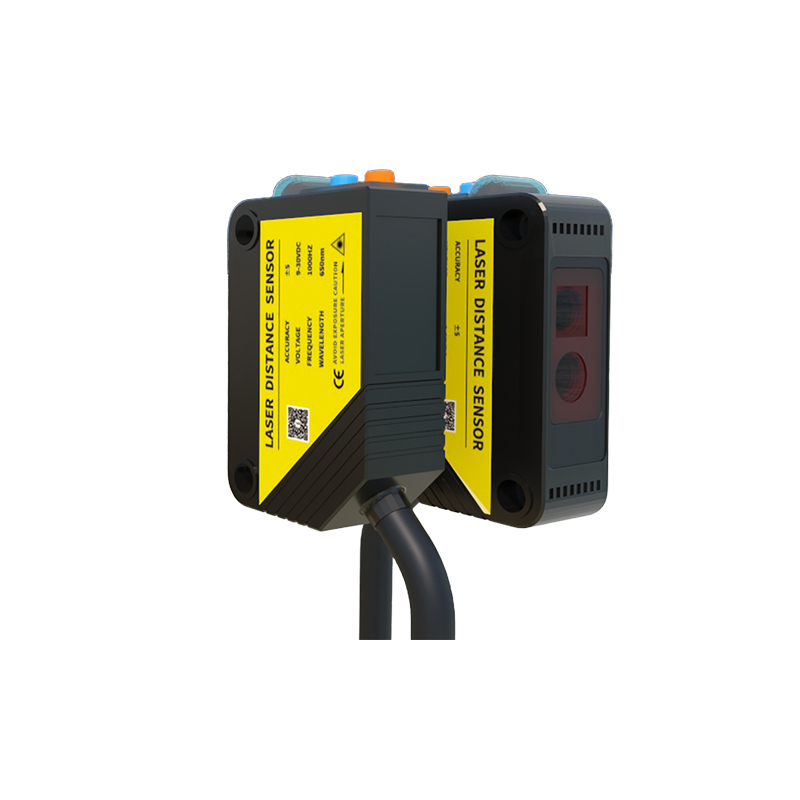
In today's fast-paced industrial landscape, accuracy and efficiency are non-negotiable. The industrial rangefinder laser sensor stands as a cornerstone technology, enabling precise distance measurement and object detection in challenging environments. These sensors utilize laser beams to calculate distances with remarkable accuracy, often within sub-millimeter tolerances. This capability is critical across various sectors, including automotive assembly, aerospace manufacturing, logistics, and heavy machinery.
Unlike traditional measurement tools, industrial laser rangefinders offer non-contact operation. This feature eliminates physical wear and tear, reduces the risk of damaging sensitive components, and allows for measurements of moving or hazardous objects. The core principle involves emitting a laser pulse towards a target and measuring the time it takes for the reflection to return. Advanced models employ phase-shift or triangulation methods for even higher precision in specific applications.
The integration of these sensors into automated systems has revolutionized quality control and process automation. On a production line, they can verify part dimensions, monitor assembly gaps, and ensure precise positioning of robotic arms. In warehouse management, they facilitate accurate inventory level sensing and pallet dimensioning, optimizing storage space and logistics. Their robustness is another key advantage; designed to withstand dust, vibrations, temperature fluctuations, and ambient light interference, they deliver reliable performance in harsh factory conditions.
Modern industrial rangefinder laser sensors often come with intelligent features. Connectivity options like IO-Link, Ethernet/IP, or PROFINET allow for seamless integration into Industrial Internet of Things (IIoT) networks. This enables real-time data collection, remote monitoring, and predictive maintenance, contributing to smarter, data-driven decision-making. Users can configure measurement parameters, set tolerance thresholds, and receive instant alerts for any deviations, minimizing downtime and waste.
Selecting the right sensor requires careful consideration of several factors. The required measuring range, from a few centimeters to several hundred meters, must match the application. Resolution and repeatability specifications determine the achievable precision. Environmental factors like the target material's reflectivity, presence of steam or dust, and operational temperature range are crucial. Furthermore, the physical housing size, protection rating (e.g., IP67), and mounting options must align with the installation site.
The future of industrial laser sensing is geared towards even greater miniaturization, enhanced connectivity, and the integration of AI-powered data analysis. As Industry 4.0 advances, these sensors will become more adaptive and capable of complex tasks like 3D profiling and shape recognition. Their role in ensuring precision, safety, and efficiency will only grow more vital, solidifying their position as an indispensable tool for modern industrial operations seeking a competitive edge through technological innovation.