check

check

check
check
check
check
check
check

check

check
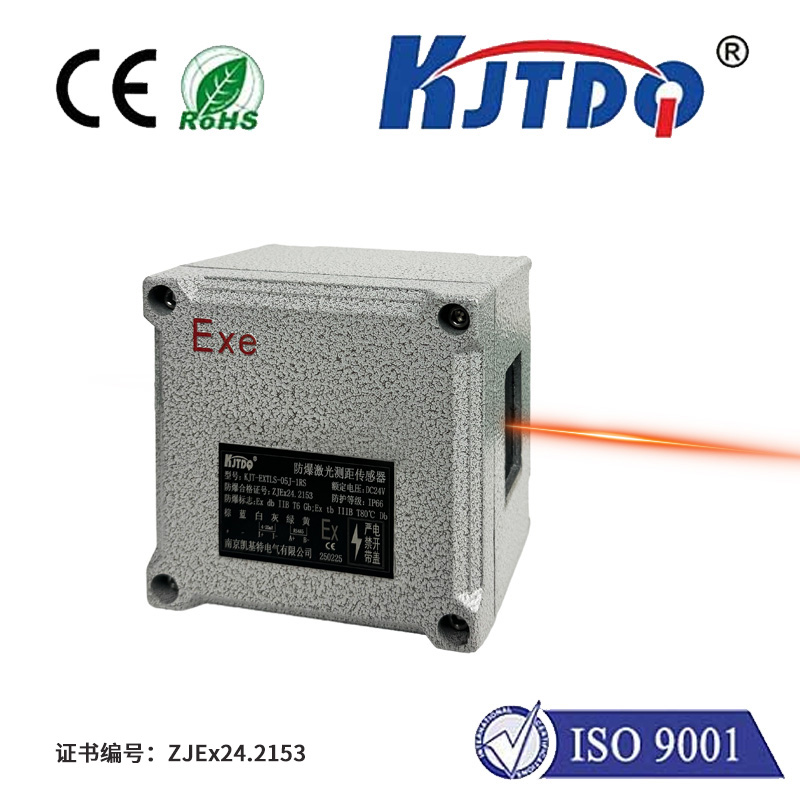
In the rapidly evolving landscape of automation, robotics, and smart technology, the demand for accurate, reliable, and fast distance measurement has never been higher. Among the various sensing technologies available, the Time-of-Flight (TOF) Laser Ranging Sensor stands out as a premier solution, offering unparalleled precision for a multitude of applications. This technology, particularly exemplified by advanced models like the KJTDQ series, is revolutionizing how machines perceive and interact with their environment.
At its core, a TOF Laser Ranging Sensor operates on a straightforward yet powerful principle. It emits a short pulse of laser light towards a target object. The sensor then precisely measures the time it takes for that light pulse to travel to the object and reflect back to the sensor's receiver. Since the speed of light is a known constant, the sensor's internal processor can calculate the distance to the object with extreme accuracy using the formula: Distance = (Speed of Light × Time of Flight) / 2. This direct measurement method eliminates many of the errors associated with triangulation or phase-shift techniques used in other sensors.
The advantages of implementing a TOF Laser Ranging Sensor like the KJTDQ are substantial. First and foremost is its exceptional accuracy and resolution, capable of detecting minute distance changes, often down to the millimeter level, even over several meters. This is coupled with a high measurement speed, allowing for real-time data acquisition crucial for dynamic applications such as autonomous vehicle navigation or high-speed robotic pick-and-place operations. Furthermore, TOF sensors are largely immune to ambient light interference and target surface color or texture variations that often plague other optical sensors, ensuring stable performance in diverse industrial conditions.
The practical applications for this technology are vast and growing. In industrial automation, KJTDQ sensors are integral for precise object positioning, conveyor belt monitoring, and robotic arm guidance, ensuring seamless production lines. The logistics and warehousing sector leverages them for volume measurement of packages, palletizing, and automated guided vehicle (AGV) obstacle detection and navigation. In the consumer electronics space, they enable features like gesture control in smart devices and focus assistance in cameras. Emerging fields such as drones utilize TOF sensors for terrain following and collision avoidance, while smart buildings employ them for people counting and occupancy monitoring to optimize energy use.
When selecting a TOF Laser Ranging Sensor, several key specifications of the KJTDQ series merit close attention. The measuring range defines the minimum and maximum distances the sensor can reliably handle. The measurement rate, or how many distance readings it can take per second, determines its suitability for fast-moving processes. Accuracy and repeatability specifications indicate the sensor's precision and consistency. Environmental ratings like IP67 are critical for durability in harsh factory settings, ensuring resistance to dust and water ingress. Finally, the output interface (e.g., analog voltage, digital UART, Ethernet) must be compatible with the existing control system for easy integration.
Integration of a KJTDQ TOF sensor into a system is typically streamlined. Modern designs focus on user-friendly mounting and simple wiring. Configuration, often done via dedicated software or a web interface, allows engineers to set parameters like the measurement window, output format, and filtering options to tailor the sensor's behavior to the specific task. This plug-and-play philosophy minimizes setup time and accelerates deployment.
Looking ahead, the future of TOF Laser Ranging Sensor technology is bright. Continuous advancements are leading to sensors with even longer ranges, higher speeds, and improved accuracy, all while reducing the physical size and power consumption. The integration of multi-pixel TOF arrays is paving the way for simple 3D depth imaging, expanding applications into areas like security surveillance and advanced human-machine interaction. The KJTDQ series represents the cutting edge of this progression, offering a robust, high-performance tool for engineers and developers.
In conclusion, the TOF Laser Ranging Sensor, particularly advanced versions like the KJTDQ, is a foundational technology enabling the next wave of intelligent systems. Its ability to deliver fast, precise, and reliable distance data makes it an indispensable component across industries from heavy manufacturing to consumer gadgets. For any project requiring precise spatial awareness, incorporating a high-quality TOF sensor is not just an option—it is a strategic decision to enhance capability, efficiency, and innovation.