check

check

check

check

check

check
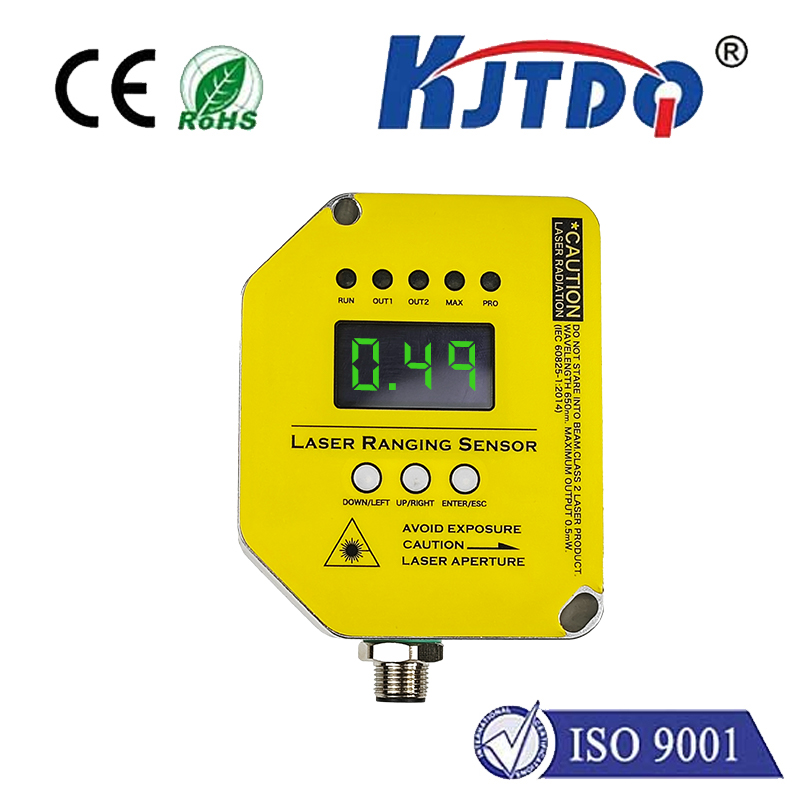
In the realm of precision measurement and distance sensing, the laser beam rangefinder sensor stands as a cornerstone technology. Its applications span a vast array of industries, from construction and surveying to robotics, defense, and even consumer electronics. Unlike traditional measuring tapes or ultrasonic sensors, a laser rangefinder operates by emitting a focused beam of light—typically a laser—towards a target. The sensor then precisely calculates the time it takes for the beam to reflect back to the receiver. This time-of-flight (ToF) principle, often enhanced with phase-shift analysis for even greater accuracy, allows for instantaneous and highly accurate distance measurements, often within millimeter-level precision over considerable ranges.
The core advantage of the laser beam rangefinder sensor lies in its unparalleled combination of speed, accuracy, and non-contact operation. For professionals in construction, this means quickly and accurately calculating areas, volumes, and layouts without physical contact, drastically improving efficiency and reducing human error. Surveyors rely on these sensors for topographic mapping and land assessment, where precision is non-negotiable. In the industrial automation sector, laser rangefinders are integral to robotics, enabling autonomous guided vehicles (AGVs) to navigate complex environments and robotic arms to perform precise pick-and-place operations by constantly monitoring object positions.
Modern laser rangefinder sensors have evolved far beyond simple distance measurement. Advanced models incorporate features like continuous measurement mode, which provides real-time data streams for tracking moving objects. They also boast robust environmental sealing (IP ratings) to withstand dust, moisture, and vibrations commonly found in harsh industrial or outdoor settings. Connectivity options such as RS-232, USB, Ethernet, and various industrial fieldbuses ensure seamless integration into larger control and data acquisition systems. Furthermore, the miniaturization of components has led to compact, lightweight sensors that can be embedded into drones for aerial surveying or handheld devices for portable use.
When selecting a laser beam rangefinder sensor, several critical specifications must be evaluated. The measuring range defines the minimum and maximum distances the device can handle effectively. Accuracy and resolution indicate the smallest detectable change in distance, crucial for high-precision tasks. The laser's wavelength and class are important for safety and performance under different lighting conditions. Response time determines how quickly the sensor can update its measurement, a vital factor for dynamic applications. Lastly, the target surface properties matter; while most sensors work well on diffuse surfaces, specialized models are needed for transparent, reflective, or low-reflectivity materials.
Looking ahead, the integration of laser rangefinding with other technologies like inertial measurement units (IMUs), GPS, and sophisticated software algorithms is creating powerful hybrid systems. These systems enable 3D scanning, complex spatial modeling, and enhanced situational awareness. As the demand for automation, smart infrastructure, and precise data collection continues to grow globally, the laser beam rangefinder sensor will remain an indispensable tool, driving innovation and efficiency across countless fields. Its role in shaping the future of measurement is as focused and impactful as the laser beam it projects.