check

check

check

check

check

check
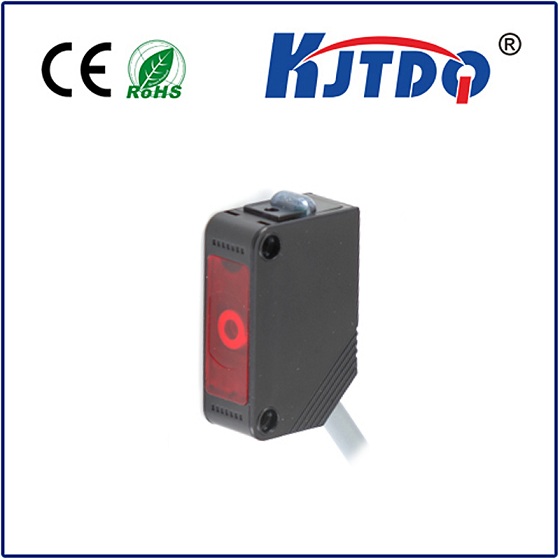
In the rapidly evolving landscape of industrial automation, robotics, and smart systems, the demand for sensors that deliver unparalleled accuracy, reliability, and ease of integration has never been higher. Enter the amplifier-integrated Time-of-Flight (TOF) laser sensor, a groundbreaking innovation that is setting new benchmarks for precision distance and presence detection. This advanced technology seamlessly combines a high-performance laser emitter, a sensitive photodetector, and a sophisticated signal processing amplifier into a single, compact housing. This integration marks a significant departure from traditional sensor setups, which often require separate sensor heads, amplifiers, and complex wiring, leading to increased installation time, potential points of failure, and higher overall system costs.
The core principle of TOF technology is elegantly simple yet powerful. The sensor emits a short, focused pulse of laser light towards a target object. The light reflects off the object and returns to the sensor's receiver. A highly precise internal timer measures the exact duration between the emission and the reception of the light pulse. Since the speed of light is a known constant, the sensor's integrated amplifier instantly calculates the distance to the object with exceptional accuracy. The "amplifier-integrated" aspect is crucial; it means the critical analog-to-digital conversion, signal filtering, and computation happen directly within the sensor unit. This on-board processing eliminates signal degradation that can occur over long cable runs between a sensor head and a remote amplifier, ensuring consistently stable and noise-immune measurements even in electrically noisy industrial environments.
The practical advantages of adopting amplifier-integrated TOF laser sensors are transformative across numerous applications. In automated guided vehicles (AGVs) and mobile robots, these sensors provide real-time, millimeter-precise data for obstacle avoidance, navigation, and docking, enabling safer and more efficient operation in dynamic spaces. On production lines, they excel in tasks such as precise object positioning, height verification, and fill-level monitoring in containers, regardless of the object's color, texture, or material (with the exception of perfectly transparent or highly absorbent surfaces). Their compact, self-contained design simplifies mechanical mounting and drastically reduces cabinet space requirements, as there is no need for separate amplifier units. Furthermore, many models feature intuitive teach-in functions via a button or IO-Link communication, allowing for quick and flexible configuration without the need for complex programming.
Compared to other sensing technologies like ultrasonic sensors or traditional photoelectric switches, amplifier-integrated TOF laser sensors offer distinct benefits. They provide a much higher level of precision and a smaller, more defined laser spot, enabling detection of very small objects or precise edges. They are largely immune to ambient light interference and acoustic noise, ensuring reliable performance in challenging conditions. The all-in-one design also translates to reduced maintenance, as there are fewer components to manage and calibrate.
Looking ahead, the integration of smarter features is the natural progression for this technology. Future iterations of amplifier-integrated TOF sensors are expected to incorporate enhanced diagnostics, predictive maintenance alerts, and even more advanced data processing capabilities directly at the edge. This evolution will further empower the development of Industry 4.0 and IoT ecosystems, where sensors not only collect data but also provide actionable intelligence.
In conclusion, the amplifier-integrated TOF laser sensor represents a paradigm shift in non-contact sensing. By merging high-precision optical measurement with robust, integrated signal conditioning, it delivers a solution that is accurate, reliable, and remarkably simple to deploy. For engineers and system integrators seeking to enhance the capabilities and efficiency of their automated systems, this technology is no longer just an option; it is becoming the definitive standard for precision distance measurement in the modern industrial world.