check

check

check

check

check

check
In the realm of industrial automation, quality control, and robotics, achieving accurate and reliable measurements is not just a goal—it’s a fundamental requirement. This is where the high-precision laser displacement rangefinder sensor steps into the spotlight. As a cornerstone of modern metrology, this technology offers unparalleled accuracy, speed, and versatility, making it indispensable across a multitude of sectors.
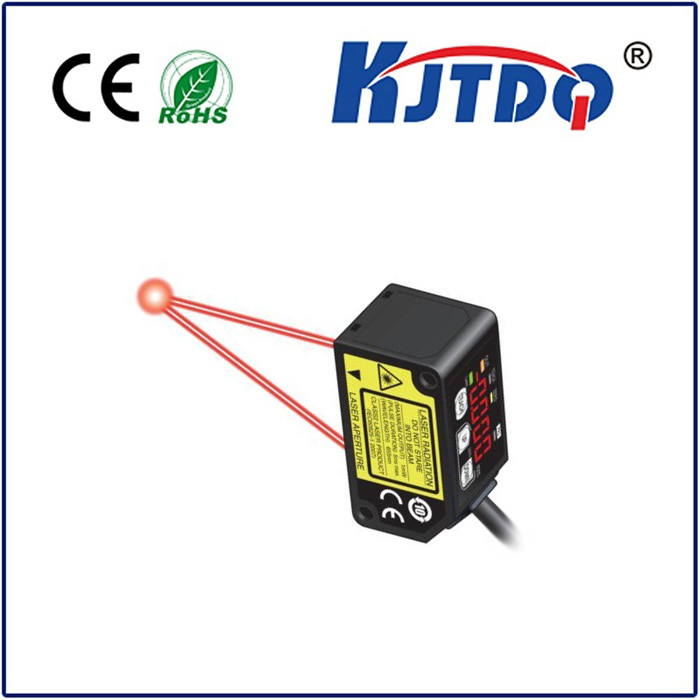
At its core, a high-precision laser displacement sensor operates on the principle of optical triangulation or time-of-flight measurement. A focused laser beam is projected onto the target surface. The reflected light is then captured by a high-resolution receiving element, such as a CCD or PSD. By analyzing the position or the phase shift of the reflected beam, the sensor's internal processor calculates the exact distance to the target with micron-level resolution. This non-contact method ensures that delicate or moving surfaces can be measured without any risk of damage or interference.
The applications for this technology are vast and varied. In manufacturing, these sensors are deployed for critical tasks like thickness gauging of materials, vibration analysis of machinery, and precise inspection of component dimensions. They ensure that every part meets stringent specifications, directly impacting product quality and reducing waste. In the automotive industry, they are used for panel gap measurement and robotic guidance during assembly. The electronics sector relies on them for solder paste inspection and wafer alignment, where even a micron of deviation can be consequential.
Beyond traditional industry, high-precision laser rangefinders are enabling advancements in emerging fields. In autonomous vehicle development, they contribute to LiDAR systems for environmental perception. In aerospace, they assist in the alignment of complex structures and the inspection of turbine blades. Their ability to perform rapid, repeated measurements makes them ideal for dynamic processes and real-time monitoring systems.
When selecting a high-precision laser displacement sensor, several key specifications demand attention. Resolution, often down to sub-micron levels, defines the smallest detectable change in distance. Linearity indicates how consistently the measurement matches the actual displacement across the entire measuring range. The sampling speed, sometimes reaching tens of kilohertz, determines how quickly the sensor can update readings, which is crucial for high-speed production lines. Environmental factors like ambient light, temperature fluctuations, and the target's surface characteristics (color, reflectivity, texture) also significantly influence performance. Modern sensors incorporate advanced algorithms and adaptive optics to compensate for these variables, ensuring stable and reliable data output.
The integration of these sensors into larger systems has been streamlined by developments in connectivity and data processing. Standard industrial communication protocols like Ethernet/IP, PROFINET, and EtherCAT allow for seamless connection to PLCs and control networks. This facilitates not just data collection but also the immediate implementation of corrective actions within a closed-loop control system, enhancing overall process automation and intelligence.
Looking ahead, the evolution of high-precision laser displacement technology continues. Trends point towards even smaller form factors, higher speeds, and enhanced robustness for harsh industrial environments. The integration of AI and machine learning for predictive maintenance and smarter data interpretation is on the horizon, promising to unlock new levels of operational efficiency and insight.
In conclusion, the high-precision laser displacement rangefinder sensor is far more than a simple measuring device. It is a critical enabler of precision, efficiency, and innovation in the digital industrial age. By providing trustworthy, non-contact dimensional data at remarkable speeds, it forms the reliable foundation upon which advanced manufacturing, rigorous quality assurance, and cutting-edge technological research are built. For engineers and decision-makers aiming to optimize processes and ensure excellence, understanding and leveraging this technology is not an option—it is a strategic imperative.