check

check

check

check

check

check
In the world of industrial automation and heavy machinery, the margin for error is razor-thin. Equipment failure or inaccurate readings in high-pressure systems can lead to catastrophic downtime, safety hazards, and significant financial loss. This is where precision-engineered components like the HR182-15-601.5E1 High Pressure Proximity Sensor step into the spotlight, offering unparalleled reliability where it matters most. This guide delves into the critical features, applications, and benefits of this robust sensor, explaining why it is a cornerstone technology for engineers and system designers.
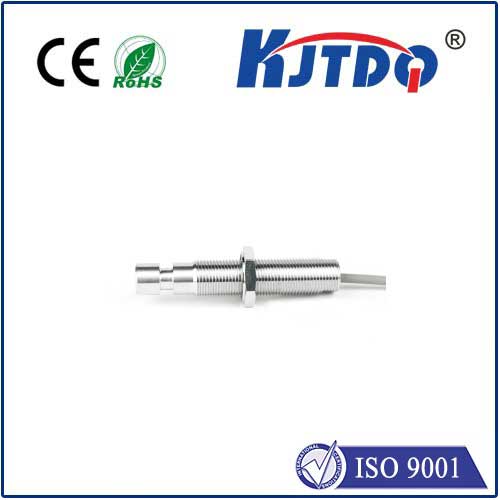
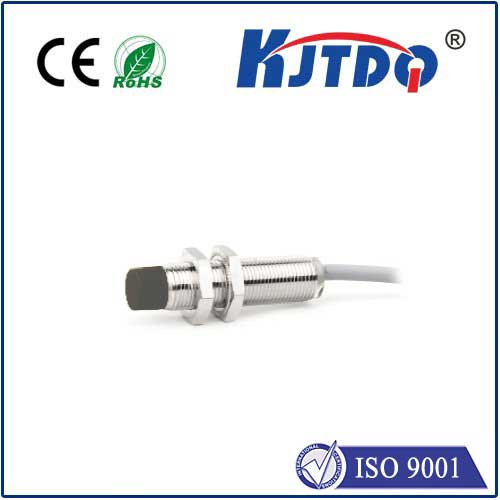
At its core, the HR182-15-601.5E1 is a non-contact inductive proximity sensor specifically engineered to operate flawlessly in environments with extreme ambient pressure. Unlike standard sensors that might falter or provide erratic signals under such stress, this model is built with a hermetically sealed housing capable of withstanding pressures that would compromise lesser devices. The "601.5" in its designation often refers to a specific thread size and form, typically a robust M18 x 1.5 metric thread, ensuring a secure and pressure-tight installation directly into hydraulic blocks, valve manifolds, or pressurized chambers. Its construction materials are selected for durability and resistance to corrosion, often featuring stainless steel sensing faces and housings to endure harsh industrial fluids and conditions.
The operational principle remains that of a standard inductive sensor: it generates an electromagnetic field and detects the presence of a conductive metal target. However, the internal electronics and sealing of the HR182-15-601.5E1 are optimized to maintain a stable sensing field and consistent switching performance regardless of external pressure fluctuations. This stability is paramount. It ensures that the sensor provides a crisp, clean signal to the PLC (Programmable Logic Controller) for detecting piston position in a hydraulic cylinder, confirming the closed or open state of a high-pressure valve, or monitoring the presence of a metal component within a pressurized assembly line. False triggers are virtually eliminated, contributing to smoother, more predictable machine cycles.
The applications for this high-pressure proximity sensor are vast and critical across several industries. In mobile hydraulics, such as in construction equipment (excavators, cranes) and agricultural machinery, these sensors reliably monitor cylinder rod positions under constantly changing load and pressure conditions. Within industrial manufacturing, they are indispensable in plastic injection molding machines to confirm mold clamping status under immense tonnage, or in die-casting machines to verify piston position. The oil and gas sector relies on similar robust sensors for subsea equipment and wellhead control systems, where pressure ratings are extreme. Furthermore, in test stands for engines and hydraulic components, the HR182-15-601.5E1 provides accurate feedback for performance validation under simulated high-pressure operational scenarios.
Choosing the HR182-15-601.5E1 over a standard sensor translates into tangible operational advantages. The foremost benefit is increased system uptime and reliability. By providing dependable feedback, it prevents machine faults caused by erroneous sensor signals, reducing unplanned stoppages. This reliability directly enhances operator and plant safety by ensuring safety-critical sequences, like pressure releases or lockouts, are accurately confirmed. Secondly, it leads to reduced maintenance costs and longer service life. Its rugged build minimizes failures due to pressure-induced seal leaks or internal component damage. Finally, it offers improved process quality and repeatability. Consistent and accurate position detection ensures every machine cycle is identical, leading to higher product quality and less waste.
When integrating the HR182-15-601.5E1, several technical specifications demand attention. Key parameters include its rated operating pressure, which must exceed the maximum system pressure with a safety margin, its sensing distance (which may be slightly reduced compared to a standard sensor in atmospheric pressure), the output type (typically PNP or NPN DC), and the supply voltage range. Ensuring the target material (usually ferrous metals like steel or iron) is within its specifications is also crucial. Proper installation is non-negotiable; the sensor must be torqued correctly according to manufacturer specifications to maintain its pressure integrity without damaging the threads or housing.
In conclusion, the HR182-15-601.5E1 High Pressure Proximity Sensor is not merely a component but a vital investment in operational integrity for systems operating under duress. Its specialized design bridges the gap between the need for precise non-contact detection and the harsh realities of high-pressure industrial environments. For engineers tasked with designing reliable hydraulic systems, heavy machinery, or any application where pressure and precision intersect, specifying a sensor of this caliber is a decisive step toward achieving robustness, safety, and peak operational performance. It stands as a silent, vigilant guardian, ensuring that in the high-stakes world of industrial pressure, your control system always has a clear and truthful eye on the process.