check

check

check

check

check

check
In industrial automation and control systems, photoelectric sensors play a pivotal role in object detection, positioning, and counting. Among the various output configurations available, the PNP type stands out for its specific characteristics and widespread application. This guide delves into the fundamentals, working principles, and practical considerations of PNP photoelectric sensors, providing essential knowledge for engineers and technicians.
A photoelectric sensor operates by emitting a light beam—typically infrared, visible red, or laser—and detecting changes in the received light. These changes, caused by the presence or absence of a target object, are converted into an electrical signal. The output stage of the sensor determines how this signal is presented to the control system. This is where the terms PNP and NPN come into play, referring to the type of transistor used in the output circuit.
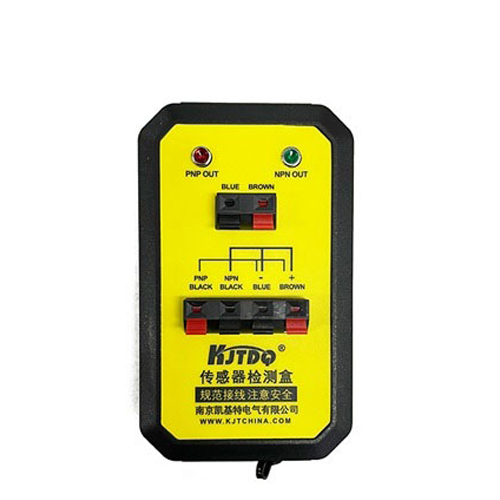
A PNP photoelectric sensor is characterized by its sourcing output. In a standard wiring configuration, the sensor has three connections: a positive voltage supply (often labeled V+ or Brown wire), a negative or ground (0V, often Blue wire), and the output signal wire (often Black wire). When the sensor is in its active state (e.g., an object is detected in a diffuse sensor), the internal PNP transistor switches on. This action connects the output terminal internally to the positive supply voltage (V+). Essentially, the sensor *sources* current *from* the positive supply *to* the load (like a programmable logic controller - PLC input, relay, or indicator). The load is then connected between the sensor's output wire and the ground (0V). This is a crucial distinction. When active, the output wire of a PNP sensor goes "high" (to V+), providing a voltage signal to the connected device.
Contrasting this with an NPN sensor clarifies its application. An NPN sensor has a sinking output. When active, it connects the output terminal internally to ground (0V), *sinking* current *from* the load *to* ground. The load must be connected between the positive supply and the sensor's output. This fundamental difference in current flow dictates compatibility with control equipment.
The choice between PNP and NPN is often dictated by regional conventions and the design of the control system. In many European and North American applications, PNP sensors (sourcing) are commonly paired with PLCs that have sinking-type input modules. This creates a complete circuit where the sensor provides the positive voltage, and the PLC input provides the path to ground. It is a widely adopted and reliable standard for 24V DC systems. Understanding the PLC's input card specification is paramount before selecting a sensor.
Beyond the output type, photoelectric sensors come in various operational modes. The through-beam type, with separate emitter and receiver units, offers the longest sensing range and high reliability. The retro-reflective type uses a reflector and is easier to install for longer ranges than the diffuse type. Diffuse sensors, where the emitter and receiver are in the same housing, detect objects by the reflection of their own light beam. Each mode can be found with a PNP output configuration, making them versatile for different detection tasks, from detecting transparent bottles to positioning metal parts on a conveyor.
Key advantages of PNP sensors include their intuitive wiring logic for many technicians and common compatibility with a vast array of industrial controllers. They are often considered a safe choice for standard machinery. When integrating a PNP sensor, attention must be paid to voltage ratings (ensuring the sensor's supply voltage matches the system, typically 10-30V DC), output current capacity (to ensure it can drive the connected load), and the sensor's response time for high-speed applications.
Installation and environmental factors significantly impact performance. Ensuring a stable power supply, protecting the sensor lens from dust, oil, and debris, and minimizing electrical noise in the signal cables are standard best practices. Proper alignment for through-beam and retro-reflective models is critical. For diffuse sensors, understanding the background suppression or background evaluation feature is important to avoid false triggers from objects beyond the intended target.
In summary, the PNP photoelectric sensor is a fundamental component in modern industrial automation. Its sourcing output configuration makes it the preferred interface for many control systems, providing a robust and straightforward method for converting optical detection into a usable electrical signal. By comprehending its operation, wiring, and application context, professionals can effectively select, install, and maintain these sensors, ensuring efficient and reliable operation in diverse industrial environments, from packaging and material handling to automotive assembly lines.