check

check

check

check

check

check
In today's rapidly advancing technological landscape, the seamless integration of automation and control systems is paramount. At the heart of many such systems lies a critical component: the optical switch sensor. This device, utilizing photoelectric principles for light control, represents a cornerstone of modern industrial and commercial automation. Unlike traditional mechanical switches, optical sensors offer non-contact detection, high precision, and exceptional reliability, making them indispensable in a wide array of applications.
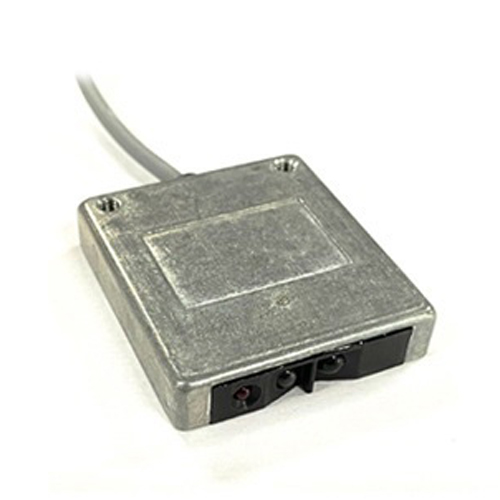
An optical switch sensor fundamentally operates by employing a light source, typically an LED or laser diode, and a photodetector. The sensor detects the presence, absence, or specific characteristics of an object by interpreting changes in the light beam. This photoelectric effect is harnessed for precise light control within a circuit or system. There are several primary sensing modes. The through-beam sensor consists of separate transmitter and receiver units; an object is detected when it interrupts the light beam between them, offering the longest sensing range and highest accuracy. The retro-reflective sensor houses both emitter and receiver in a single unit, using a reflector to bounce the light beam back; detection occurs when an object breaks this reflected beam. Finally, the diffuse reflective sensor, also a single-unit design, detects objects by measuring the light reflected directly off the target's surface, making it ideal for detecting non-reflective materials.
The applications for photoelectric light control via optical switch sensors are vast and varied. In manufacturing and packaging lines, they are used for object counting, position verification, and jam detection. Their high speed and accuracy ensure smooth, efficient production flow. Within the realm of safety and security, these sensors form the invisible beams of safety curtains on dangerous machinery, instantly halting operation if a breach is detected. They are also integral to automatic doors, activating opening and closing sequences as a person approaches. Furthermore, in consumer electronics and automotive systems, optical switches provide silent, durable alternatives to mechanical buttons for user interface control.
The advantages of implementing optical switch sensor technology are compelling. Their non-contact nature means no physical wear and tear from repeated use, leading to a significantly longer operational lifespan compared to mechanical counterparts. They are capable of detecting a diverse range of materials, including glass, plastic, metal, and liquids, provided the object affects the light beam. Modern sensors are designed to be highly resistant to environmental interference such as ambient light, dust, and vibrations, ensuring stable performance in challenging conditions. Additionally, their fast response time, often in the microsecond range, is crucial for high-speed automation processes.
When selecting an optical switch sensor for a specific photoelectric light control task, several key factors must be considered. The sensing distance required for the application will dictate whether a through-beam, retro-reflective, or diffuse model is most suitable. The physical properties of the target object—its size, color, material, and surface finish—will influence the sensor's choice of light source (e.g., visible red, infrared) and its sensitivity settings. The operating environment is also critical; sensors may need specialized housings rated for washdowns, extreme temperatures, or hazardous areas. Finally, the output type required to interface with the broader control system—such as digital (PNP/NPN) or analog signals—must be specified.
Looking ahead, the evolution of optical switch sensor technology continues. Innovations are focusing on miniaturization, allowing sensors to fit into increasingly compact devices. Enhanced connectivity through Industrial Internet of Things (IIoT) protocols enables smarter sensors that can communicate diagnostic data and performance metrics for predictive maintenance. There is also a growing emphasis on developing sensors with even higher immunity to challenging environmental factors like heavy contamination or intense background light.
In conclusion, the optical switch sensor is a fundamental enabler of automated photoelectric light control. Its ability to provide reliable, fast, and non-contact detection makes it a versatile solution across countless industries. From ensuring worker safety to optimizing complex assembly lines, this technology quietly powers the automated world. Understanding its operating principles, applications, and selection criteria is essential for engineers and system designers aiming to build efficient, robust, and intelligent automated systems for the future.