check

check

check

check

check

check
In the dynamic landscape of industrial automation, precision and reliability are non-negotiable. Among the myriad of sensing technologies available, retro-reflective photoelectric sensors stand out for their unique operational principle and versatility. When these sensors are designed with transparent object detection capabilities, they unlock a new realm of possibilities for applications that were once considered challenging. This article delves into the world of retro-reflective photoelectric sensors for transparent materials, exploring their functionality, advantages, and critical applications.
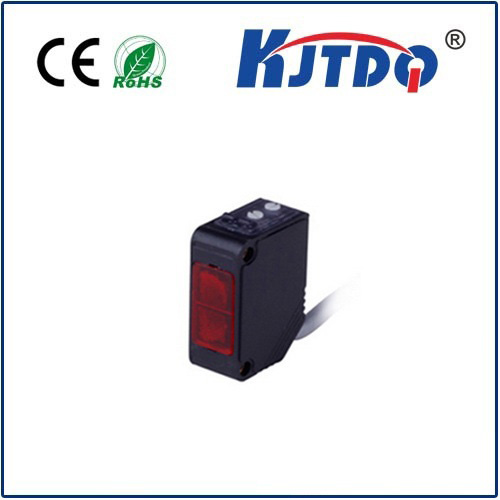
At its core, a retro-reflective photoelectric sensor consists of an emitter and a receiver housed in a single unit. The emitter projects a light beam, typically infrared or visible red, towards a specialized reflector, known as a retro-reflector. This reflector is designed to return the light beam directly back to the receiver along the same path, regardless of the angle of incidence. The sensor detects an object when it interrupts this established light path. The fundamental challenge with transparent objects—such as glass, clear plastic films, or bottles—is that they allow most of the light to pass through, failing to create a sufficient interruption for a standard sensor to register.
This is where advanced retro-reflective sensors with transparent object detection features come into play. These sophisticated devices are engineered to overcome this limitation. They often employ modulated light signals and highly sensitive receivers that can detect the subtle changes in the returned light beam caused by a transparent object. Even though the object may transmit most of the light, it will still cause minor refraction, reflection, or a slight reduction in light intensity. Specialized algorithms and circuitry within the sensor are tuned to recognize these minute variations, triggering a reliable output signal. Some high-end models utilize polarized light filters. The emitter sends out polarized light, and the receiver has a filter that only accepts light with a specific polarization. A standard retro-reflector depolarizes the light. When a shiny, non-metallic transparent object (like glass) passes through the beam, it reflects some of the polarized light back directly, allowing the receiver to detect this "false" signal as an object presence, thereby enabling detection.
The advantages of using retro-reflective photoelectric sensors for transparent materials are significant. Firstly, they simplify installation and alignment compared to through-beam sensors, which require separate emitter and receiver units placed opposite each other. With only one wiring point and a reflector on the opposite side, installation is faster and reduces costs. Secondly, they offer a generous sensing range, often comparable to through-beam models, making them suitable for large conveyors or packaging lines. Their ability to reliably detect clear objects reduces production errors, minimizes waste from mislabeled or unfilled containers, and enhances overall system integrity. This reliability translates directly into increased productivity and reduced downtime.
In practice, these sensors are indispensable across numerous industries. In the food and beverage sector, they ensure that clear glass or plastic bottles are present on filling lines before liquid is dispensed, and they verify the presence of transparent lids or seals on containers. The pharmaceutical industry relies on them to detect clear blister packs, vials, and syringes during packaging and inspection processes, ensuring patient safety and compliance. In logistics and packaging, they count or verify the presence of transparent shrink wrap, clear tapes, or films on boxes. Automotive manufacturing plants use them to confirm the placement of glass windshields or clear plastic components on assembly robots. Even in printing, they detect the presence of clear film overlays or monitor the web of transparent materials.
Selecting the right sensor requires careful consideration of several factors. The specific type of transparent material (e.g., glass, PET, PVC) and its thickness will affect light transmission. The required sensing distance and the environmental conditions—such as exposure to dust, moisture, or washdowns—dictate the needed housing rating (e.g., IP67, IP69K). The response speed must match the line speed of the application. Furthermore, modern sensors offer programmable functions, such as adjustable sensitivity (teach-in function), time delays, and output configurations (PNP/NPN), allowing for fine-tuning to the exact application needs.
In conclusion, retro-reflective photoelectric sensors with transparent object detection capabilities are a transformative solution for modern automated systems. They bridge a critical gap in sensing technology, providing a reliable, cost-effective, and efficient method for handling materials that are invisible to conventional sensors. By ensuring accurate detection of clear glass, plastics, and films, they enhance quality control, optimize production flow, and contribute significantly to the robustness of automated processes. As industries continue to demand higher levels of precision and flexibility, the role of these specialized photoelectric sensors will only become more central to the future of smart manufacturing and logistics.