check

check

check

check

check

check
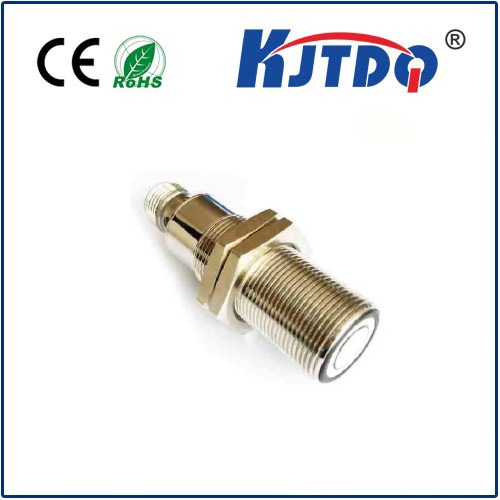
An ultrasonic proximity sensor paired with an Arduino board forms a powerful and accessible toolkit for anyone venturing into the world of electronics, robotics, or smart device prototyping. This combination is celebrated for its simplicity, cost-effectiveness, and remarkable accuracy in non-contact distance ranging. Unlike infrared sensors, ultrasonic modules are less affected by ambient light or the color of the target object, making them a robust choice for various environments.
At the heart of this system is the HC-SR04, the most ubiquitous ultrasonic sensor module. It operates on a straightforward principle: it emits a high-frequency sound wave (inaudible to humans) and listens for its echo. By precisely measuring the time interval between the emission and the reception of the echo, the Arduino can calculate the distance to an object using the simple formula: Distance = (Speed of Sound × Time Elapsed) / 2. The division by two accounts for the sound wave's round trip to the object and back.
Connecting the HC-SR04 to an Arduino is a beginner-friendly process. The module typically has four pins: VCC (power), Trig (trigger), Echo (receive), and GND (ground). The VCC and GND connect to the Arduino's 5V and GND pins, respectively. The Trig pin connects to a digital output pin on the Arduino, which sends a short pulse to initiate a measurement. The Echo pin connects to a digital input pin, which reads the duration of the returning pulse. With just a few jumper wires, the physical setup is complete.
The real magic happens in the code. A basic Arduino sketch involves sending a 10-microsecond high pulse to the Trig pin, then using thepulseIn() function to measure the duration the Echo pin stays high. This duration, in microseconds, is directly proportional to the distance. Converting this time into centimeters or inches requires knowing the speed of sound (approximately 343 meters per second at room temperature). A standard calculation in the code translates the microseconds into a tangible distance value, which can be displayed on the Serial Monitor, used to control an LED, or trigger a servo motor.
The applications for an Arduino ultrasonic proximity sensor are vast and inspiring. In robotics, it's the cornerstone for obstacle avoidance systems, allowing autonomous robots to navigate spaces safely. It can be used to create interactive art installations that respond to a viewer's presence. For home automation, it can trigger lights as a person enters a room or act as a smart parking sensor. In industrial prototyping, it can monitor liquid levels in tanks or count objects on a conveyor belt. Its versatility is limited only by the creator's imagination.
While incredibly useful, achieving consistent results requires attention to a few key factors. The sensor has a defined range, typically 2cm to 400cm for the HC-SR04. Objects too close or too far will not be detected correctly. The surface and angle of the target matter; soft, textured, or sharply angled surfaces may absorb or scatter the sound waves, leading to inaccurate readings or no reading at all. Environmental factors like extreme temperature and humidity can affect the speed of sound, though for most hobbyist applications, this is negligible. For critical measurements, temperature compensation can be added using a separate sensor.
For those looking to move beyond basic distance reading, the Arduino platform offers avenues for enhancement. Multiple sensors can be used to create a wider detection field. Libraries are available to streamline the code and handle more complex filtering of data, such as ignoring occasional erroneous readings. The sensor data can be integrated with wireless modules like Bluetooth or Wi-Fi to create IoT devices that report distances to a smartphone or a web dashboard.
In conclusion, the synergy between an ultrasonic proximity sensor and an Arduino microcontroller opens a gateway to practical, hands-on learning and innovation. It demystifies the concept of electronic sensing, providing immediate and tangible feedback. Whether you are a student, a hobbyist, or a professional prototype, mastering this tool equips you with the foundational skills to bring interactive, intelligent projects to life, from simple alarms to complex autonomous systems. Start with a basic ping program, and you'll soon find yourself integrating this reliable sensor into increasingly sophisticated creations.