check

check

check

check

check

check
In industrial automation and machinery control, the reliability of detection systems directly impacts operational efficiency and safety. Among various sensor technologies, PNP normally closed (NC) proximity sensors have emerged as a critical component for countless applications requiring precise, fail-safe object detection. This comprehensive guide explores the fundamental principles, practical advantages, and ideal use cases for PNP NC proximity sensors, providing essential knowledge for engineers, technicians, and procurement specialists.
Understanding the core terminology is the first step. "PNP" refers to the type of transistor output used in the sensor's switching circuit. In a PNP sensor, the output wire switches to a positive voltage (typically +24V DC) when the sensor is activated, sourcing current to the load. This is contrasted with NPN sensors, which sink current to ground. The "NC" designation stands for "Normally Closed." In its default, non-activated state (when no target is present), the sensor's output circuit is closed, allowing current to flow. When a target enters the sensing range, the circuit opens, interrupting the current. This fail-safe characteristic is crucial for many safety and monitoring functions.
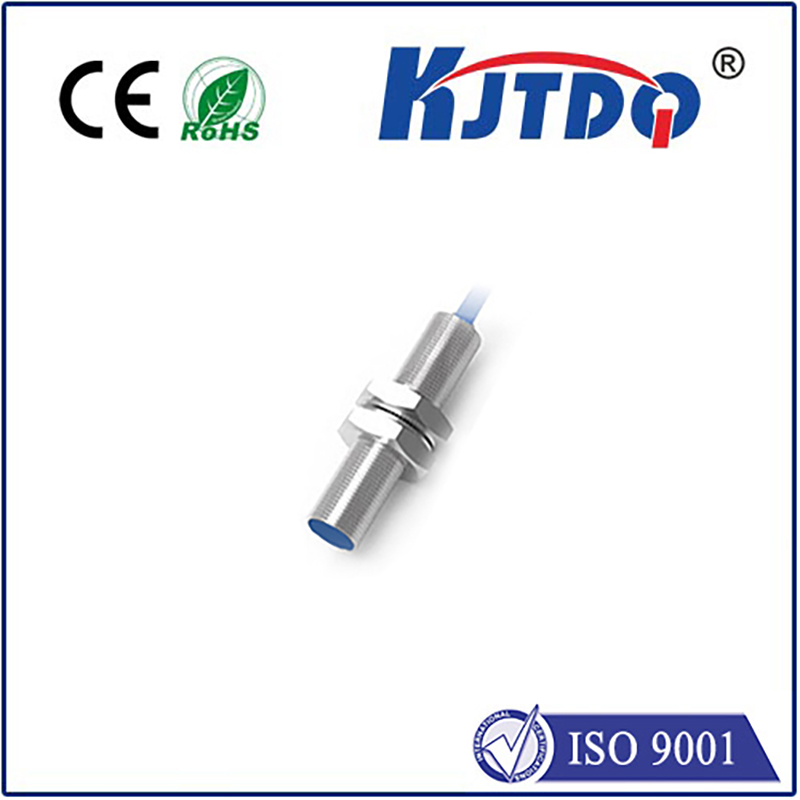
The operational principle of an inductive PNP NC proximity sensor involves generating an electromagnetic field from its sensing face. When a metallic target enters this field, eddy currents are induced in the target, causing a change in the sensor's internal oscillation circuit. This change is detected, triggering the solid-state output switch to change state—opening the circuit in the case of an NC configuration. This non-contact operation ensures long service life and high reliability, as there is no mechanical wear from physical contact.
The advantages of choosing a PNP NC configuration are significant, particularly in safety-critical designs. The primary benefit is the fail-safe nature. In a Normally Closed setup, a wire break, power loss, or sensor failure typically results in an "open circuit" signal, which can be programmed to trigger an alarm or a safe machine shutdown. This is often preferred for emergency stop monitoring, guard door position verification, or critical presence detection where an inactive sensor must indicate a fault condition. Furthermore, PNP sourcing outputs are commonly the standard in many regions and PLC (Programmable Logic Controller) input modules, simplifying wiring and integration, especially when interfacing with legacy control systems that expect a sourcing signal.
Typical applications for PNP NC proximity sensors are found across diverse industries. In automated assembly lines, they are used to verify the absence of a component in a fixture before a cycle begins, preventing collisions. In robotics, they can serve as limit switches for axis movement, where the NC signal maintains circuit continuity until a limit is reached. Within packaging machinery, they monitor the presence of a metallic safety guard. If the guard is opened, the sensor loses its target, opens the circuit, and immediately stops the machine. They are also extensively used in material handling for detecting the end-of-travel on conveyors or the presence of a metal pallet.
When selecting and installing a PNP NC proximity sensor, several factors require consideration. The sensing range, which is typically a few millimeters for standard inductive models, must be appropriate for the application. The target material (ferrous or non-ferrous metals) affects the effective sensing distance. Environmental conditions like temperature extremes, moisture, dust, or chemical exposure dictate the required housing material and IP (Ingress Protection) rating. Electrical specifications, including operating voltage range and output current capacity, must match the control system's requirements. Proper installation is key; sensors should be mounted securely to avoid vibration-induced errors, and adequate clearance from surrounding metal (flush or non-flush mounting) must be observed as per the manufacturer's guidelines to ensure consistent performance.
Troubleshooting common issues often involves checking the basics. If a sensor fails to trigger, verify the power supply voltage and polarity. Ensure the target is within the specified sensing range and is of the correct material and size. For an NC sensor that is constantly in the "open" state (indicating a detected target when none is present), check for accumulation of metallic debris on the sensing face or the presence of other metal objects in the vicinity. Using a multimeter to measure the output voltage in both target-present and target-absent states can quickly isolate wiring problems from sensor failures.
In conclusion, the PNP NC proximity sensor represents a robust and intelligent solution for industrial detection tasks where reliability and safety are non-negotiable. Its inherent fail-safe design, combined with the widespread compatibility of PNP sourcing outputs, makes it a versatile and trusted choice. By understanding its operation, benefits, and application best practices, professionals can effectively integrate these sensors to enhance system integrity, prevent downtime, and ensure safer automated operations. As technology advances, these sensors continue to evolve with improved sensing distances, smarter diagnostics, and enhanced durability, solidifying their role as a cornerstone of modern industrial automation.