check

check

check

check

check

check
In the rapidly evolving landscape of industrial automation, the demand for reliable, accurate, and durable sensing technology is paramount. Among the myriad of components that drive modern manufacturing and processing lines, proximity sensors stand as critical enablers of efficiency and safety. The M3-B3 Proximity Sensor emerges as a standout solution in this domain, engineered to meet the rigorous demands of contemporary industrial environments. This article delves into the core features, applications, and distinct advantages of the M3-B3, illustrating why it is becoming the preferred choice for engineers and system integrators worldwide.
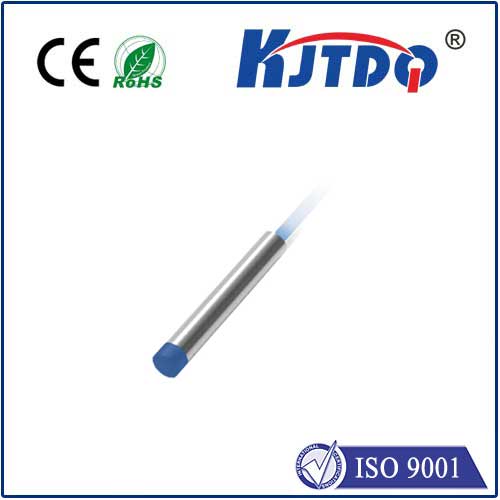
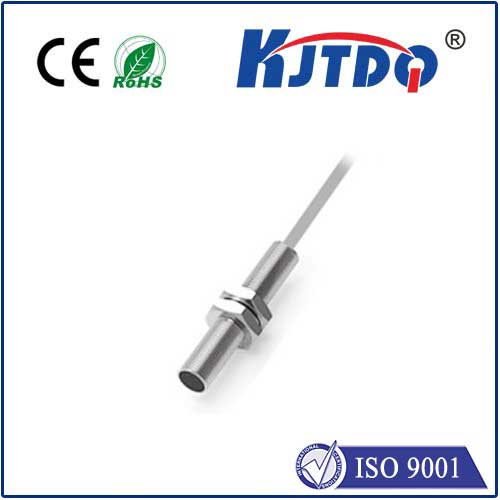
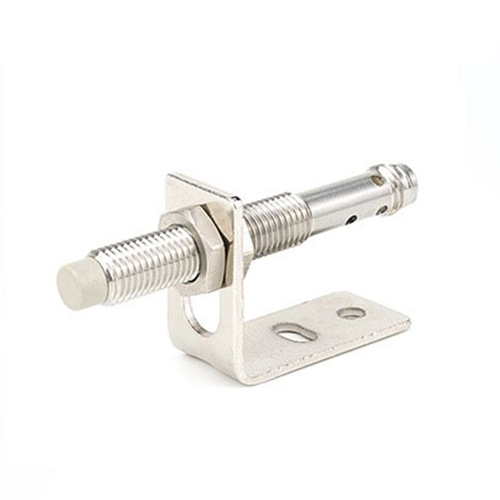
At its core, the M3-B3 is a compact, cylindrical inductive proximity sensor. Its fundamental operating principle is based on electromagnetic induction. The sensor generates a high-frequency oscillating electromagnetic field from its sensing face. When a metallic target object enters this detection field, eddy currents are induced within the target. This causes a change in the oscillation amplitude within the sensor's internal circuit, which is then processed to trigger a solid-state switching output. The "M3" designation typically refers to its 3mm diameter threaded barrel, making it exceptionally suitable for applications with severe space constraints where larger sensors simply cannot fit.
The performance specifications of the M3-B3 Proximity Sensor are tailored for precision. It offers a short-range detection capability, typically in the sub-millimeter to few-millimeter range, which is ideal for high-accuracy positioning tasks. Despite its miniature size, it boasts impressive technical characteristics. Key features often include a high switching frequency, allowing it to detect rapidly moving or vibrating targets—a common requirement in packaging, assembly, and sorting machinery. Its construction is robust, usually featuring a stainless-steel housing that provides superior resistance to mechanical impacts, vibrations, and harsh industrial contaminants like coolants, oils, and metal shavings. Furthermore, many models are equipped with advanced circuitry offering protection against short-circuits, overloads, and reverse polarity, enhancing system reliability and reducing downtime.
One of the most significant advantages of the M3-B3 sensor is its versatility in output configurations. It is commonly available in both NPN (sinking) and PNP (sourcing) transistor output types, as well as Normally Open (NO) or Normally Closed (NC) logic. This flexibility allows for seamless integration into a wide array of programmable logic controller (PLC) systems and control architectures prevalent across Europe, North America, and Asia. The consistent and stable switching signal it provides is crucial for tasks such as part presence verification, end-of-travel detection for cylinders, counting metallic objects on a conveyor, or ensuring proper tool positioning in CNC machinery.
The application spectrum for the M3-B3 Proximity Sensor is vast. In the automotive industry, it is deployed on robotic welding arms to confirm component placement before a weld cycle begins. Within electronics manufacturing, these sensors ensure miniature components are correctly seated in pick-and-place machines. They are indispensable in automated packaging lines for detecting the presence of metallic lids or caps. Even in complex semiconductor fabrication equipment, the M3-B3's precision and reliability are trusted for critical alignment and monitoring functions. Its ability to operate without physical contact eliminates mechanical wear and tear, ensuring a long operational life and minimal maintenance—a key factor in calculating total cost of ownership.
When selecting a sensor for a critical application, environmental resilience is non-negotiable. High-quality M3-B3 sensors are designed to perform consistently across a wide temperature range and possess high ingress protection (IP) ratings, such as IP67, making them dust-tight and capable of withstanding temporary immersion in water. This durability ensures reliable operation in challenging conditions, from the oily floor of a machining center to the wash-down environments of food and beverage processing plants (when specified with appropriate housing materials).
Implementing the M3-B3 sensor requires careful consideration. Correct mounting is essential; the sensor must be installed so that the target approaches the sensing face axially for optimal performance. Engineers must also account for the sensor's inherent blind zone and ensure that only the specified ferrous or non-ferrous metals are used as targets, as different materials affect the sensing distance. Proper shielding and cable management are recommended to mitigate potential electrical interference in noisy industrial settings.
In conclusion, the M3-B3 Proximity Sensor represents a fusion of miniaturization, precision, and ruggedness. It addresses the core challenges of modern automation: achieving more in less space, enhancing accuracy, and maximizing uptime. For design engineers and maintenance professionals seeking a dependable, high-performance inductive sensor for tight spaces and demanding tasks, the M3-B3 proves to be an indispensable component. Its continued adoption across diverse industries underscores its role as a fundamental building block in the intelligent factories of today and tomorrow, driving productivity through unwavering detection accuracy.