check

check

check

check

check

check
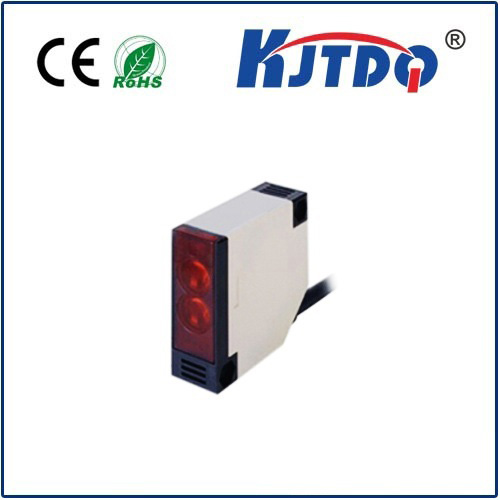
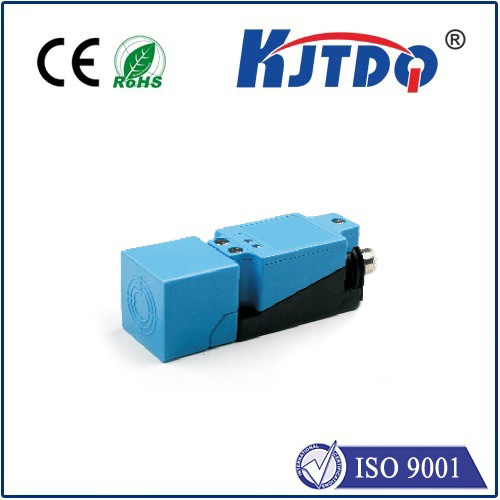
In the world of industrial automation and electronic control, the ability to detect the presence or absence of an object without physical contact is fundamental. Among the various technologies enabling this, the NPN 3-wire configuration for non-proximity sensing stands out for its reliability and specific application advantages. This article delves into the operational principles, wiring methodology, and key scenarios where this sensor type is the optimal choice, moving beyond basic proximity detection.
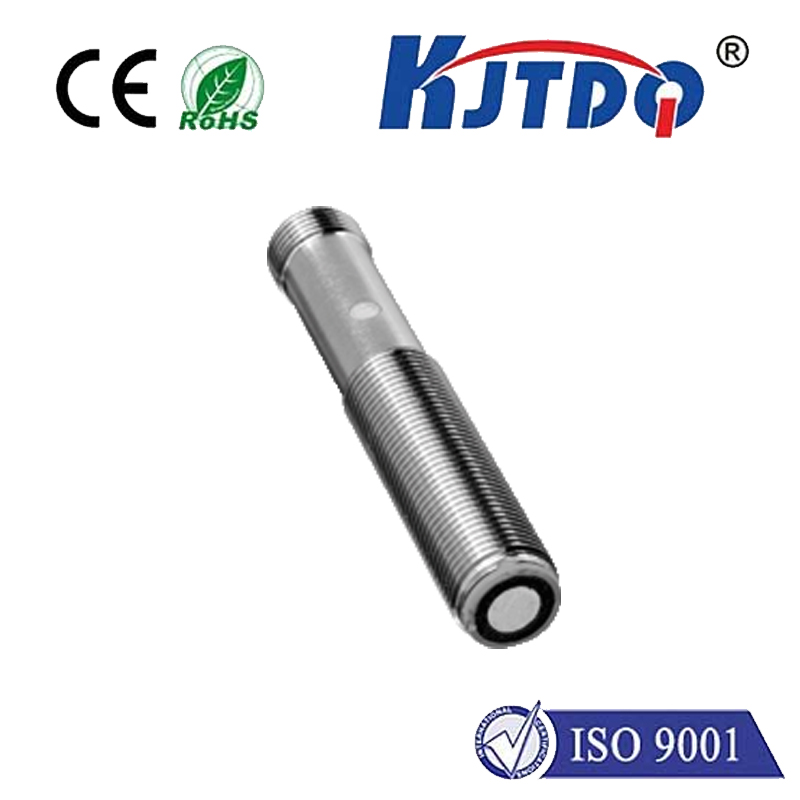
At its core, an NPN sensor is a solid-state switching device. The "NPN" designation refers to the type of transistor used in its output stage. In a 3-wire setup, the sensor requires three connections: a positive supply voltage (typically labeled V+ or Brown wire), a negative supply or ground (0V or Blue wire), and the output signal wire (often Black wire). The defining characteristic of the NPN output is that it switches the negative or ground side of the load. When the sensor is inactive (no target detected), the output transistor is off, and the output line is in a high-impedance state relative to the negative rail. Upon activation, the NPN transistor turns on, effectively connecting the output wire to the negative supply (0V), thus completing the circuit for the connected load, which must be wired between the positive supply and the sensor's output.
The term "no proximity sensor" in this context requires clarification. It does not refer to the absence of a sensor but specifies the sensor's output logic state in its normal, non-activated condition. An NPN "normally open" (NO) sensor provides no output connection (open circuit) when no target is present. When a target enters its sensing range, the switch closes, connecting the output to ground. Conversely, an NPN "normally closed" (NC) sensor does the opposite. The phrase "npn 3wire no" commonly points to an NPN, 3-wire, normally open configuration. This is a crucial distinction for system design and safety.
Wiring an NPN 3-wire sensor correctly is paramount. The brown wire connects to the positive DC supply (e.g., +24V). The blue wire connects to the power supply's 0V or ground. The black wire is the switched output. For a normally open sensor, the load (such as a PLC input, relay coil, or indicator lamp) is connected between the positive supply (+24V) and the black output wire. When the sensor activates, it pulls the black wire to 0V, allowing current to flow from the positive supply, through the load, and to ground via the sensor, thus energizing the load. Incorrect wiring, such as mixing up PNP and NPN types, can lead to malfunction or damage.
So, why choose an NPN 3-wire normally open sensor? Its primary advantage lies in compatibility with sinking input modules on Programmable Logic Controllers (PLCs). Many industrial PLCs are designed to accept sinking inputs, where the input module provides a positive voltage, and the connected device (the NPN sensor) sinks that current to ground when activated. This makes NPN sensors a standard in many regions and industries. Furthermore, the 3-wire design provides a dedicated output line, offering better signal stability and noise immunity compared to 2-wire sensors. The normally open configuration is often preferred for safety-critical "stop" functions or applications where an energy-on-detect state is desired, such as starting a process when an object is present.
Typical applications extend across manufacturing and packaging. For instance, on a conveyor belt, an NPN 3-wire NO sensor can detect when a product arrives at a specific point, triggering a robotic arm to pick it up. The "no signal until detection" logic is intuitive for counting and sequencing operations. In automated assembly, it can verify a component is in place before a welding or fastening cycle begins. Its robustness against electrical noise makes it suitable for environments with motors and variable frequency drives.
Troubleshooting often involves a systematic approach. First, verify power is correctly applied across the brown and blue wires. Next, use a multimeter to check the voltage on the black output wire relative to ground. In a normally open configuration, it should read near the supply voltage when inactive and drop to near 0V when a target is presented. If the sensor does not switch, confirm the target material and size are within the sensor's specifications, as inductive sensors, a common type in this configuration, only detect metals.
In summary, the NPN 3-wire normally open proximity sensor is a cornerstone of modern control systems. Its operation, centered on sinking the load current to ground, offers reliable and noise-resistant performance. Understanding its wiring, the meaning of "NO," and its ideal use cases—particularly with sinking PLC inputs—empowers engineers and technicians to design more efficient, reliable, and safe automated systems. Selecting the correct sensor logic and type is not merely a technical detail but a critical decision for operational integrity.