check

check

check

check

check

check
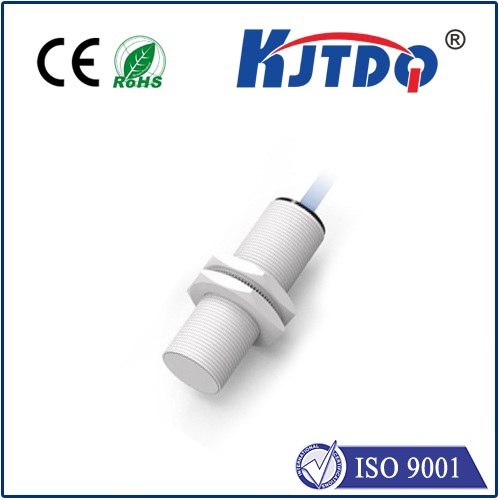
In the realm of automation and smart technology, the precision of object detection is paramount. Among the various sensing technologies available, the capacity type proximity sensor stands out for its unique operational principle and application versatility. Unlike inductive or photoelectric sensors that rely on magnetic fields or light beams, a capacity type proximity sensor functions by detecting changes in capacitance. This method allows it to sense both metallic and non-metallic objects, including liquids, plastics, and glass, making it an exceptionally flexible solution.
The core of its operation lies in the formation of a capacitor. The sensor's active surface acts as one plate of a capacitor, with the target object acting as the other. The air gap between them serves as the dielectric. When an object enters the sensor's detection field, it alters the dielectric constant, thereby changing the capacitance of the system. The sensor's internal oscillator circuit is tuned to a specific threshold. When the capacitance change reaches this threshold, it triggers a switch in the output state, signaling the presence of the object. This capacity-based detection is highly sensitive and can be finely adjusted to ignore background interference or detect materials through thin barriers.
The capacity of a proximity sensor, often referred to in technical specifications, encompasses several key aspects. Primarily, it indicates the maximum sensing distance or range for which the sensor is rated. However, true 'capacity type' goes beyond mere distance; it defines the sensor's inherent ability to measure capacitive changes. Key performance parameters under this 'capacity type' umbrella include sensitivity, which determines how small a capacitive change can be detected; response time, critical for high-speed applications; and environmental stability, ensuring consistent performance despite fluctuations in temperature or humidity. Understanding these specifications is crucial for selecting the right sensor. For instance, an application involving level detection of a non-conductive liquid in a plastic tank would require a sensor with high sensitivity to minor capacitive shifts, whereas a packaging line detecting cardboard boxes might prioritize a faster response time.
The advantages of deploying capacity type proximity sensors are significant. Their ability to detect virtually any material eliminates the limitations posed by other sensor types. They are ideal for applications like liquid level control, material presence verification on non-metallic conveyor belts, and touch-sensitive interfaces. Furthermore, their solid-state design ensures long-term reliability with no moving parts to wear out. When integrating these sensors, engineers must consider factors such as the dielectric constant of the target material, the size of the target, and potential environmental contaminants like dust or moisture, which can affect capacitive coupling. Proper mounting and shielding are also essential to prevent false triggers from adjacent machinery or the sensor's own mounting bracket.
In practical industrial and consumer settings, these sensors prove indispensable. From ensuring precise fill levels in beverage bottling plants to enabling the touch-sensitive buttons on modern appliances, their role is pervasive. In automated assembly lines, they verify the presence of plastic components before a robotic arm proceeds with its task. The ongoing evolution of this technology focuses on miniaturization, enhanced noise immunity, and smarter onboard diagnostics, pushing the boundaries of what reliable, contactless detection can achieve. By mastering the principles and specifications of the capacity type proximity sensor, designers and technicians can unlock new levels of efficiency, safety, and innovation in their systems, ensuring that machines interact with their environment in the most intelligent and responsive way possible.