check

check

check

check

check

check
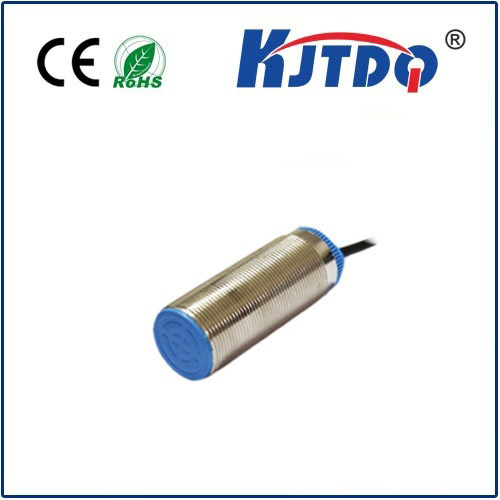
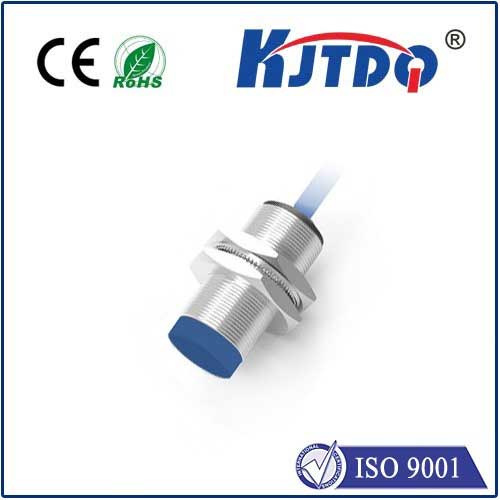
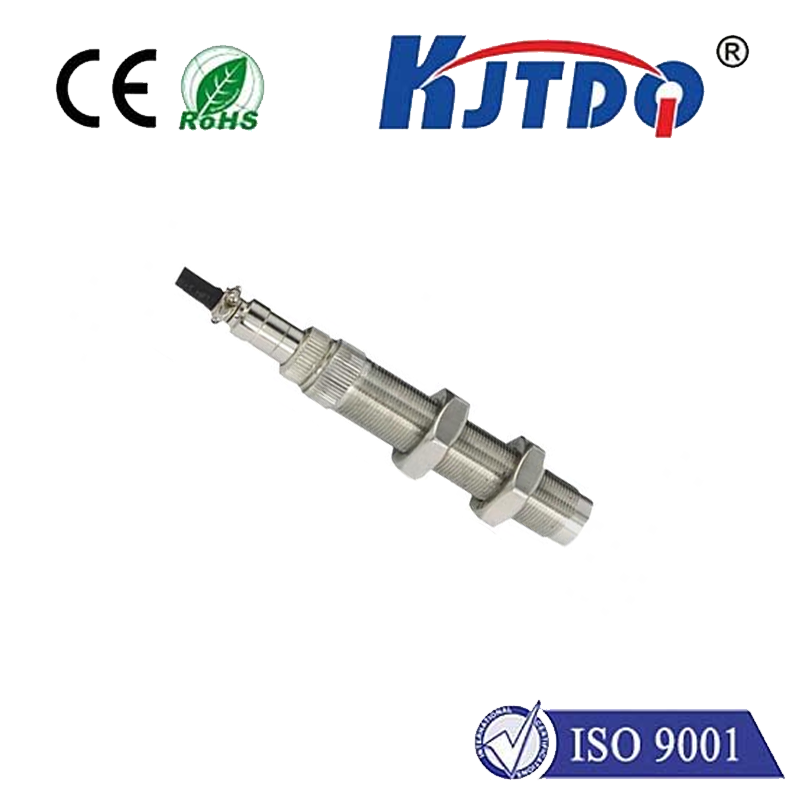
In the world of industrial automation, precision and reliability are non-negotiable. The M18 inductive proximity sensor switch stands as a cornerstone component, engineered to deliver consistent, non-contact detection of metallic objects. Its compact cylindrical design, measuring 18mm in diameter, makes it a versatile solution for countless applications where space is at a premium but performance cannot be compromised. This sensor operates on a fundamental principle: it generates an electromagnetic field from its sensing face. When a metallic target enters this field, it induces eddy currents within the target, causing a change in the sensor's internal oscillation amplitude. This change is detected by the circuitry, triggering a solid-state output switch. This mechanism ensures exceptionally fast response times and a complete absence of physical contact, leading to virtually infinite mechanical life and no wear and tear on either the sensor or the target.
The robustness of the M18 inductive sensor is a key factor in its widespread adoption. Typically housed in a nickel-plated brass or stainless-steel body, it offers impressive resistance to environmental challenges. It can withstand common industrial contaminants like coolants, oils, and dust, with many models boasting high IP (Ingress Protection) ratings such as IP67 or IP68, making them suitable for washdown environments or outdoor use. The sensing range, while dependent on the specific model and target material, is highly stable and repeatable. For a standard mild steel target, the nominal sensing distance for an M18 sensor is often 5mm, 8mm, or 10mm. It is crucial to note that the effective sensing distance varies with different metals; for instance, aluminum or copper requires a reduction factor, as these materials are less easily detected than steel.
Installation and wiring are straightforward, contributing to reduced downtime and maintenance costs. These sensors are available in several output configurations to seamlessly integrate into various control systems. The two-wire DC version simplifies wiring but requires careful consideration of residual current. The more common three-wire DC versions come in NPN (sinking) and PNP (sourcing) transistor outputs, providing a clear signal to Programmable Logic Controllers (PLCs) or other control devices. There are also AC versions and models with analog current or voltage outputs for distance-proportional measurement. A critical feature found in many modern M18 sensors is short-circuit and overload protection, which safeguards the device and the connected circuitry from accidental wiring errors or power surges.
The application spectrum for the M18 inductive proximity switch is vast. You will find them reliably counting products on conveyor lines, verifying the presence of a metal part in an assembly fixture, monitoring the position of a machine slide or cylinder, and ensuring proper spindle orientation in machining centers. They are indispensable in packaging machinery, automotive manufacturing, material handling systems, and robotic cells. Their ability to function in harsh conditions—resistant to vibration, shock, and electromagnetic interference—makes them a trusted choice for mission-critical tasks. When selecting an M18 sensor, engineers must consider factors beyond just size: the required sensing distance, the target material, the operating voltage, the output type needed for their control system, and the environmental conditions it will face.
In conclusion, the M18 inductive proximity sensor switch is far more than just a simple switch. It is a sophisticated, durable, and highly adaptable electronic component that forms the sensory backbone of modern industrial systems. Its design elegantly balances physical ruggedness with electronic precision, providing a dependable digital signal that drives automation, enhances safety, and optimizes productivity. For any application demanding accurate, wear-free detection of metallic objects, the M18 inductive sensor remains an industry-proven and essential solution.