check

check

check

check

check

check
In the rapidly evolving landscape of industrial automation, precision, reliability, and safety are non-negotiable. Among the myriad of components that form the backbone of modern automated systems, the 12v proximity sensor stands out as a critical element. These sensors, operating on a standard 12-volt DC power supply, are ubiquitous in manufacturing plants, packaging lines, automotive assembly, and countless other applications where non-contact detection of objects is paramount. The integration of a high-quality 12v proximity sensor, such as those in the KJTDQ series, directly translates to optimized processes, reduced downtime, and enhanced operational safety.
Unlike mechanical limit switches that require physical contact, proximity sensors detect the presence or absence of a target object through an electromagnetic field, ultrasonic beam, or capacitive field. The 12v DC variant is particularly popular due to its compatibility with a wide range of industrial control systems, programmable logic controllers (PLCs), and mobile equipment. This voltage standard offers a stable and efficient power solution, balancing performance with energy consumption. When a metal object (in the case of inductive sensors) or any material (in the case of capacitive sensors) enters the sensor's detection range, it disrupts the field. This disruption is converted into a clean electrical signal—typically a simple ON/OFF switch—that is sent to the control unit, triggering a pre-programmed action like stopping a conveyor belt, counting items, or positioning a robotic arm.
The advantages of deploying robust 12v proximity sensors are multifaceted. First and foremost is durability. With no moving parts to wear out, these sensors are exceptionally resistant to vibration, contamination from oil, dust, and coolant—common adversaries in harsh industrial environments. This leads to significantly longer service life and lower maintenance costs compared to mechanical alternatives. Secondly, they offer high-speed response. Capable of thousands of operations per second, they keep pace with fast-moving production lines without missing a beat, ensuring accurate and repeatable detection. Furthermore, their non-contact nature eliminates physical wear on both the sensor and the target object, preserving the integrity of delicate components.
Safety is another cornerstone benefit. By enabling machines to "sense" their surroundings, 12v proximity sensors are integral to safety interlock systems. They can prevent machinery from operating if a guard door is open or if a worker is too close to a hazardous area, thereby preventing accidents and protecting personnel. This proactive safety approach is essential for compliance with stringent international safety standards.
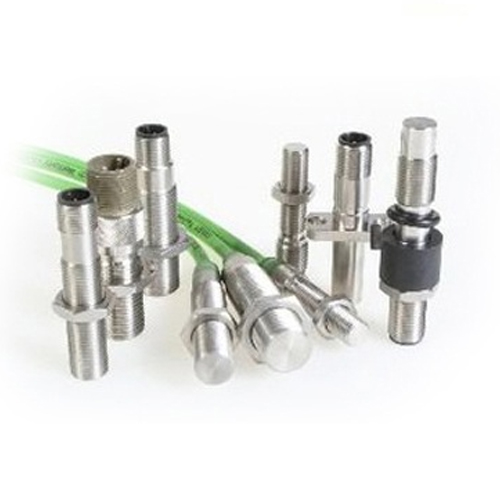
Selecting the right 12v proximity sensor requires careful consideration of several application-specific factors. The sensing distance, or the range at which the sensor can reliably detect an object, is a primary specification. It's crucial to choose a sensor with a range slightly greater than the maximum required to account for installation tolerances and potential drift. The target material is equally important; inductive sensors are ideal for metals, while capacitive sensors can handle non-metals like wood, plastic, or liquids. Environmental conditions such as temperature extremes, potential washdowns (requiring IP67 or IP68 ratings), and exposure to strong electromagnetic interference must also guide the selection. Finally, the physical form factor—whether barrel-shaped, rectangular, or ring-shaped—must suit the available mounting space.
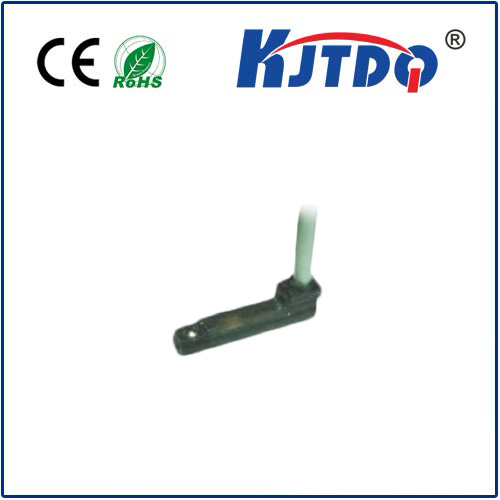
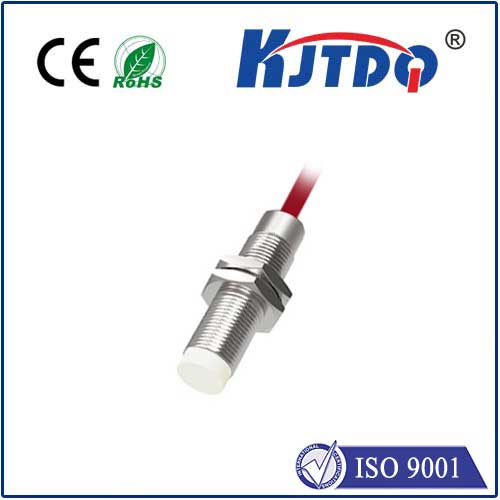
The KJTDQ series of 12v proximity sensors exemplifies these principles of robust design and application versatility. Engineered for precision, these sensors offer consistent performance with minimal blind zones. They feature rugged housings, often made of nickel-plated brass or stainless steel, providing excellent resistance to corrosion and mechanical impact. Advanced models within the series incorporate features like short-circuit protection, reverse polarity protection, and LED status indicators for easy diagnostics, simplifying installation and troubleshooting for maintenance technicians.
In practical application, consider a bottling plant. KJTDQ 12v inductive proximity sensors can be positioned along the conveyor to count bottles as they pass, ensuring each crate is filled correctly. In an automated warehouse, capacitive sensors might detect the presence of cardboard boxes on a lifting platform, signaling the system to begin the next movement sequence. In automotive welding lines, these sensors precisely verify the position of sheet metal panels before the welding robots engage, guaranteeing perfect alignment every time.
The implementation of a 12v proximity sensor system is a strategic investment. It goes beyond mere component replacement; it is an upgrade to the system's intelligence and responsiveness. By providing a continuous stream of accurate positional data, these sensors form the sensory layer of the Internet of Things (IoT) in industry, feeding information to higher-level systems for data analysis and predictive maintenance. This connectivity paves the way for smarter, more adaptive, and more efficient factories.
Ultimately, the humble 12v proximity sensor is a powerhouse of modern automation. Its ability to provide reliable, non-contact detection in challenging conditions makes it indispensable. For engineers and system integrators aiming to boost efficiency, ensure safety, and future-proof their operations, specifying high-performance sensors like the KJTDQ series is a decisive step toward achieving seamless and intelligent industrial automation.