check

check

check

check

check

check
In the intricate world of industrial automation, the reliability of sensing components is non-negotiable. Among the diverse array of sensors, the 15mm PNP Normally Open (NO) proximity sensor utilizing a reed switch mechanism stands out for its unique blend of simplicity, durability, and precision in specific applications. This article delves into the operational principles, key advantages, and ideal use cases for this distinct type of sensor.
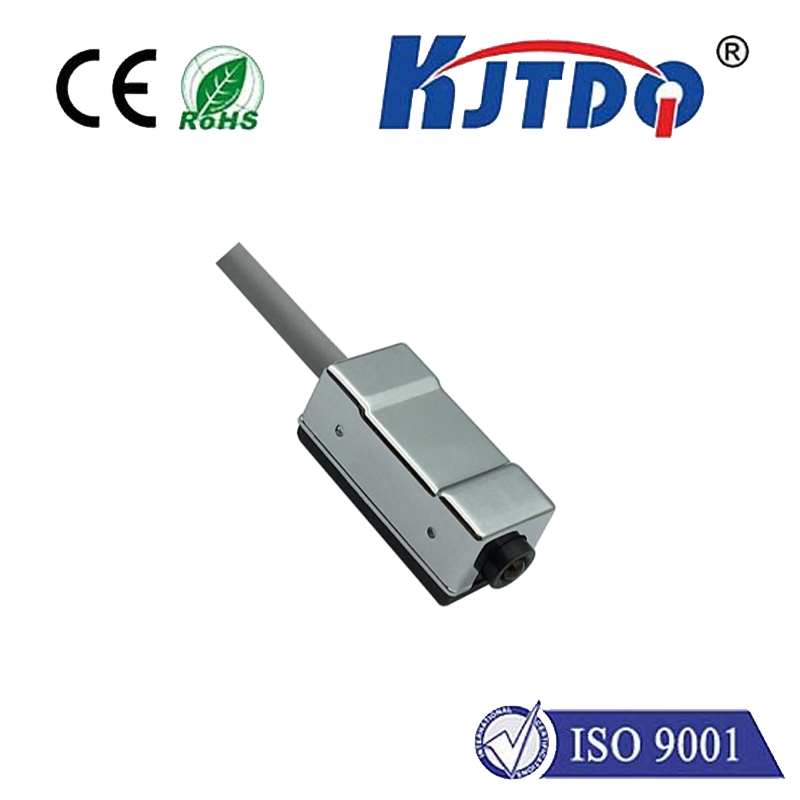
At its core, this sensor integrates a hermetically sealed reed switch within a robust 15mm diameter housing. The reed switch consists of two ferromagnetic reeds enclosed in a glass tube filled with an inert gas. When a magnetic field from an external actuator or target enters its sensing range, the reeds magnetize, attract each other, and make contact, closing the circuit. In the PNP (sourcing) configuration, the output switches to a positive voltage when the target is detected, providing the signal to the connected control system like a PLC. The "Normally Open" designation means the switch contacts are open in the absence of a magnetic field and close upon detection.
The primary advantage of the reed switch-based 15mm PNP NO sensor lies in its exceptional reliability for low-power, dry-circuit applications. The sealed glass enclosure protects the contacts from dust, oxidation, and corrosion, ensuring a long operational life with minimal contact bounce. This makes it supremely suitable for environments where exposure to contaminants is a concern, though it is important to note they are typically not designed for extremely high-current switching. Their operation is virtually unaffected by non-ferrous materials like aluminum, plastic, or liquid, providing a high degree of selectivity. They respond only to magnetic fields, offering precise detection of permanent magnets or ferromagnetic targets.
Compared to more common inductive or capacitive proximity sensors, the 15mm PNP NO reed sensor excels in specific scenarios. A classic application is in safety and position monitoring, such as detecting whether a guard door or access panel is securely closed using a small embedded magnet. They are also invaluable in fluid control systems, where they can be used outside a pipe or non-metallic tank to detect the position of a magnetic float switch, providing a seal-less and leak-proof level sensing solution. Furthermore, in clean or low-voltage electronic environments—such as within medical devices, laboratory equipment, or low-power logic circuits—their clean switching and isolation characteristics are highly beneficial.
When selecting and installing a 15mm PNP NO reed proximity sensor, several factors require consideration. The sensing distance is typically shorter than that of an inductive sensor of the same size and is dependent on the strength of the target magnet. Proper alignment between the sensor and the magnetic target is crucial for consistent operation. Electrically, users must ensure compatibility with the PNP (sourcing) input module of their controller and pay attention to the voltage rating and load current to avoid damaging the delicate reed contacts. The robust 15mm threaded barrel allows for easy mounting in standard fixtures, but care should be taken to avoid mechanical stress on the sensor body.
In summary, the 15mm PNP Normally Open proximity sensor with a reed switch represents a specialized and highly effective solution for magnetic field detection. Its sealed construction offers outstanding environmental resistance and longevity for state detection tasks involving magnets or ferrous metals under clean electrical conditions. For engineers and designers working on machinery safety, liquid level control, or delicate electronic systems, understanding and leveraging this sensor's capabilities can lead to more robust, reliable, and maintenance-friendly automation designs. It remains a testament to the enduring value of elegantly simple technology in solving modern industrial challenges.