check

check

check

check

check

check
In today's rapidly evolving industrial landscape, precision, reliability, and efficiency are non-negotiable. At the heart of countless automation and safety systems lies a critical component: the proximity sensor. Among the various form factors available, the M20 cylindrical housing represents a cornerstone of industrial design, offering a robust and versatile platform for non-contact detection. This guide delves into the world of M20 proximity sensors, exploring their technology, applications, and key selection criteria to empower your next project.
Understanding the M20 Form Factor
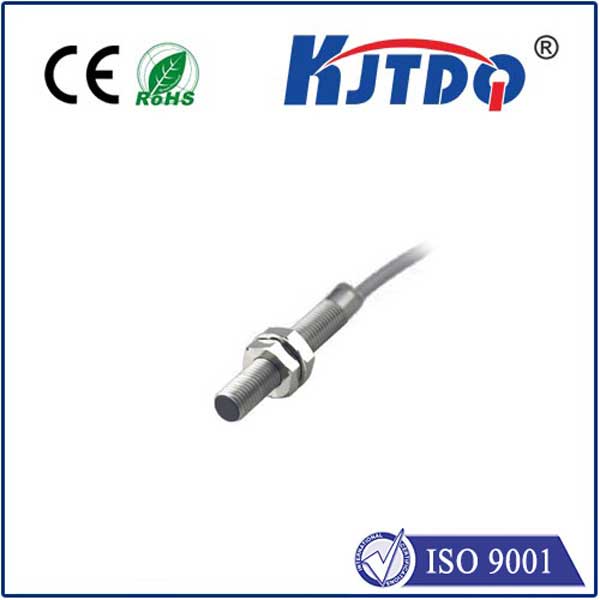
The "M20" designation refers to the sensor's threaded cylindrical housing with a 20-millimeter diameter. This standardized size is a global industry norm, ensuring easy installation and replacement. The threaded body allows for simple mounting in drilled holes or appropriate mounting nuts, providing mechanical stability and protection. The compact yet durable design of an M20 sensor makes it suitable for environments where space is constrained but performance cannot be compromised.
Core Sensing Technologies: Inductive, Capacitive, and Ultrasonic
M20 proximity sensors are not defined by a single technology. The most common type is the inductive sensor. These sensors generate an electromagnetic field. When a metallic object (the target) enters this field, it induces eddy currents within the target, causing a change in the sensor's oscillation amplitude. This change is detected and converted into a switch signal. Inductive M20 sensors are ideal for detecting metals like steel, aluminum, or copper and are widely used in machine tools, material handling, and robotic positioning.
For applications requiring detection of non-metallic materials—such as wood, plastic, glass, or liquids—capacitive M20 sensors are the solution. They function by generating an electrostatic field. Any object that enters this field alters its capacitance, triggering an output switch. They are perfect for level detection in tanks, presence sensing of packaging materials, or monitoring granulates.
While less common in the standard M20 threaded format, ultrasonic sensing principles can also be housed similarly. These sensors measure the time-of-flight of sound waves to detect objects and measure distances, useful for clear object detection and certain level control applications.
Key Features and Performance Parameters
When selecting an M20 proximity sensor, several technical specifications are paramount:
* Sensing Distance: The nominal operating distance (e.g., 5mm, 8mm, 10mm) for which the sensor is rated. Always consider a safety factor.
* Output Type: Typically PNP (sourcing) or NPN (sinking) transistor outputs, or sometimes analog (4-20mA, 0-10V). The choice must match your control system (e.g., PLC input card).
* Connection Method: Pre-wired cable or quick-disconnect (connector) variants for easier maintenance.
* Housing Material: Often made of nickel-plated brass or stainless steel (e.g., V2A, V4A) for corrosion resistance.
* Protection Rating: Look for high IP (Ingress Protection) ratings like IP67 or IP69K, indicating resilience against dust and water ingress, crucial for washdown or outdoor applications.
* Switching Frequency: How many on/off cycles per second the sensor can handle, important for high-speed counting or positioning.
Applications Across Industries
The versatility of the M20 proximity sensor leads to its ubiquitous presence. In automotive manufacturing, they ensure robotic arms are in position for welding. On packaging lines, they count bottles or detect the presence of a label. In metalworking, they confirm the position of a drill bit or the end of a metal sheet. They are fundamental in conveyor systems for object detection and in automated storage systems for pallet positioning. Their robust nature also makes them suitable for harsh environments like agricultural machinery or forestry equipment.
Installation and Maintenance Best Practices
Correct installation is critical for optimal performance. Ensure the sensor is mounted securely to avoid vibration-induced errors. Maintain the specified sensing distance from the target, and be mindful of the sensor's "blind zone" immediately in front of its face. For inductive sensors, remember that different metals and target sizes can affect the actual sensing range. Avoid mounting multiple inductive sensors directly opposite each other to prevent mutual interference. Regular maintenance primarily involves keeping the sensing face clean from debris, oil, or metal chips that could hinder operation.
Conclusion: Making the Informed Choice
The M20 proximity sensor is far more than just a simple switch. It is a sophisticated, reliable, and indispensable component in modern industrial automation. By understanding the different sensing technologies—inductive for metals, capacitive for nearly all materials—and carefully evaluating specifications like sensing distance, output type, and environmental protection, engineers and technicians can select the perfect M20 sensor for their specific challenge. This ensures not only the smooth operation of machinery but also enhances safety, reduces downtime, and contributes to overall operational excellence. Investing time in the right sensor selection pays dividends in system performance and longevity.