check

check

check

check

check

check
In the rapidly evolving landscape of industrial automation, precision and reliability are non-negotiable. The EC5525NPAP proximity sensor stands as a pivotal component in this domain, engineered to deliver exceptional performance in diverse and demanding environments. This inductive proximity sensor is designed to detect metallic objects without physical contact, thereby minimizing wear and tear and ensuring long-term operational stability. Its robust construction allows it to withstand harsh conditions, including exposure to dust, moisture, and temperature variations, making it an ideal choice for manufacturing lines, packaging machinery, and material handling systems.
The core technology of the EC5525NPAP revolves around its high-frequency oscillation circuit. When a metallic target enters its sensing field, it induces eddy currents that dampen the oscillations, triggering a solid-state output signal. This mechanism allows for remarkably accurate detection, with a consistent sensing distance that reduces errors in positioning and counting applications. The sensor's NPN normally-open (NO) configuration, indicated by the "NPAP" designation, is a common and versatile output type compatible with a wide range of programmable logic controllers (PLCs) and control systems. This compatibility simplifies integration into existing setups, reducing downtime and installation complexity.
One of the standout features of the EC5525NPAP is its embedded protection circuitry. It is equipped with safeguards against short-circuit, reverse polarity, and overcurrent conditions. This built-in resilience not only protects the sensor itself from accidental damage but also shields the broader control system from potential faults, enhancing overall system safety and reducing maintenance costs. The sensor's housing is typically crafted from nickel-plated brass or stainless steel, offering excellent resistance to corrosion and mechanical impact, which is crucial for longevity in industrial settings.
Practical applications of this sensor are extensive. On an automotive assembly line, for instance, the EC5525NPAP can be used to verify the presence of engine blocks or wheel hubs with pinpoint accuracy, ensuring that each robotic arm performs its task at the correct moment. In food and beverage packaging, it reliably detects metal lids or cans on high-speed conveyors, coordinating the actions of fillers, cappers, and labelers. Its ability to function flawlessly amidst electromagnetic interference (EMI) common in factories further underscores its reliability.
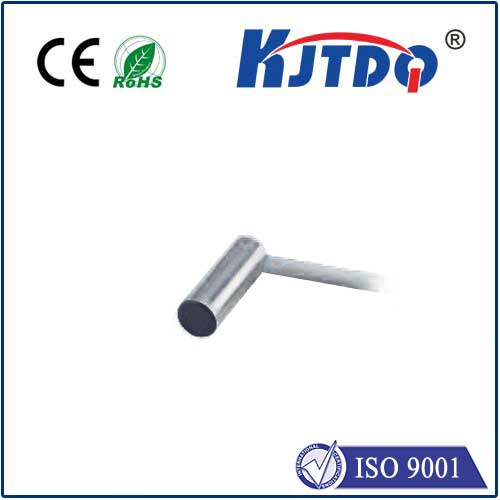
When selecting a proximity sensor like the EC5525NPAP, engineers consider factors such as sensing range, target material, output type, and environmental ratings. This particular model excels by offering a stable sensing performance even when faced with different types of steel, aluminum, or copper alloys. Its compact cylindrical form factor, often in an M12 or M18 threading, allows for easy mounting in space-constrained locations. Regular performance verification, ensuring the sensing face is clean and free from obstructions, is recommended to maintain optimal functionality over its extended service life.
The integration of such advanced sensors is a cornerstone of the Internet of Things (IoT) and Industry 4.0 initiatives. By providing reliable, real-time data on machine status and component position, the EC5525NPAP contributes to smarter, data-driven decision-making. It enables predictive maintenance schedules, reduces material waste from misalignments, and increases overall production throughput. In essence, this sensor is more than just a switch; it is a critical data point that feeds into the digital nervous system of a modern smart factory.
Ultimately, the value proposition of the EC5525NPAP proximity sensor lies in its blend of durability, precision, and ease of use. It empowers manufacturers to achieve higher levels of automation efficiency, consistency, and safety. By reliably converting physical presence into an electrical signal, it forms an invisible yet indispensable link in automated control chains, driving productivity and supporting the relentless advancement of industrial technology. For system designers and maintenance technicians seeking a proven solution for non-contact metal detection, this sensor represents a trusted and effective component.