check

check

check

check

check

check
In the world of industrial automation and machine control, precision and reliability are non-negotiable. Among the myriad of components that ensure seamless operation, the NPN proximity sensor stands out as a fundamental workhorse. This guide delves into the core functionality, key applications, and critical advantages of NPN proximity sensors, providing a clear understanding of why they are a preferred choice for countless engineers and system integrators.
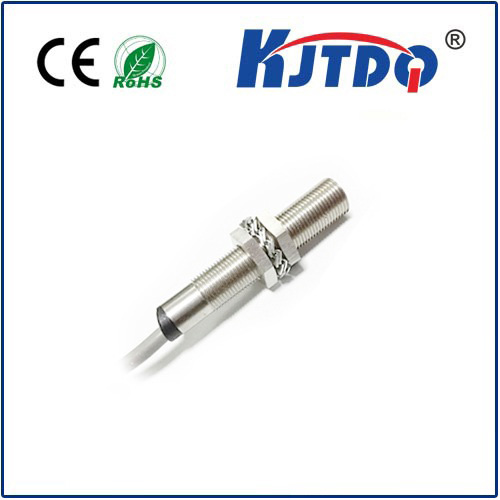
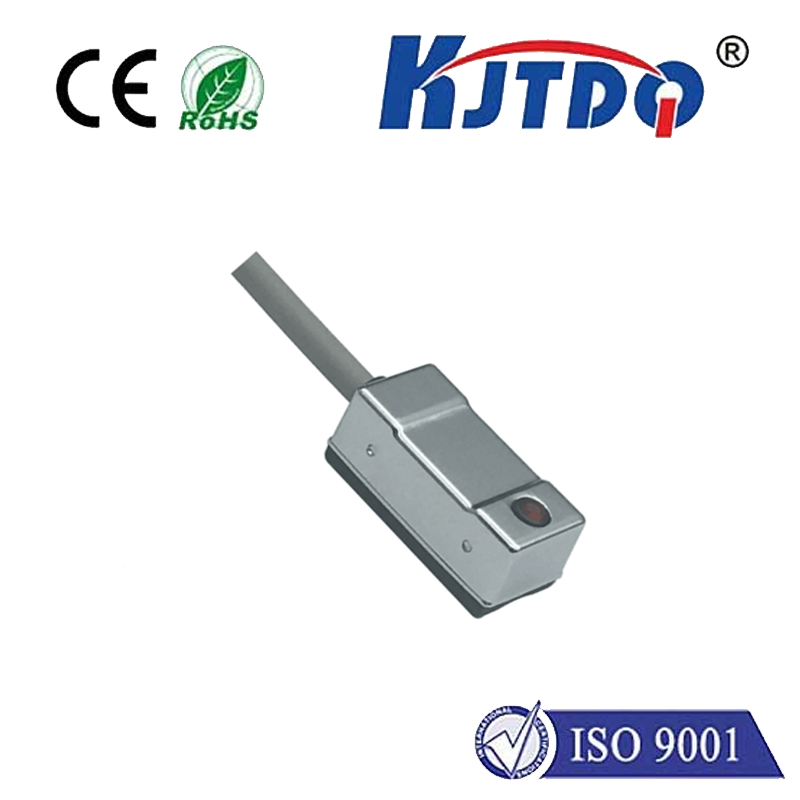
An NPN proximity sensor is a type of non-contact electronic sensor that detects the presence or absence of a metallic object within its sensing range. The "NPN" designation refers to its internal transistor output configuration. In simple terms, when an NPN sensor detects a target, it switches its output signal by connecting the load to the ground, or common negative voltage. This is often described as a "sinking" output. This operational principle is crucial for compatibility with various programmable logic controllers (PLCs) and other control systems, particularly those common in European and Asian markets.
The core technology behind these sensors is typically inductive sensing. The sensor generates an electromagnetic field from its active face. When a metal object enters this field, it causes eddy currents to form on the object's surface, which in turn dampens the oscillation within the sensor's internal coil. The sensor's circuitry detects this change and triggers the solid-state NPN transistor to switch states. This entire process happens instantaneously and without any physical contact, leading to exceptional longevity and wear-free operation compared to mechanical limit switches.
The applications for NPN proximity sensors are vast and varied. They are indispensable in manufacturing assembly lines for tasks such as part counting, position verification, and end-of-travel detection. In packaging machinery, they ensure products are correctly positioned for wrapping or boxing. Robotics heavily relies on these sensors for precise arm positioning and object detection. Furthermore, they play a vital role in safety systems, acting as interlock sensors on machine guards to prevent operation when a door is open. Their robustness allows them to perform reliably in harsh environments with dust, moisture, and vibration, where mechanical switches would quickly fail.
Choosing an NPN sensor offers several distinct advantages. Their solid-state design guarantees a high number of operating cycles, significantly reducing maintenance costs and downtime. The fast switching speed enables high-speed production processes without missing a detection event. Their inherent resistance to environmental contaminants makes them suitable for demanding industrial settings. From a wiring and system design perspective, the NPN (sinking) configuration is often simpler to integrate into control systems that are designed with a common positive voltage scheme, providing a straightforward and reliable interface.
When selecting an NPN proximity sensor for a specific application, several parameters must be considered. The sensing distance, or nominal range, must be appropriate for the required detection gap. The housing material, such as nickel-plated brass or stainless steel, should be chosen based on the environmental conditions. The electrical specifications, including operating voltage and output current, must match the control system's requirements. Finally, the physical form factor—whether barrel-shaped, rectangular, or ring-shaped—must fit the mechanical constraints of the installation.
In conclusion, the NPN proximity sensor is more than just a component; it is a cornerstone of modern industrial automation. Its non-contact operation, durability, and reliable NPN sinking output make it an essential tool for engineers seeking to build efficient, safe, and high-performing systems. By understanding its working principle and application strengths, professionals can leverage this technology to solve complex detection challenges and drive operational excellence across countless industries. For system designers and maintenance technicians alike, mastering the use of the NPN proximity sensor is a key step toward optimizing any automated process.