check

check

check

check

check

check
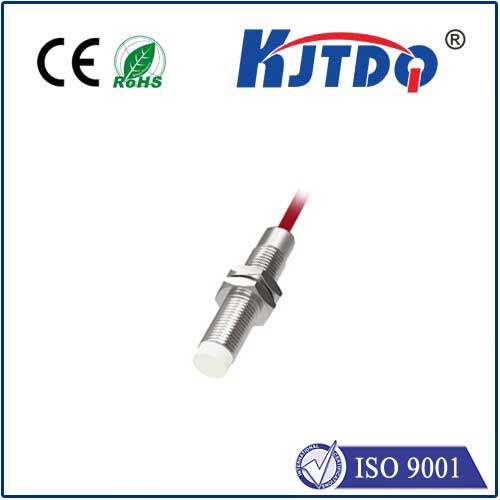
In the dynamic landscape of industrial automation, precision, safety, and efficiency are paramount. The advent of long range proximity sensors marks a significant leap forward, offering capabilities that transcend traditional sensing limitations. These advanced devices are engineered to detect the presence or absence of objects at considerable distances without any physical contact, fundamentally transforming operational workflows across diverse sectors.
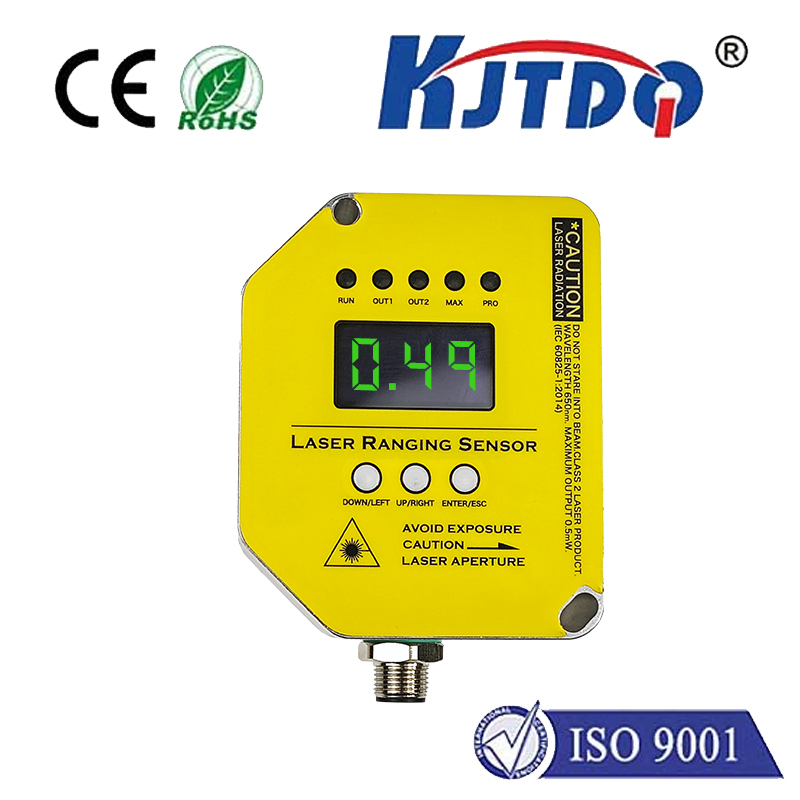
Unlike standard inductive or capacitive sensors with limited ranges, long range proximity sensors utilize sophisticated technologies such as ultrasonic, laser, or time-of-flight (ToF) principles. This allows for reliable detection over distances that can extend from several centimeters to multiple meters. The core advantage lies in their ability to provide early warning and precise measurement in applications where close proximity is either impractical or hazardous. For instance, in large-scale material handling systems, these sensors can monitor the fill level of bulk containers or the position of crane hooks from a safe distance, preventing overflows and collisions. In automated guided vehicle (AGV) networks, they ensure smooth navigation and obstacle avoidance in expansive warehouse environments, enhancing both throughput and safety.
The integration of these sensors significantly boosts operational efficiency. By enabling non-contact detection at extended ranges, they reduce mechanical wear and tear associated with physical switches or shorter-range sensors that require objects to be very close. This translates to lower maintenance costs and increased system uptime. Furthermore, their high accuracy ensures consistent process control. In forestry and agricultural machinery, long range sensors assist in precise positioning and object avoidance, optimizing complex tasks like logging or harvesting. Security and perimeter monitoring systems also benefit immensely, as these sensors can detect intrusions over wide areas with high reliability, day or night, and in various weather conditions.
Durability and adaptability are hallmarks of modern long range proximity sensors. Designed to withstand harsh industrial environments, they are often housed in robust enclosures with high ingress protection (IP) ratings, resisting dust, moisture, and extreme temperatures. Their output signals are easily integrated with Programmable Logic Controllers (PLCs) and Industrial Internet of Things (IIoT) platforms, facilitating real-time data acquisition and predictive maintenance strategies. This connectivity is crucial for building smarter, more responsive industrial ecosystems.
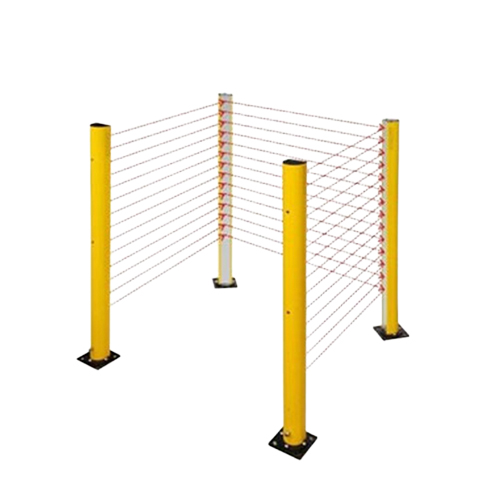
The impact on workplace safety cannot be overstated. By allowing monitoring and control from a distance, these sensors minimize the need for personnel to enter dangerous zones near heavy machinery, high-temperature processes, or moving parts. They act as a critical component in safety interlock systems, ensuring equipment only operates when the path is clear. This proactive approach to hazard prevention helps companies comply with stringent safety regulations and protects valuable human resources.
Looking ahead, the evolution of long range sensing technology continues. Innovations are focusing on enhancing accuracy, reducing power consumption, and integrating advanced features like background suppression and improved noise immunity. As industries increasingly embrace automation and smart manufacturing, the demand for reliable, long-range detection solutions will only grow. These sensors are not merely components; they are enablers of a more efficient, safe, and intelligent industrial future.
In conclusion, the long range proximity sensor stands as a pivotal innovation in measurement and control technology. Its ability to deliver reliable, non-contact detection over extended distances addresses critical challenges in automation, logistics, security, and safety. For engineers and system integrators seeking to optimize performance and future-proof their operations, understanding and implementing this technology is an essential step forward.