check

check

check

check

check

check
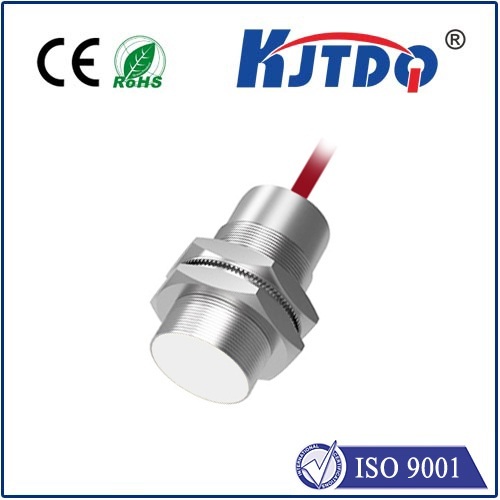
In the intricate world of industrial automation and machine safety, the choice of a sensor's electrical output is a fundamental decision that impacts system logic, safety, and reliability. Among the various configurations, the normally closed (NC) proximity sensor stands out as a critical component for fail-safe design. Unlike its normally open (NO) counterpart, a normally closed proximity sensor is designed to complete an electrical circuit in its idle, non-activated state. When the sensor detects a target within its sensing range, it opens the circuit, interrupting the current flow. This inherent behavior makes it a cornerstone for applications where safety is paramount.
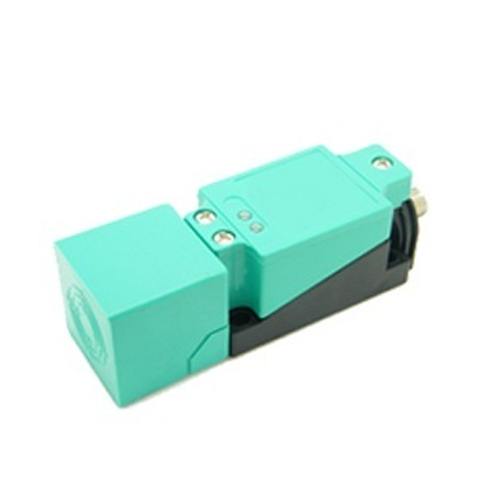
The principle of operation for an inductive proximity sensor, a common type used for metal detection, remains the same regardless of the output state. It generates an electromagnetic field. When a metallic target enters this field, it causes eddy currents within the target, which dampens the oscillator's amplitude. This change is detected by the sensor's circuitry. For a normally closed version, this detection event triggers the internal solid-state switch (like an NPN or PNP transistor) to change from a conducting "ON" state to a non-conducting "OFF" state, thereby breaking the circuit to the connected load, such as a programmable logic controller (PLC) input or a relay coil.
The primary advantage of using a normally closed proximity sensor lies in its fail-safe characteristic. Consider a critical safety interlock on a machine guard door. If a normally closed sensor is monitoring the door, the circuit is complete (and a "TRUE" or "1" signal is sent to the control system) when the door is safely shut. If the door opens, the sensor is activated, breaking the circuit and sending a "FALSE" or "0" signal, which can be programmed to immediately halt the machine. Crucially, if a fault occurs—such as a wire break, power loss to the sensor, or a sensor failure—the circuit will also be broken, mimicking the "door open" safety state and causing a machine stop. This default-to-safety is the essence of fail-safe design. A normally open sensor in the same application would require the circuit to close to signal danger; a wire break could leave the machine running unsafely.
This configuration is extensively used in safety circuits, emergency stop monitoring, and critical position verification where an unexpected open circuit must initiate a safe shutdown. For instance, monitoring the position of a robotic arm in a restricted zone or confirming the closure of a hydraulic press guard often employs normally closed sensors. It simplifies safety logic, as a loss of signal directly equates to an alarm condition.
However, integrating normally closed sensors requires careful consideration of the control system's logic. Many PLCs are wired to source current and expect a "high" signal (24V) for an active input. With a standard NPN normally closed sensor (sinking output), the wiring differs from a typical NPN normally open setup. The sensor's output wire is connected to the PLC input, and the PLC input's common is connected to the positive voltage. When idle (circuit closed), current flows from the positive, through the closed sensor switch, into the PLC input, registering as "TRUE." When activated, the switch opens, current stops, and the PLC input sees "FALSE." Understanding this wiring and the resulting signal state is crucial to avoid logic errors.
While offering superior safety for critical functions, normally closed sensors are not always the universal choice. For standard counting or routine part detection tasks where a fault does not pose a direct hazard, normally open sensors are perfectly adequate and often align more intuitively with standard programming logic (e.g., sensor sees part = TRUE). The decision hinges on a thorough risk assessment of the application.
In conclusion, the normally closed proximity sensor is not merely a variant but a deliberate selection for enhanced safety and reliability. Its design ensures that the most common failures—wire breaks and loss of power—result in a safe system state. Engineers and technicians must grasp its operational principle, wiring implications, and ideal application scenarios to effectively harness its fail-safe potential. Proper selection between normally closed and normally open configurations is a key step in building robust, dependable, and safe automated systems that protect both machinery and personnel.