check

check

check

check

check

check
In the intricate world of industrial automation and machinery, the ability to detect objects without physical contact is not just a convenience—it's a cornerstone of efficiency, safety, and precision. Among the myriad of components that make this possible, proximity sensors stand out. Today, we focus on a specific model that has garnered attention for its robust performance: the CJF18-05NA proximity sensor. This guide delves into its workings, applications, and the distinct advantages it offers to engineers and system integrators.
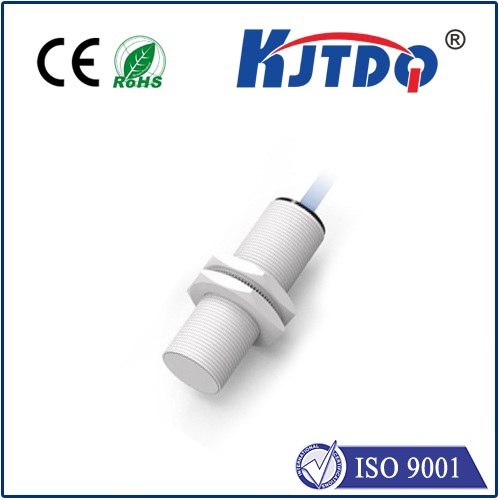
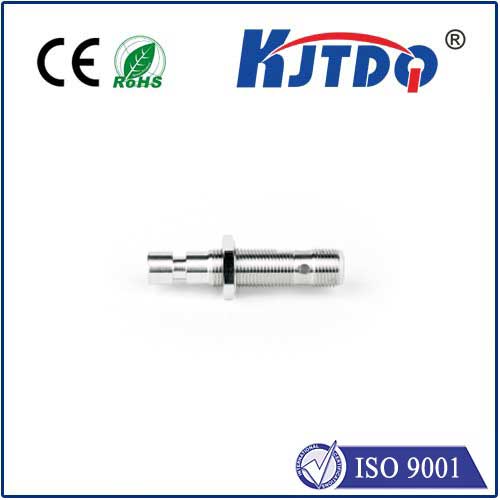
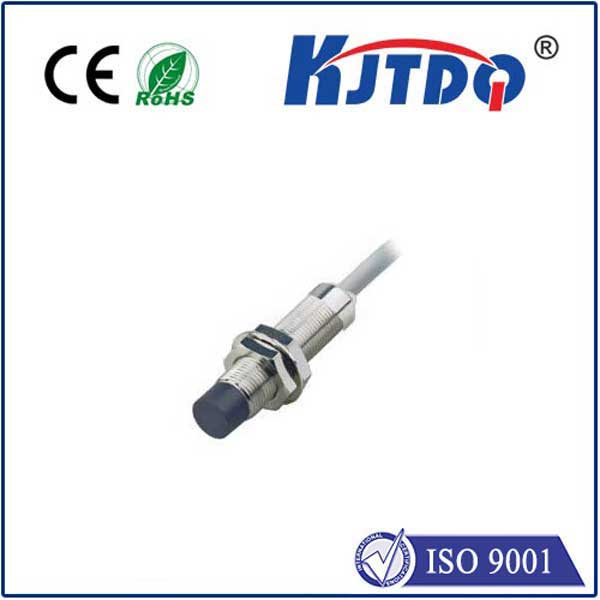
At its core, the CJF18-05NA is an inductive proximity sensor. This technology operates on a simple yet brilliant principle. The sensor generates an electromagnetic field from its sensing face. When a metallic object enters this field, it induces eddy currents within the object. The sensor detects the change in the oscillation amplitude caused by these currents and triggers a solid-state switch, sending a clear digital signal to the control system. The "NA" in its designation typically signifies a normally open (NO) output configuration, meaning the output circuit closes (turns on) when a target is detected. The 18mm diameter cylindrical housing and 5mm sensing distance are key identifiers of its physical and operational specs.
What sets the CJF18-05NA apart in a crowded market? First is its unwavering reliability. Designed for harsh industrial environments, it often features robust construction resistant to dust, moisture, and oil splashes. Its non-contact nature means there is no mechanical wear on the sensor itself, leading to a dramatically extended service life compared to mechanical limit switches. This translates directly into reduced maintenance costs and less machine downtime.
Precision is another hallmark. The 5mm sensing range is consistent and repeatable, allowing for exact positioning of metal parts. Whether it's counting gears on a conveyor, confirming the presence of a drill bit, or ensuring a robotic arm is in the correct starting position, the CJF18-05NA provides the accurate feedback necessary for seamless automation. Furthermore, its high switching frequency enables it to detect objects moving at high speeds, making it suitable for fast-paced production lines.
The applications for this sensor are vast and varied. In automotive assembly plants, it verifies the presence of engine blocks or wheel hubs. On packaging machinery, it ensures caps are correctly placed on bottles. Within CNC machining centers, it acts as a tool setting probe or a part-positioning verification device. Material handling systems rely on sensors like the CJF18-05NA to manage inventory on palletizers and sorters. Its versatility makes it a fundamental building block in modern manufacturing.
Selecting and installing the CJF18-05NA requires attention to detail. It is crucial to match the sensor to the target material; inductive sensors are specifically designed for metals, with different performance characteristics for steel, aluminum, and copper. The mounting must be secure, with adequate clearance from surrounding metal structures to prevent false triggering. Electrical connection is typically straightforward, involving a three-wire setup (brown for DC+, blue for DC-, and black for the output signal) that integrates seamlessly with standard Programmable Logic Controllers (PLCs).
In conclusion, the CJF18-05NA proximity sensor exemplifies the power of simple, effective technology to solve complex industrial challenges. Its durability, accuracy, and speed form a trifecta of benefits that enhance operational reliability. For engineers seeking a proven solution for non-contact metal detection, understanding and utilizing the CJF18-05NA is a step toward building more resilient, efficient, and intelligent automated systems. It's not merely a component; it's a silent guardian of productivity on the factory floor.