check

check

check

check

check

check
In the world of industrial automation and machinery, precision and reliability are non-negotiable. This is where the small inductive proximity sensor, a cornerstone of modern sensing technology, proves its immense value. These compact, robust devices are engineered to detect the presence or absence of metallic objects without any physical contact, ensuring longevity and consistent performance in demanding environments. Unlike optical or capacitive sensors, inductive proximity sensors operate on the principle of electromagnetic induction. The core component is a coil wound around a ferrite core, which generates an oscillating electromagnetic field. When a metallic target enters this field, eddy currents are induced on the target's surface. This causes a change in the oscillation amplitude within the sensor, which is then detected and converted into a solid-state output signal, typically switching a load on or off.
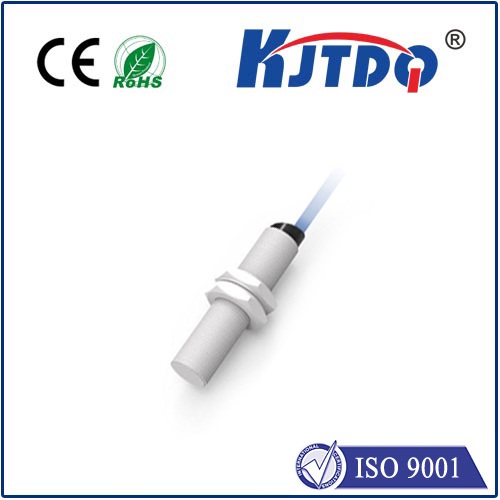
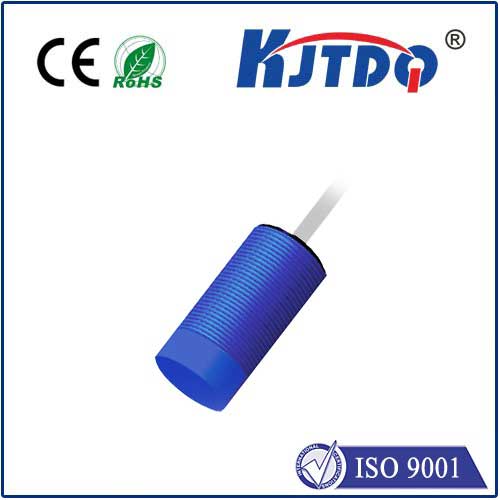
The defining characteristic of the "small" inductive proximity sensor is its remarkably compact housing, often in cylindrical shapes like M5, M8, or M12. This miniaturization allows for installation in space-constrained applications where traditional sensors simply cannot fit. Despite their size, they offer impressive sensing ranges, typically from 0.5mm to 4mm for ferrous metals like steel. Their housing is usually constructed from nickel-plated brass, stainless steel, or high-grade PBT plastic, providing exceptional resistance to shock, vibration, oils, and coolants. This ruggedness makes them ideal for harsh settings such as CNC machine tools, robotic end-effectors, assembly lines, and material handling systems.
One of the key advantages of the KJTDQ series and similar high-quality small inductive sensors is their exceptional switching frequency and repeat accuracy. They can detect objects at incredibly high speeds, making them perfect for counting small parts, monitoring rotational speed, or verifying the position of a machine component. Furthermore, they are largely immune to environmental factors like dust, dirt, moisture, and ambient light, which often plague other sensing methods. Their solid-state design means no moving parts to wear out, leading to a virtually maintenance-free operation and a long service life, which translates directly into reduced downtime and lower total cost of ownership.
When selecting a small inductive proximity sensor for your application, several critical factors must be considered. First is the target material; standard sensors are optimized for steel, while models with reduced sensing ranges are available for non-ferrous metals like aluminum or copper. The sensing distance, or "Sn," must be chosen with a safety margin to account for installation tolerances and target variations. Output configuration is another vital choice: NPN (sinking) or PNP (sourcing) transistor outputs are standard, with 2-wire, 3-wire, or 4-wire (with IO-Link) versions available for different PLC and control system integrations. The housing style—shielded (flush-mountable) or unshielded—also affects the sensing field and installation. Shielded sensors can be mounted flush in metal without affecting performance, while unshielded types offer a slightly longer range but require non-metallic surroundings.
Installation and wiring are straightforward but require attention to detail. Ensuring the correct voltage supply (commonly 10-30V DC) and proper grounding is essential. The sensor must be positioned so that the target approaches the sensing face correctly, and adequate clearance from other metal objects should be maintained to prevent false triggering. For the most demanding applications, advanced features found in premium lines like KJTDQ include short-circuit protection, reverse polarity protection, and enhanced temperature stability, ensuring reliable operation from sub-zero conditions to high-temperature industrial ovens.
From packaging machinery that verifies foil seals to robotic arms that precisely locate gripper positions, the small inductive proximity sensor is an indispensable component. Its ability to provide a reliable, contact-free signal in a tiny, tough package empowers engineers to design smarter, faster, and more efficient automated systems. As Industry 4.0 and smart manufacturing evolve, these sensors continue to be fundamental building blocks for data acquisition and process control, proving that great capability indeed comes in small, robust packages.