check

check

check

check

check

check
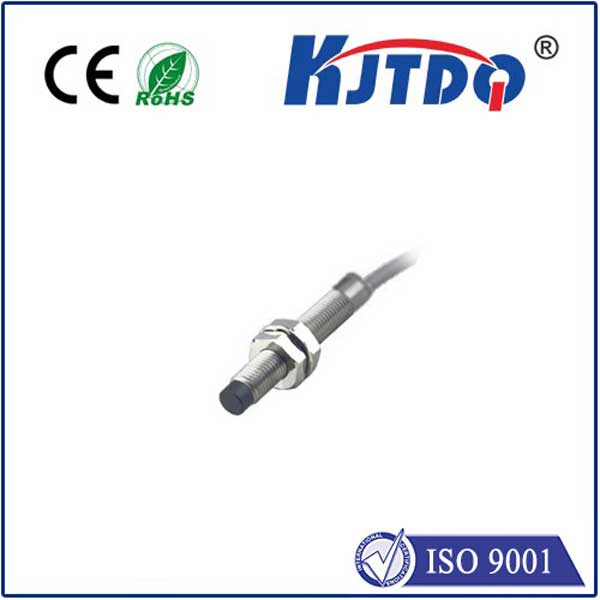
In the rapidly evolving landscape of industrial automation and smart device integration, the demand for reliable, precise, and efficient sensing solutions has never been higher. Among the myriad of components that power modern machinery and electronics, proximity sensors stand as critical enablers of non-contact detection. The TL-W5MC1 emerges as a noteworthy contender in this field, designed to meet rigorous application demands with its advanced technological profile. This guide delves into the core aspects of this sensor, exploring its operational principles, key specifications, and diverse application scenarios to provide a comprehensive understanding of its capabilities.
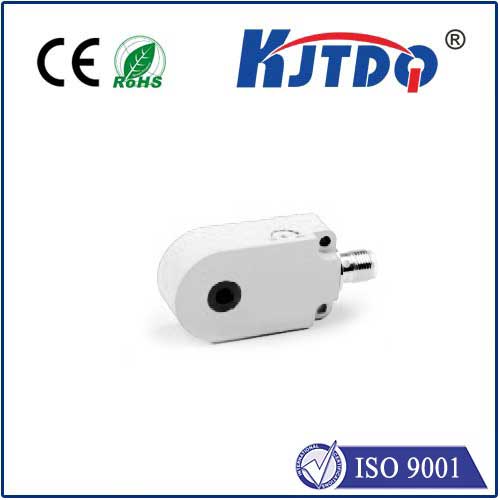
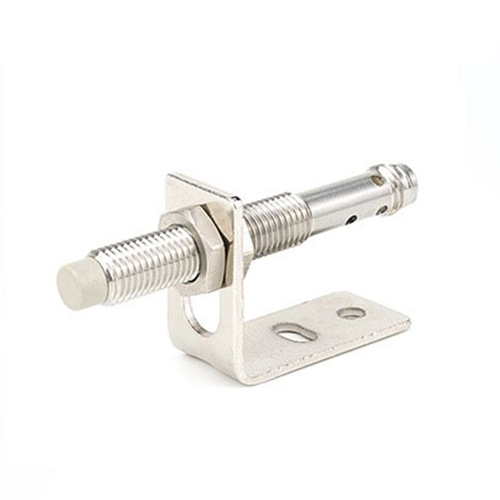
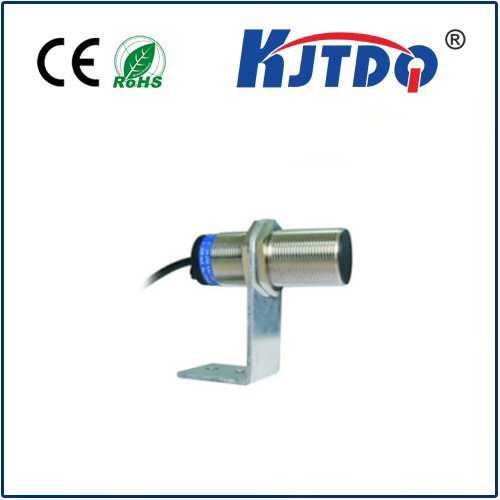
At its heart, the TL-W5MC1 is an inductive proximity sensor. This type of sensor generates an electromagnetic field from its sensing face. When a metallic object enters this field, it induces eddy currents within the object, causing a change in the oscillation amplitude within the sensor's internal circuit. This change is detected and processed, triggering a solid-state output switch. The "TL-W5MC1" designation typically follows industry-standard coding, where details like sensing distance, housing style, output type, and connection method are embedded. For precise specifications, consulting the official manufacturer datasheet is paramount, as parameters can vary.
The performance of any proximity sensor is defined by several critical parameters. The nominal sensing distance, often denoted as Sn, is a fundamental spec. For a model like the TL-W5MC1, this distance is carefully calibrated, often in the range suitable for medium-range detection tasks in industrial settings. Factors such as the target material—specifically ferrous metals like iron and steel versus non-ferrous metals like aluminum or copper—can significantly affect the effective sensing range. Repeat accuracy, the sensor's ability to consistently detect an object at the same point, is another vital metric, ensuring reliability in high-speed or precision assembly lines.
Environmental robustness is a non-negotiable feature for industrial components. The TL-W5MC1 is typically housed in a rugged casing, often made of nickel-plated brass or stainless steel, offering high resistance to physical impacts, vibrations, and corrosive elements. Its ingress protection rating, likely IP67 or higher, signifies complete protection against dust ingress and the ability to withstand temporary immersion in water. This makes it suitable for challenging environments like washdown areas in food processing or outdoor machinery. Furthermore, built-in protection against short-circuits, overloads, and reverse polarity enhances its operational longevity and system safety.
Electrical output configuration is a key selection criterion. The TL-W5MC1 commonly comes in two-wire or three-wire DC versions. A three-wire DC sensor, for instance, provides separate wires for power supply positive, power supply negative, and the output signal (often NPN or PNP transistor output), allowing for easier integration into programmable logic controller systems. The switching frequency, or the number of on/off cycles per second, determines how fast the sensor can respond, a crucial factor in high-speed counting or positioning applications.
The practical applications of the TL-W5MC1 proximity sensor span a vast array of industries. In automated manufacturing, it is indispensable for part presence verification on conveyor belts, end-of-travel detection on robotic arms, and precise positioning in CNC machinery. Within the packaging industry, it ensures accurate bottle cap placement or carton counting. Automotive assembly lines utilize these sensors for robotic welding position checks and component insertion verification. Beyond heavy industry, its principles find use in consumer electronics for features like automatic screen blanking when a phone is held to the ear, though specific models for such applications differ.
When integrating the TL-W5MC1 or any similar sensor, several installation and operational considerations must be heeded. Mounting flush or non-flush can affect the sensing range; non-flush mounting typically allows for a longer range. Ensuring adequate clearance from surrounding metal objects prevents false triggering due to the sensor's electromagnetic field. Proper wiring according to the datasheet, including the use of surge suppressors for inductive loads, is essential for stable performance. Regular maintenance, though minimal, involves keeping the sensing face clean from debris, oil, or metal chips that could interfere with detection.
Comparing the TL-W5MC1 to other sensing technologies highlights its niche. Unlike capacitive sensors that detect both metallic and non-metallic materials, inductive sensors like the TL-W5MC1 are exclusively for metals, offering higher stability and resistance to environmental contaminants like dust or moisture compared to optical sensors. Ultrasonic sensors, while effective for longer ranges and various materials, may have slower response times and higher costs for simple metal detection tasks. The choice ultimately hinges on the specific target material, required range, environmental conditions, and cost constraints.
In conclusion, the TL-W5MC1 proximity sensor represents a mature and highly refined solution for non-contact metal detection. Its design prioritizes accuracy, durability, and seamless integration into complex control systems. By understanding its technical specifications—from sensing distance and output type to environmental ratings—engineers and system integrators can effectively leverage its capabilities to enhance automation efficiency, improve safety, and ensure process reliability. As Industry 4.0 continues to advance, components like the TL-W5MC1 will remain foundational building blocks in the intelligent systems of tomorrow, bridging the gap between physical actions and digital control.