check

check

check

check

check

check
In the dynamic world of industrial automation, precision, reliability, and durability are non-negotiable. At the heart of countless assembly lines, robotic arms, and material handling systems lies a critical component often overlooked: the inductive sensor proximity switch. This robust device is the silent sentinel, enabling seamless, contactless detection and forming the backbone of modern control systems. Unlike mechanical switches prone to wear and tear, inductive sensors operate on a fundamental electromagnetic principle, offering a maintenance-free solution for harsh industrial environments.
The core technology of an inductive sensor proximity switch involves an oscillator circuit that generates a high-frequency electromagnetic field at its active face. When a metallic object—typically ferrous metals like steel or iron, or non-ferrous metals like aluminum, copper, or brass—enters this field, eddy currents are induced on the surface of the target. These eddy currents absorb energy from the oscillator, causing a change in its amplitude. This change is detected by the sensor's circuitry, which then triggers a solid-state output signal to switch the state of the connected device, such as a PLC (Programmable Logic Controller), without any physical contact.
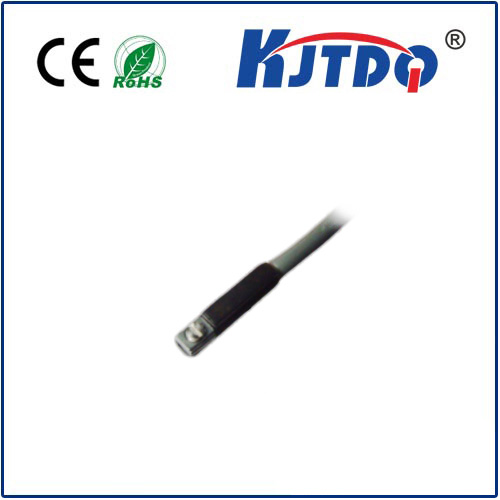
This contactless operation is the primary advantage. It eliminates mechanical failure points, drastically reduces maintenance costs, and ensures a remarkably long operational life, often rated for tens of millions of switching cycles. The KJTDQ series of inductive proximity sensors exemplifies this reliability, engineered to perform consistently in challenging conditions filled with dust, oil, coolant, and vibrations. Their hermetically sealed housings, often in rugged materials like nickel-plated brass or stainless steel, provide exceptional resistance to environmental factors.
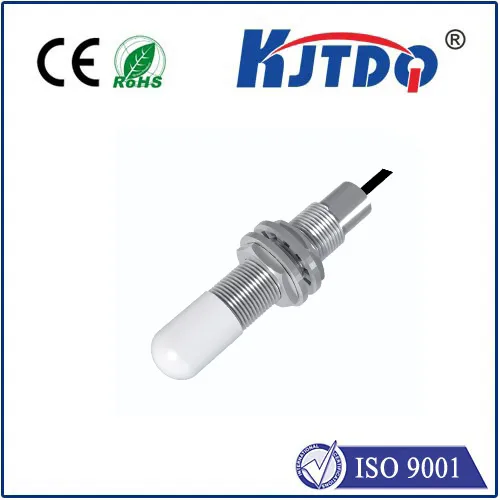
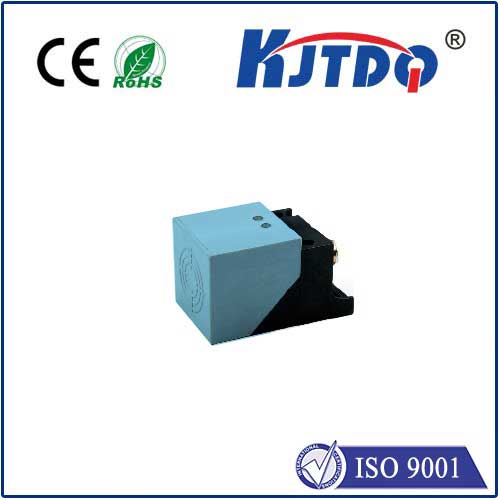
When selecting an inductive sensor for an application, several key specifications must be considered. The sensing range, or nominal switching distance (Sn), is crucial and varies by model and target material. It's important to note that the effective sensing distance for non-ferrous metals is typically less than for steel. The housing style—barrel (cylindrical), rectangular, or ring-shaped—must suit the mounting constraints. Output configuration is another vital choice: NPN (sinking) or PNP (sourcing) transistor outputs, which define how the sensor interfaces with the control system's DC circuitry. Additionally, the presence of built-in protection features like short-circuit, overload, and reverse polarity protection, as found in the KJTDQ line, safeguards both the sensor and the connected equipment from wiring errors and electrical faults.
The applications are virtually limitless. They are indispensable for precise position detection of machine parts, end-of-travel limits on actuators, counting metallic objects on a conveyor, monitoring the presence of tools in a CNC machine, or verifying the closed position of a metallic door or guard. In high-speed packaging machinery, they ensure products are correctly positioned for sealing or labeling. Within automotive manufacturing, they provide the precise feedback needed for robotic welding and part placement.
To ensure optimal performance and longevity, proper installation and setup are paramount. The sensor must be mounted securely to minimize vibration effects. It is critical to maintain the recommended lateral and axial distance from other metal objects or adjacent sensors to prevent mutual interference, a phenomenon known as "shielding." For flush-mountable models, they can be installed level with a metal surface, while non-flush types require a clear zone around the sensing face. Always refer to the manufacturer's datasheet for specific mounting guidelines and derating factors for different target materials.
The evolution of inductive sensor technology continues. Modern variants offer advanced diagnostics through IO-Link communication, enabling predictive maintenance by providing data on operating hours, temperature, and signal strength. Miniaturized designs allow for integration into increasingly compact machinery. The enduring principle, however, remains: providing a robust, contactless switching solution for metallic objects.
For system integrators and maintenance engineers, choosing a proven and reliable component like the KJTDQ inductive proximity switch is an investment in uptime and productivity. Its ability to deliver unwavering performance under pressure makes it more than just a sensor; it is a fundamental pillar supporting the efficiency, safety, and intelligence of automated industrial processes worldwide. By understanding its operating principle and application nuances, professionals can leverage this technology to build more resilient and capable automation systems.