check

check

check

check

check

check
In the rapidly evolving landscape of industrial automation, the demand for accurate, reliable, and durable sensing solutions is paramount. Among the leaders in this critical field, Honeywell proximity sensors stand out as a benchmark for performance and innovation. These non-contact devices are engineered to detect the presence or absence of an object within a specified range, playing a foundational role in countless applications, from manufacturing assembly lines and robotic guidance to packaging machinery and material handling systems. Their ability to function in harsh environments—characterized by dust, moisture, vibration, and extreme temperatures—makes them indispensable for maintaining continuous and efficient operations.
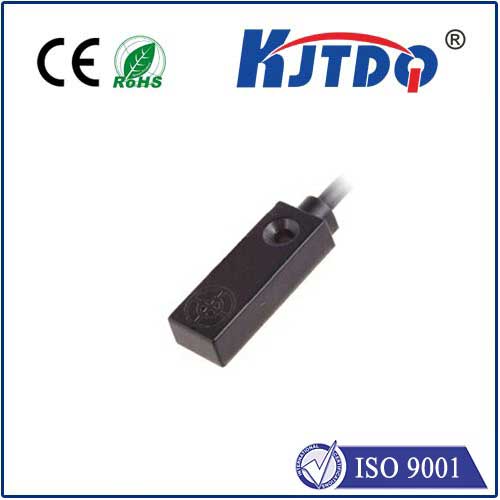
The core technology behind Honeywell's proximity sensors often involves inductive, capacitive, or magnetic sensing principles. Inductive sensors, for instance, are exceptionally effective for detecting metallic objects. They generate an electromagnetic field; when a metal target enters this field, it causes a change in oscillation, which the sensor detects and converts into a clear electrical signal. This robust technology ensures high switching accuracy and repeatability, crucial for precision tasks like part positioning or counting on a high-speed conveyor. Capacitive sensors, on the other hand, can detect a wider variety of materials, including liquids, plastics, and wood, by sensing changes in capacitance. This versatility allows for level detection in tanks or monitoring non-metallic materials on production lines.
What truly differentiates Honeywell proximity sensors is their unwavering commitment to reliability and longevity. Built with high-grade materials and subjected to rigorous testing, these sensors are designed to withstand the punishing conditions of industrial settings. Their solid-state design, with no moving parts to wear out, translates to minimal maintenance requirements and a significantly extended service life compared to mechanical switches. This durability directly reduces downtime and total cost of ownership, providing a compelling return on investment for facility managers and engineers. Furthermore, many models feature advanced diagnostics, such as LED status indicators, which provide immediate visual feedback on sensor operation, simplifying troubleshooting and system integration.
Integration into modern industrial networks is another key strength. Honeywell offers a comprehensive portfolio of proximity sensors with various output types, including analog voltage/current, NPN/PNP transistor, and IO-Link digital communication. The IO-Link capability, in particular, represents a leap forward in smart sensor technology. It enables bidirectional data exchange, allowing not only for the transmission of standard switching signals but also for the remote configuration of parameters, real-time monitoring of sensor health, and access to detailed diagnostic information. This connectivity is a cornerstone of Industry 4.0, facilitating predictive maintenance, data-driven optimization, and seamless communication with PLCs and higher-level control systems.
Selecting the right proximity sensor requires careful consideration of several application-specific factors. The sensing distance, target material, required output signal, environmental protection rating (IP or NEMA), and housing size are all critical parameters. Honeywell's extensive catalog ensures that for nearly every need—whether it's a miniature sensor for tight spaces, a cylindrical sensor for standard mounting, or a specialized model for washdown or hazardous areas—there is a proven solution available. Engineers rely on this breadth of choice to design systems that are not only functional but also optimized for efficiency and safety.
In conclusion, as industries worldwide push for greater automation, efficiency, and intelligence, the role of precise and dependable sensing becomes ever more critical. Honeywell proximity sensors provide the essential "eyes" for automated equipment, delivering the accuracy, ruggedness, and smart features needed to meet today's complex industrial challenges. By ensuring consistent detection and control, they form a reliable backbone for automated processes, driving productivity, enhancing safety, and enabling the smarter factories of the future. Their proven performance in diverse and demanding applications continues to make them a trusted choice for engineers seeking to build resilient and advanced automation systems.