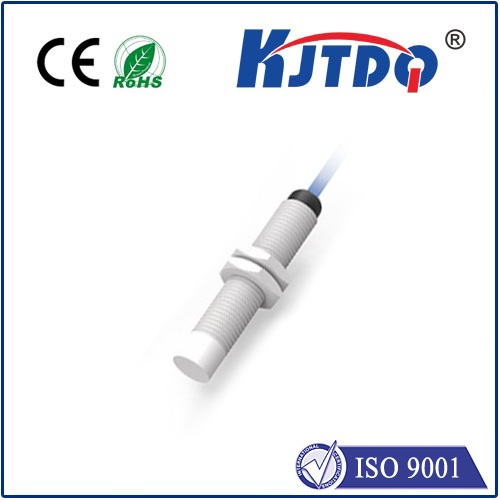
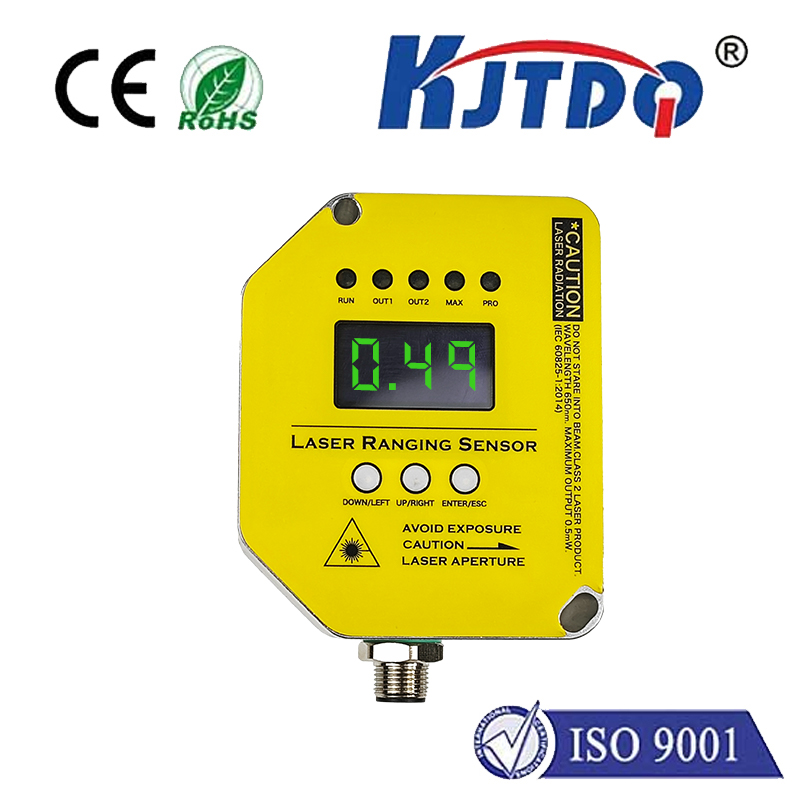
distance sensor high precision
- time:2025-03-08 03:31:35
- Click:0
High-Precision Distance Sensors: Revolutionizing Accuracy in Modern Technology
In an era where automation, robotics, and smart systems dominate industries, the demand for ultra-accurate measurement tools has skyrocketed. Among these tools, high-precision distance sensors have emerged as unsung heroes, enabling innovations from self-driving cars to advanced manufacturing. But what makes these sensors so critical, and how are they transforming the way we interact with technology? Let’s dive into the science, applications, and future of these remarkable devices.
The Science Behind High-Precision Distance Sensors
Distance sensors measure the physical gap between themselves and a target object. While basic variants have existed for decades, high-precision models elevate accuracy to micrometer-level resolutions, often with error margins below 0.1%. This leap in performance is achieved through advanced technologies such as LiDAR (Light Detection and Ranging), laser triangulation, and time-of-flight (ToF) measurements.
For instance, LiDAR sensors emit laser pulses and calculate distance by measuring the time it takes for the light to reflect back. Combined with high-speed processors, these systems achieve millimeter-level precision—even in dynamic environments. Similarly, ultrasonic sensors use sound waves for non-contact measurements, ideal for harsh conditions where dust or moisture might interfere with optical systems.
Key Applications Driving Demand
The versatility of high-precision distance sensors has made them indispensable across industries:
- Industrial Automation
In manufacturing, these sensors ensure robotic arms position components with flawless accuracy. For example, in semiconductor production, a deviation of just microns can render a microchip useless. Sensors like laser displacement models monitor assembly lines in real time, minimizing waste and maximizing efficiency.
- Autonomous Vehicles
Self-driving cars rely on LiDAR arrays to create 3D maps of their surroundings. By measuring distances to pedestrians, vehicles, and obstacles with centimeter-level precision, these systems enable split-second decisions that save lives.
- Healthcare and Biotechnology
From robotic surgery to lab equipment calibration, high-precision sensors ensure delicate procedures are performed safely. In MRI machines, they help align components to sub-millimeter tolerances, enhancing diagnostic accuracy.
- Consumer Electronics
Smartphones use proximity sensors to disable touchscreens during calls, while drones employ ToF sensors for obstacle avoidance. Even AR/VR headsets depend on precise depth sensing to create immersive experiences.
Why Precision Matters: The Competitive Edge
The shift toward Industry 4.0 and the Internet of Things (IoT) has made accuracy non-negotiable. Consider these advantages:
- Reduced Operational Costs: Precise measurements minimize material waste and rework.
- Enhanced Safety: In applications like aviation or construction, sensor errors can lead to catastrophic failures.
- Data-Driven Insights: High-resolution distance data feeds AI algorithms, improving predictive maintenance and quality control.
However, achieving this precision isn’t without challenges. Environmental factors like temperature fluctuations, ambient light, or electromagnetic interference can skew readings. Leading manufacturers address these issues through adaptive calibration algorithms and multi-sensor fusion techniques, which cross-validate data from multiple sources.
Choosing the Right High-Precision Sensor
Selecting a sensor requires balancing specs with real-world needs:
- Range: Short-range sensors (e.g., 1 mm to 50 cm) suit microelectronics, while long-range LiDAR (up to 200 meters) fits automotive use.
- Resolution: A 10 µm resolution might be overkill for warehouse inventory drones but essential for PCB manufacturing.
- Environmental Resistance: Optical sensors struggle in foggy or dusty settings, making ultrasonic or radar-based alternatives preferable.
- Speed: High-speed processes, like bottling lines, need sensors with sub-millisecond response times.
Brands like Keyence, Sick AG, and Banner Engineering dominate the market, offering tailored solutions for niche applications.
The Future: Smaller, Smarter, and More Integrated
As industries push the boundaries of miniaturization and AI, distance sensors are evolving too. Emerging trends include:
- MEMS-Based Sensors: Micro-electromechanical systems (MEMS) are shrinking LiDAR units to fit smartphones and wearables.
- AI-Enhanced Calibration: Machine learning algorithms now auto-correct sensor drift caused by environmental changes.
- Quantum Sensing: Early-stage research into quantum entanglement could redefine measurement limits, potentially achieving nanometer-level precision.
Moreover, the integration of 5G and edge computing allows sensors to process data locally, reducing latency in critical systems like autonomous drones or smart grids.
From factory floors to outer space, high-precision distance sensors are quietly powering the technologies of tomorrow. As accuracy requirements tighten and applications diversify, one thing is clear: in a world driven by data, the ability to measure distances with unwavering precision isn’t just an advantage—it’s a necessity.