check

check

check

check

check

check

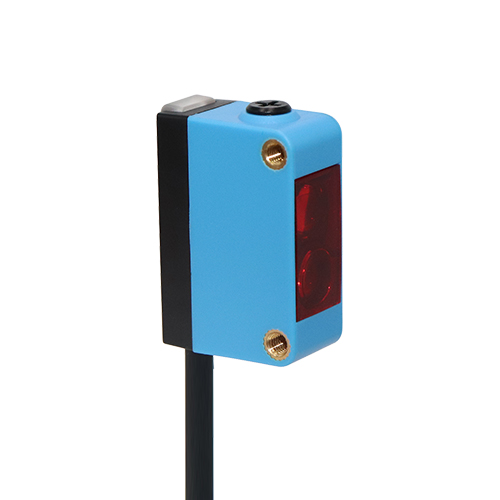
CMOS laser sensors have revolutionized the way we detect and measure light. These innovative devices utilize complementary metal-oxide-semiconductor (CMOS) technology to create highly sensitive, low-power, and cost-effective solutions for a wide range of applications. In this article, we will explore the features and benefits of CMOS laser sensors and discuss their potential impact on various industries. What is a CMOS Laser Sensor? A CMOS laser sensor is an electronic component that detects and measures the intensity of light using complementary metal-oxide-semiconductor technology. Unlike traditional silicon-based photodetectors, which require complex manufacturing processes, CMOS laser sensors can be easily integrated into existing semiconductor manufacturing lines. This allows for mass production at a lower cost and higher scalability. The key feature of a CMOS laser sensor is its ability to convert incident light into an electrical signal. This is achieved through the absorption of photons by the sensor material, which generates electron-hole pairs. The density of these pairs is proportional to the intensity of the incoming light, allowing for accurate measurement and detection. Benefits of CMOS Laser Sensors