check
check
check
check
check
check
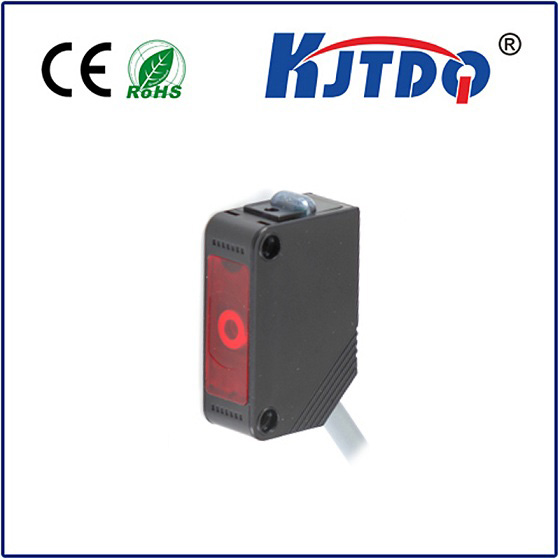
A label or color-mark sensor that misses after a material or speed change is being asked to detect a different signal than it was taught: new label stock or film changes the optical contrast and transparency the threshold was set for, print variation moves the mark's reflectance, higher web speed shortens the time each mark spends in front of the sensor below its response capability, and film flutter moves the web out of the focus/spot geometry. The first safe check is comparative: run the old and new material side by side at the same speed and watch the sensor's indicators and margin. Reteaching is a defined procedure on a defined sample — it belongs to the exact model manual, not to trial and error on a running line.
Teach-in is material-specific. A threshold taught on one label stock encodes that stock's contrast and transparency; a new stock can sit on the wrong side of it. Change material → plan a re-teach on the new sample.
Contrast is the physics; speed is the arithmetic. Missing marks on new material is usually a contrast/transparency problem; missing marks at higher speed is usually a response-time problem — the two have different checks and different fixes.
Print variation is a process input. Ink density and mark-color changes shift reflectance; if the print process drifts, the sensor is the messenger — the fix may belong upstream.
Film flutter and spot position are mechanical. A web that flutters or wanders moves the mark off the sensor's spot; guides, tension and spot placement fix what thresholds cannot.
Re-teach on the worst-case sample, verify at full speed. A teach on average material fails on the edges of the batch; validation on the fastest line condition catches the response-time margin.