check

check

check

check
check
check
check
check

check
check
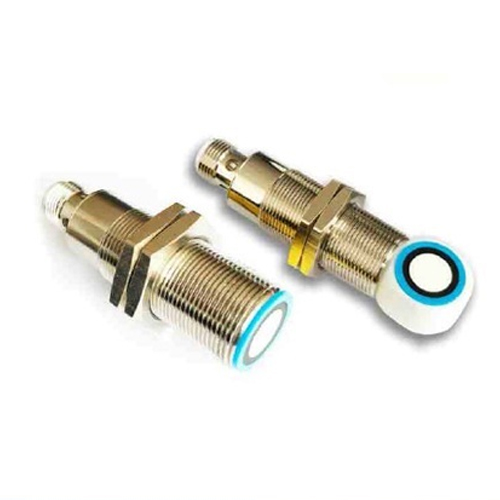
In the intricate world of industrial automation and machine design, space is often a premium, and mounting surfaces are not always ideal. This is where the non-flush mount proximity sensor, a versatile and robust category of sensors, becomes an indispensable tool. Unlike their flush-mount counterparts, these sensors are designed with a sensing face that protrudes from their housing. This unique design allows them to be installed without requiring direct contact with the metal mounting surface, offering unparalleled flexibility in challenging environments.
The core principle behind a non-flush mount inductive proximity sensor is electromagnetic induction. It generates a high-frequency electromagnetic field from its exposed sensing coil. When a metallic target enters this active field, eddy currents are induced on the target's surface. This process dampens the oscillator's amplitude within the sensor, triggering a change in the output state (e.g., from OFF to ON). The key differentiator is the shape and reach of this electromagnetic field. The field extends not only from the front face but also radially from the sides of the sensing head. This "side-looking" capability allows for greater installation freedom. It can detect targets approaching from the side or be recessed in a drilled hole without losing functionality, a scenario where a flush-mount sensor would be severely limited or require a larger, more complex cutout.
The advantages of choosing a non-flush mount design are significant. First and foremost is its extended sensing range. For the same physical size, a non-flush mount sensor typically offers a sensing distance 2 to 3 times greater than a flush-mount sensor. This allows machines to be designed with more tolerance for target positioning or enables earlier detection of objects. Secondly, installation flexibility is vastly improved. Engineers are not constrained to perfectly flat, metallic mounting surfaces. These sensors can be mounted with an air gap behind them, on non-metallic brackets, or even embedded within non-metallic structures, simplifying mechanical design and reducing installation time and cost. Furthermore, they are generally less susceptible to minor mounting surface irregularities.
However, this powerful functionality comes with specific considerations. The very same radial sensing field that provides flexibility also makes the sensor susceptible to false triggers. If installed in a tight metal enclosure or too close to surrounding metal structures (like a machine frame), the sensor might detect this background metal instead of the intended target. Careful planning of the mounting location, ensuring adequate clearance from surrounding metals, is crucial. This requirement for a "metal-free zone" around the sensing head is the primary trade-off.
Practical applications for non-flush mount proximity sensors are widespread. They are ideal for end-of-stroke detection on pneumatic cylinders where mounting space on the cylinder body is limited. In conveyor systems, they excel at detecting irregularly shaped metal parts or components presented on non-metallic pallets. They are also commonly used in material handling for position verification of metal grippers or clamps, and in packaging machinery to sense the presence of metallic foils or lids without requiring direct, flush contact.
When selecting a non-flush mount proximity sensor, key specifications must be evaluated. The nominal sensing distance (Sn) is paramount. Always verify the actual detectable distance for your specific target material (steel, aluminum, brass, etc.), as it varies. The housing material, typically nickel-plated brass or stainless steel, should be chosen based on the environmental conditions (e.g., washdown, chemicals). The electrical output type (NPN/PNP, NO/NC) must be compatible with the control system (PLC). For demanding environments, look for features like weld-field immunity, short-circuit protection, and high IP ratings for dust and water resistance.
In conclusion, the non-flush mount proximity sensor is a powerful solution for applications demanding longer range and flexible installation where a standard flush-mount sensor would fail. By understanding its operating principle, respecting its need for a metal-free lateral zone, and carefully matching its specifications to the application, designers and maintenance engineers can unlock new levels of reliability and efficiency in automated systems. It transforms spatial constraints from a problem into a manageable design parameter, proving that sometimes, standing out from the mounting surface is the most effective way to sense what's coming.