check

check

check

check
check
check
check
check
check

check
In today's rapidly evolving technological landscape, the ability to detect presence and measure distance without physical contact has become fundamental. At the heart of this capability lies a crucial component: the infrared proximity sensor. This sophisticated yet compact device operates on a simple yet powerful principle, emitting an invisible beam of infrared light and measuring the reflection to determine an object's proximity. Its integration into consumer electronics, automotive systems, and industrial automation has revolutionized how devices interact with their environment, making them smarter, safer, and more efficient.
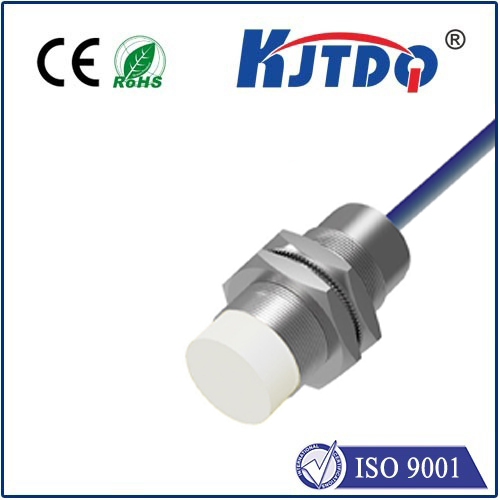
The core functionality of an infrared proximity sensor is elegantly straightforward. It contains an infrared LED that emits light in the infrared spectrum, which is invisible to the human eye. Opposite this emitter is a photodiode or phototransistor, a light-sensitive detector. When an object enters the sensor's field of view, it reflects part of the emitted infrared light back towards the detector. The sensor's internal circuitry then analyzes the intensity of this reflected light. A stronger reflected signal typically indicates a closer object, while a weaker signal suggests the object is farther away. This data is processed to provide a reliable distance measurement or a simple presence/absence detection.
The applications for this technology are vast and deeply integrated into daily life. In the realm of smartphones and tablets, infrared proximity sensors play a vital role in power management and user experience. When a user raises a phone to their ear during a call, the sensor detects the proximity of the head and automatically turns off the display. This prevents accidental screen touches and conserves battery life. Similarly, in modern laptops, these sensors can detect when a user is present, waking the device from sleep mode, and putting it back to sleep when the user walks away.
Beyond personal electronics, the automotive industry heavily relies on infrared proximity sensors for safety and convenience. They are integral components of advanced driver-assistance systems (ADAS), used in blind-spot monitoring, parking assistance, and collision avoidance systems. By continuously scanning the vehicle's immediate surroundings, these sensors provide critical data that helps prevent accidents. Inside the cabin, they can also detect the presence of a passenger to enable or disable airbag deployment appropriately.
Industrial and automation sectors utilize these sensors for precision and reliability. On assembly lines, they detect the position of components, count objects, and ensure proper alignment. In robotics, they provide essential environmental awareness, allowing robots to navigate spaces and handle objects without collision. Their robustness and non-contact nature make them ideal for harsh environments where dirt, dust, or moisture might interfere with mechanical switches.
When selecting an infrared proximity sensor for a project, several key parameters must be considered. The sensing range defines the minimum and maximum distances at which the sensor can reliably detect an object. The response time indicates how quickly the sensor can detect a change and output a signal. Environmental factors like ambient light immunity are crucial, as sunlight or other IR sources can interfere with readings. Modern sensors often incorporate filters and modulation techniques to distinguish their own signal from background noise. Package size is another critical factor, especially for space-constrained applications like wearable devices.
The future of infrared proximity sensing is geared towards greater integration, miniaturization, and intelligence. Sensors are becoming more power-efficient, enabling their use in always-on Internet of Things (IoT) devices. They are also being fused with other sensing modalities, such as ambient light sensors, to provide more contextual information. Developments in time-of-flight (ToF) technology, a more advanced form of IR sensing, allow for even more precise distance measurement and 3D mapping, opening doors for applications in augmented reality and advanced gesture recognition.
In conclusion, the infrared proximity sensor stands as a testament to how a fundamental physical principle can be harnessed to create immense practical value. From extending smartphone battery life to enhancing automotive safety and enabling industrial automation, its role is both pervasive and pivotal. As technology continues to advance towards more intuitive and interactive systems, the demand for reliable, accurate, and compact proximity detection will only grow, ensuring the infrared proximity sensor remains a key enabling technology for years to come. Its silent, invisible operation is a cornerstone of the smart, responsive devices that define the modern world.