check

check

check

check
check
check
check
check
check

check
In the world of industrial automation and precise electronic control, reliable non-contact sensing is paramount. Among the various technologies available, the Hall Effect proximity sensor stands out for its robustness, accuracy, and versatility. This guide delves into the workings, applications, and key advantages of this critical component, explaining why it is a preferred choice for engineers and designers across numerous industries.
At its core, a Hall Effect proximity sensor operates on a fundamental principle of physics discovered by Edwin Hall in 1879. When a conductor or semiconductor carrying a current is placed in a perpendicular magnetic field, a voltage difference, known as the Hall voltage, is generated across it. A Hall Effect sensor utilizes this phenomenon. It contains a thin strip of semiconductor material (the Hall element). When a magnetic field from a target (like a permanent magnet or a ferrous metal object) approaches the sensor, it disturbs the magnetic flux, causing a measurable change in the Hall voltage. This voltage change is then processed by integrated electronics within the sensor package to produce a clean, digital or analog output signal, indicating the presence or absence of the target without any physical contact.
This non-contact nature is the source of its primary benefits. Unlike mechanical switches, Hall Effect sensors have no moving parts to wear out, leading to exceptionally long operational life and high reliability, even in demanding environments with millions of cycles. They are immune to contaminants like dust, oil, and moisture, making them ideal for harsh industrial settings. Furthermore, they can operate at very high switching speeds, detecting rapidly moving objects with precision.
The applications for Hall Effect proximity sensors are vast and varied. In the automotive industry, they are ubiquitous, used for sensing wheel speed for anti-lock braking systems (ABS), detecting gear position in transmissions, and monitoring crankshaft and camshaft position for engine timing. In factory automation, they are deployed on conveyor lines for object counting, in robotic arms for end-effector positioning, and as limit switches on linear actuators. Consumer electronics also rely on them; for instance, in laptops to detect whether the lid is open or closed, or in smartphones for flip cover detection. They are also crucial in medical devices, aerospace systems, and white goods for door closure sensing.
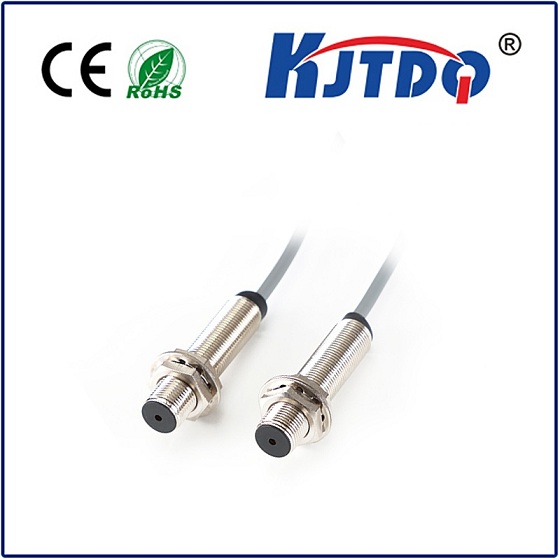
When selecting a Hall Effect proximity sensor, several key specifications must be considered. The sensing distance, or the range at which it can reliably detect a target, is crucial. The type of output (digital on/off, analog proportional, or latching) must match the control system's requirements. Operating voltage range, temperature tolerance, and housing material (often stainless steel or nickel-plated brass for durability) are also critical factors based on the application environment. Proper shielding and installation are essential to avoid interference from external magnetic fields, which can affect performance.
Compared to other non-contact technologies like inductive or capacitive sensors, Hall Effect sensors have distinct advantages. Inductive sensors only detect metallic objects, while Hall Effect sensors specifically respond to magnetic fields, allowing them to sense both magnetic and magnetized ferrous targets. They are generally more precise in position detection than inductive sensors. While capacitive sensors can detect non-metallic materials, they are more sensitive to environmental factors like humidity.
In conclusion, the Hall Effect proximity sensor is a sophisticated yet rugged solution for modern detection challenges. Its principle of operation, based on a classic physical effect, has been refined into highly reliable and adaptable electronic components. By offering long life, high-speed operation, and immunity to harsh conditions, it solves critical problems in automotive, industrial, and consumer applications. For any design requiring dependable, wear-free position or proximity feedback, the Hall Effect sensor remains an indispensable and technologically sound choice, driving efficiency and innovation in countless systems.