check

check

check

check
check
check
check
check
check

check
In the world of industrial automation and machinery, precision and reliability are non-negotiable. When it comes to detecting the presence or absence of metallic objects without physical contact, the choice of sensor is critical. Among the various options available, the M8 threaded proximity sensor stands out as a compact, versatile, and highly dependable solution for countless applications. This guide delves into the core features, benefits, and practical uses of this essential component, explaining why it has become a staple in modern manufacturing and control systems.
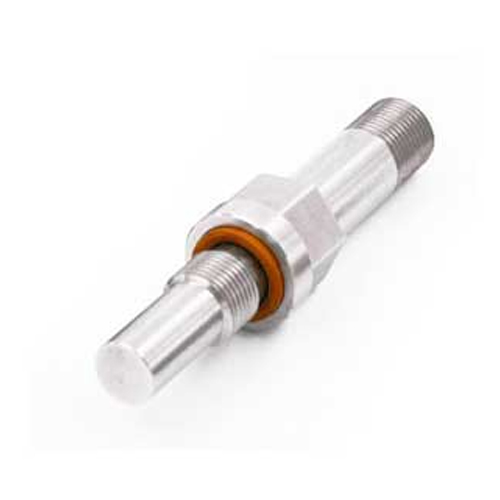
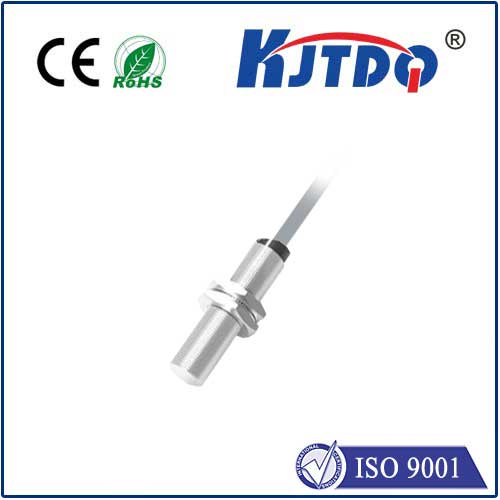
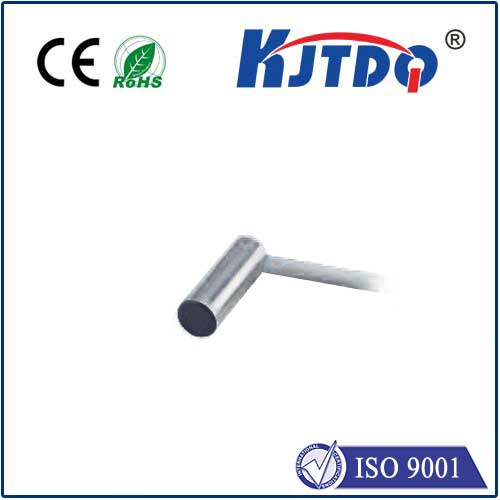
The defining characteristic of an M8 proximity sensor is its threaded cylindrical housing with an 8mm diameter. This standardized M8 thread allows for easy and secure installation into matching threaded holes, providing excellent mechanical stability and precise alignment. The compact form factor is a significant advantage in space-constrained environments where larger sensors simply cannot fit. Despite its small size, an M8 threaded sensor packs robust performance, typically offering sensing ranges suitable for detecting small metallic parts, machine components, or position indicators.
These sensors primarily operate on the inductive principle. They generate an electromagnetic field from the sensing face. When a metallic object, such as steel, aluminum, or brass, enters this field, it causes a change in the oscillation amplitude within the sensor. This change is detected by the internal circuitry, which then triggers a solid-state switching output. This non-contact method of detection eliminates mechanical wear and tear, leading to a dramatically longer operational lifespan compared to mechanical limit switches. There are no moving parts to jam, break, or require lubrication, ensuring minimal maintenance and reduced downtime.
The output from an M8 threaded proximity sensor is typically a discrete DC signal. Common configurations include NPN (sinking) or PNP (sourcing) transistor outputs, as well as Normally Open (NO) or Normally Closed (NC) switching logic. This flexibility allows engineers to seamlessly integrate the sensor into a wide array of programmable logic controller (PLC) systems, motor drives, and other control electronics. Many models also feature built-in protection against short-circuits, reverse polarity, and electrical noise, which is crucial for reliable operation in harsh industrial environments with electromagnetic interference.
The application spectrum for M8 threaded proximity sensors is remarkably broad. They are indispensable in automated assembly lines for part verification, ensuring a component is present and correctly positioned before the next stage of the process. In packaging machinery, they count products or confirm the position of a sealing arm. On CNC machines and robotic arms, they serve as precise end-of-travel or homing sensors, guaranteeing accurate and repeatable positioning. They monitor the rotation of gears or shafts by detecting passing teeth or keyways, enabling speed monitoring or synchronization. Their sealed designs, often meeting IP67 ratings, make them resistant to dust and temporary water immersion, allowing use in washdown areas or outdoor equipment.
Selecting the right M8 threaded proximity sensor involves considering several key parameters. The sensing distance, usually specified for mild steel, is paramount. For an M8 sensor, this typically ranges from 1 to 2 mm, making it ideal for short-range, precise detection. The target material also affects performance; sensing distances for non-ferrous metals like aluminum or copper are generally shorter than for steel. The operating voltage (commonly 10-30V DC), output type (NPN/PNP), and switching frequency (how many on/off cycles per second it can handle) must match the requirements of the control system. Finally, the housing material, often nickel-plated brass or stainless steel, should be chosen based on the environmental conditions, such as exposure to chemicals or extreme temperatures.
Installation is straightforward but requires attention to detail. The sensor should be mounted securely using its thread, ensuring the sensing face is parallel to the target and at the correct distance. It is vital to maintain the specified lateral and axial clearance from surrounding metal structures to prevent false triggering. Proper wiring according to the datasheet—connecting the brown wire (typically +V), blue wire (0V), and black wire (output signal)—is essential for safe and correct operation. A simple diagnostic LED indicator, present on most models, provides immediate visual feedback on the sensor's state (power and output activation), simplifying setup and troubleshooting.
In summary, the M8 threaded proximity sensor is a masterpiece of engineering efficiency. Its small size, rugged construction, non-contact operation, and electrical versatility solve a vast array of detection challenges in automation. By providing a reliable digital signal for the presence of metal, it forms a fundamental link between the physical movement of machinery and the digital logic of control systems. For engineers and technicians designing, maintaining, or upgrading automated equipment, understanding and utilizing the capabilities of the M8 proximity sensor is key to achieving high levels of efficiency, safety, and productivity. Its proven performance continues to make it a first-choice component for precise, reliable sensing in tight spaces.