check

check

check

check
check
check
check
check
check

check
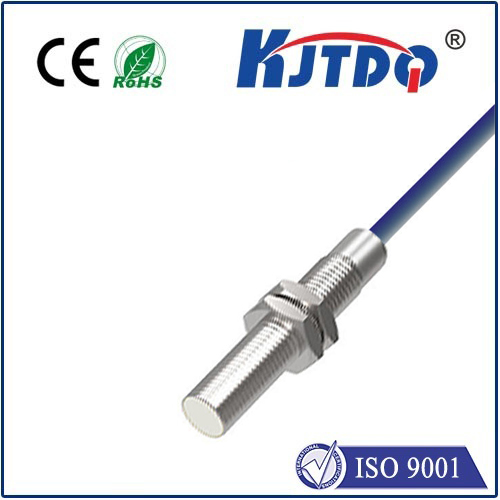
In the rapidly evolving landscape of industrial automation, precision, reliability, and safety are non-negotiable. The advent of the extended range proximity sensor marks a significant leap forward, addressing challenges that traditional sensors often struggle to overcome. These sophisticated devices are engineered to detect the presence or absence of objects at distances far greater than standard inductive or capacitive sensors, without the need for physical contact. This capability is transforming operations across manufacturing, logistics, and material handling sectors.
The core technology behind an extended range proximity sensor typically involves advanced electromagnetic or ultrasonic principles. Unlike basic sensors with limited detection ranges of a few millimeters to centimeters, these sensors can reliably identify objects from several centimeters up to a meter or more. This extended reach allows for earlier detection and response in automated processes. For instance, on a high-speed conveyor line, an extended range sensor can detect an incoming pallet well in advance, giving the control system ample time to prepare for sorting, routing, or quality checks. This preemptive detection minimizes bottlenecks and enhances overall line efficiency.
One of the most compelling applications is in automated guided vehicle (AGV) systems. AGVs rely on a suite of sensors for navigation and obstacle avoidance. Extended range proximity sensors serve as a critical long-range "eye," allowing the vehicle to detect personnel, equipment, or other AGVs from a safe distance. This enables smoother deceleration and path replanning, preventing collisions and ensuring a safer work environment. The robustness of these sensors also means they perform consistently in harsh conditions where dust, moisture, or variable lighting might impair optical systems.
In warehouse automation, inventory management reaches new levels of accuracy. Sensors mounted on retrieval arms or storage racks can detect the presence of bins or items without direct line-of-sight requirements that challenge traditional barcode scanners. This facilitates dynamic inventory tracking and reduces errors in high-density storage systems. Furthermore, in heavy machinery and robotics, these sensors provide crucial feedback for positioning and alignment of large components, where even a small margin of error can be costly.
The integration of extended range sensors with Industrial Internet of Things (IIoT) platforms unlocks predictive maintenance capabilities. By continuously monitoring the detection patterns and signal strength, the system can alert operators to potential issues like sensor misalignment, accumulating debris, or gradual performance degradation before a critical failure occurs. This shift from reactive to proactive maintenance reduces unplanned downtime and extends the lifecycle of both the sensor and the machinery it protects.
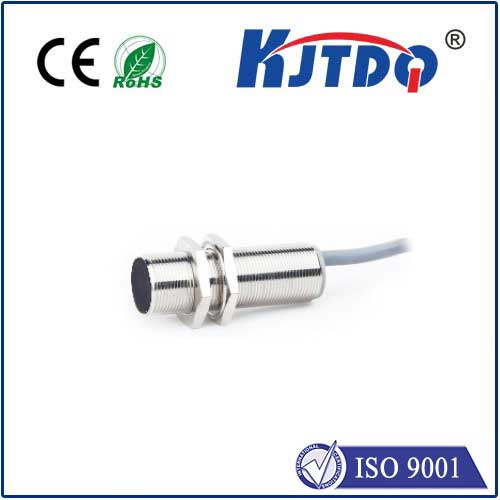
Selecting the right extended range proximity sensor requires careful consideration of several factors. The sensing technology—whether inductive for metals, capacitive for non-metals, or ultrasonic for various materials—must match the application. Environmental factors like temperature extremes, potential chemical exposure, and electrical noise immunity are critical. The housing material, typically stainless steel or ruggedized polymers, must withstand the physical demands of the installation site. Output type (e.g., analog, digital IO-Link) determines how seamlessly the sensor integrates with existing programmable logic controllers (PLCs).
Installation and calibration are straightforward but vital for optimal performance. Ensuring the sensor is mounted securely, aligned correctly with the target area, and free from obstructions is essential. Many modern models feature built-in diagnostics and indicator LEDs, simplifying setup and troubleshooting. Regular verification checks against known reference objects help maintain calibration over time, ensuring long-term reliability.
The return on investment for deploying extended range proximity sensors is clear. They contribute to higher throughput by enabling faster machine cycles and reducing stoppages. Enhanced safety protocols protect both personnel and capital equipment. Improved process accuracy leads to better product quality and less material waste. As industries push towards smarter, more connected, and more flexible manufacturing—often termed Industry 4.0—the role of intelligent sensing components like the extended range proximity sensor becomes increasingly central.
Ultimately, the extended range proximity sensor is more than just a component; it is an enabler of efficiency, safety, and intelligence on the factory floor. By providing reliable, long-distance detection, it allows systems to see further, plan better, and act smarter, paving the way for the next generation of automated industrial solutions.