check

check

check

check

check

check
In the realm of industrial automation and precision control, the ability to detect objects reliably from a distance without physical contact is paramount. This is where the Long Distance Inductive Sensor, often abbreviated in specific models like the KJTDQ series, becomes a game-changer. Unlike standard inductive proximity sensors with limited ranges, these advanced devices are engineered to bridge significant gaps, offering robust sensing solutions for demanding applications.
Traditional inductive sensors operate on the principle of electromagnetic induction. They generate an oscillating electromagnetic field from a coil. When a metallic target enters this field, it induces eddy currents within the target, which in turn dampens the sensor's oscillation, triggering a detection signal. However, their effective sensing distance is typically constrained, often just a few millimeters to tens of millimeters. Long Distance Inductive Sensors, such as the KJTDQ models, are meticulously designed to amplify this principle. They utilize optimized coil designs, specialized ferrite cores, and advanced electronic circuitry to project a stronger and more focused electromagnetic field. This technological refinement allows them to sense ferrous and non-ferrous metals from distances that can exceed 50 mm, with some high-performance units reaching 100 mm or more.
The advantages of implementing a Long Distance Inductive Sensor like the KJTDQ are substantial. First and foremost is enhanced operational safety and reduced wear. By enabling detection from a farther distance, these sensors eliminate the risk of collision between the sensor and the target, especially in high-speed or heavy-machinery environments. This non-contact nature also means there is no mechanical wear on the sensor head, leading to dramatically extended service life and lower maintenance costs. Furthermore, they provide greater flexibility in machine design. Engineers are no longer forced to mount sensors in cramped spaces close to the target; they can be installed in more accessible and protected locations, simplifying assembly and upkeep.
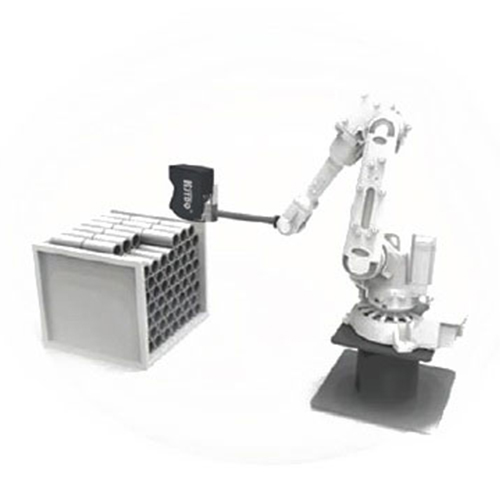
Practical applications for these powerful sensors are vast across numerous industries. In the automotive sector, they are used for precise positioning of vehicle bodies on assembly lines or detecting large metal components on robotic arms. In material handling and packaging, they monitor the presence of pallets, containers, or metal products on conveyors from a safe overhead distance. Heavy industries, such as steel manufacturing and forestry, employ them to detect the position of large metal slabs, rolls, or logs where close proximity sensing is impractical or hazardous. The KJTDQ series, with its robust housing, is particularly suited for these harsh environments, offering high immunity to electrical noise, dust, moisture, and temperature variations.
When selecting a Long Distance Inductive Sensor, several key specifications for models like KJTDQ must be considered. The rated operating distance, or sensing range, is the primary parameter. It is crucial to note that this rating is typically defined for a standard mild steel target. For other metals like aluminum, copper, or stainless steel, the effective sensing distance will be reduced due to different electrical conductivity and permeability; a correction factor must be applied. Another critical factor is the switching frequency, which determines how fast the sensor can detect objects passing by. For high-speed production lines, a higher frequency is essential. The housing material, typically nickel-plated brass or stainless steel, and the ingress protection (IP) rating are vital for ensuring durability in specific environmental conditions.
Installation and setup also require attention. While the increased range is beneficial, it can make the sensor more susceptible to interference from surrounding metal structures—a phenomenon known as flanking or side-effect. Proper mounting, often with non-metallic brackets and maintaining the recommended clearance from adjacent metal, is necessary to ensure stable operation. Regular functional checks are recommended, though their solid-state design makes them exceptionally reliable.
In conclusion, the Long Distance Inductive Sensor, exemplified by the KJTDQ series, represents a significant leap in sensing technology. It solves complex detection challenges by offering extended range, unwavering reliability, and rugged construction. For industries striving to improve automation efficiency, enhance safety protocols, and reduce system downtime, integrating these advanced sensors is not just an upgrade but a strategic move towards smarter, more resilient manufacturing and operational processes. Their ability to "see" metal from afar continues to push the boundaries of what is possible in automated control systems.