check

check

check

check

check

check
In the bustling heart of a modern factory, where robotic arms dance with precision and conveyor belts hum a constant rhythm, there exists a silent sentinel. This guardian operates without a whisper, making millions of critical decisions every day. It is the industrial proximity sensor, a cornerstone of automation that has revolutionized how machines perceive and interact with the physical world. Far from being a simple switch, today's advanced proximity sensors are intelligent components that ensure safety, enhance efficiency, and guarantee unparalleled quality in production processes.
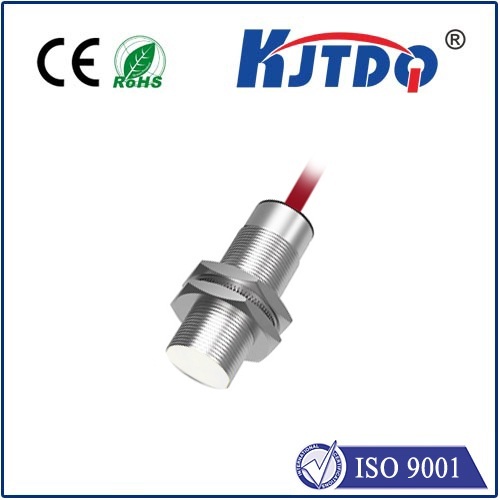
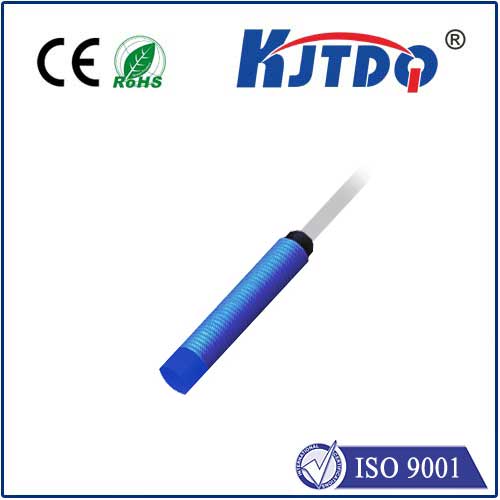
The core principle behind an inductive proximity sensor, one of the most common types in industrial settings, is elegantly simple yet profoundly effective. It generates an electromagnetic field. When a metallic object enters this field, it induces eddy currents within the target, causing a change in the sensor's own oscillation amplitude. This change is detected, triggering a solid-state output signal without any physical contact. This non-contact operation is its superpower. It eliminates mechanical wear and tear, allowing for incredibly long service life and reliable operation in environments filled with dust, oil, and vibration where traditional mechanical switches would fail rapidly. Whether detecting the presence of a metal gear on an assembly line, ensuring a robotic gripper has correctly picked up a component, or counting fast-moving parts on a high-speed bottling line, the proximity sensor performs with relentless accuracy.
Beyond the common inductive type, the industrial sensor family includes capacitive sensors capable of detecting non-metallic materials like wood, plastic, or liquids, and ultrasonic sensors that use sound waves to measure distance or detect objects regardless of their material composition. The latest innovations integrate IO-Link communication, transforming these devices from simple binary switches into smart data points on the Industrial Internet of Things (IIoT) network. A modern IO-Link enabled proximity sensor can communicate not just "object present" or "object absent," but also diagnostic data about its own health, operating temperature, and signal strength. This allows for predictive maintenance, where a machine can alert technicians to a sensor's potential failure before it occurs, preventing costly unplanned downtime.
Consider a fully automated automotive welding line. Here, hundreds of proximity sensors work in concert. They verify the correct positioning of sheet metal panels before the welding robots fire, ensuring every weld is perfect. They monitor the movement of fixtures and clamps, guaranteeing worker safety by disabling powerful machines if a guard door is opened. In food and beverage packaging, stainless-steel housed, washdown-rated sensors withstand high-pressure cleaning, detecting the position of containers and labels to maintain hygienic and efficient operation. The application versatility is staggering, spanning material handling, metalworking, packaging, and beyond.
Selecting the right industrial proximity sensor is a critical engineering decision. Key factors include the sensing distance, the target material, the required output type (PNP/NPN), the housing material (often nickel-plated brass or stainless steel for durability), and the environmental rating (IP67 or IP69K for harsh conditions). Proper installation is equally crucial; sensors must be mounted securely and spaced appropriately to avoid mutual interference, especially in dense arrays.
The evolution of the industrial proximity sensor mirrors the journey of manufacturing itself—from manual labor to mechanization, and now to intelligent, connected cyber-physical systems. As Industry 4.0 continues to unfold, these devices are becoming the sensory organs of the smart factory. They provide the essential raw data on machine state and process variables that feed into larger systems for analytics, optimization, and autonomous decision-making. They are no longer just components; they are foundational elements for building resilient, agile, and competitive manufacturing operations. By enabling machines to see and react to their environment with speed and precision, the humble proximity sensor, like the KJTDQ series known for its robustness and reliability, truly acts as the unseen guardian, tirelessly driving productivity and innovation on the factory floor.