check

check

check

check

check

check
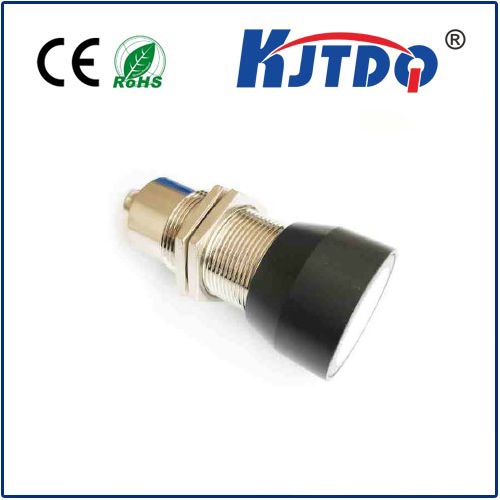
In the demanding world of industrial automation, reliability is paramount. Machines must operate continuously, and component failure is not an option. This is where the flush inductive sensor, often designated by model codes like KJTDQ, becomes an indispensable tool. Unlike its standard inductive counterpart, the flush-mounted sensor is designed to be installed level with the mounting surface, offering a unique set of advantages for challenging applications.
The core principle remains the same: the sensor generates an electromagnetic field. When a metallic target enters this field, eddy currents are induced, causing a change in the sensor's internal oscillation. This change is detected and converted into a switching signal. The critical distinction of the flush inductive sensor lies in its physical design. Its sensing face is flush with its housing, eliminating any protruding "nose." This design allows it to be mounted directly into metal without the risk of mechanical damage from passing objects. It can detect targets that move directly across its face, making it ideal for applications like counting metal teeth on a gear, detecting piston position within a cylinder, or verifying the presence of a metal slug in a tight assembly space.
The benefits of choosing a flush inductive sensor like the KJTDQ series are significant for engineers and maintenance teams. First and foremost is its exceptional durability in harsh environments. Because it sits flush, it is far less susceptible to physical impacts, abrasion, or shear forces from fast-moving machinery. This translates directly to reduced downtime and lower maintenance costs. Furthermore, this mounting style allows for very compact installation in space-constrained designs. The sensor's "shielded" or "embed-able" nature also means its sensing field is focused directly in front of the face. This provides a more precise sensing range and prevents it from detecting adjacent metal in the mounting structure, a common issue with non-flush "unshielded" sensors. This focused field is crucial for achieving accurate and repeatable detection.
Typical applications showcase its robustness. On a high-speed packaging line, KJTDQ sensors reliably detect the metallic caps on bottles as they stream past, ensuring proper filling and capping. Within a CNC machining center, they provide end-position feedback for tool changers or verify the presence of a metal workpiece on the pallet, preventing costly crashes. In heavy-duty hydraulic systems, they are the preferred choice for detecting cylinder piston position because they can withstand vibration, shock, and potential fluid contamination. Their sealed housings, often rated IP67 or higher, make them resistant to dust, coolants, and washdown procedures, ensuring longevity in food processing, pharmaceutical, or outdoor applications.
When selecting a flush inductive sensor, several technical specifications require careful consideration alongside the model identifier. The sensing range, typically shorter than unshielded models, must be matched to the application. The target material is also key; while ferrous metals like steel provide the longest range, sensors can also detect non-ferrous metals like aluminum or copper, albeit at a reduced distance. The electrical output (e.g., NPN or PNP, NO or NC) must be compatible with the control system's PLC. Operating voltage, switching frequency, and housing material (often stainless steel or nickel-plated brass for corrosion resistance) are other vital factors.
In conclusion, the flush inductive sensor, exemplified by reliable product families such as KJTDQ, is more than just a component; it is a strategic solution for enhancing machine robustness and intelligence. By enabling reliable non-contact detection where other sensors would fail, it safeguards equipment, ensures process consistency, and optimizes productivity. For any design involving metallic target detection in confined, dirty, or mechanically aggressive environments, specifying a high-quality flush inductive sensor is a decision that pays dividends in operational reliability and total cost of ownership over the long term.