check

check

check

check

check

check

What's the worst thing about industrial sites? It's not the problem itself, but the data becoming chaotic as soon as it appears.
Dust, steam, pipe obstructions, equipment vibration, metal reflections… When these interferences combine, level and distance monitoring can easily experience data fluctuations, signal loss, abnormal alarms, and even disrupt production cycles.
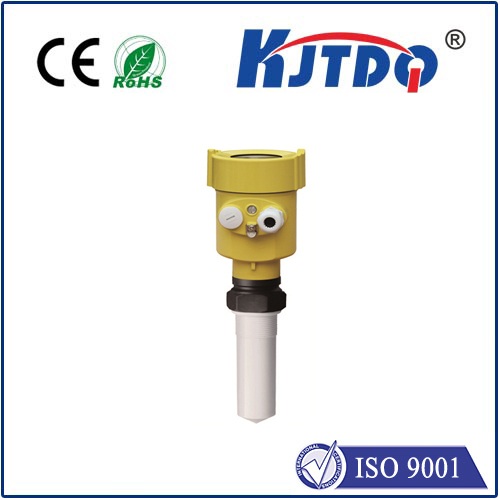
This episode of "KJT Industrial Emergency Rescue Story" concludes its first season: Episodes 10 to 12, showcasing the KJT-LD18 high-precision radar sensor facing three increasingly complex measurement scenarios—dust + steam, detection blind spots, and ultimate combined interference.
This time, we're skipping the dry parameters and going straight to the field: how do you measure in complex conditions? And how does the KJT-LD18 transform "inaccurate measurement" into "stable measurement"?
Episode 10: The Dust and Steam Challenge
Dust Pervades | Steam Surges | Signal Fluctuations | Accurate Material Level Lock
In the reactor's feeding area, dust hadn't completely dispersed, and steam continued to surge. The red alarm on the screen, displaying "Data Fluctuations, Detection Anomalies," immediately heightened the tension.
The difficulty in this type of situation lies in the fact that the interference isn't isolated; dust and steam simultaneously affect the echo signal. Ordinary measurement methods might mistake the interference for the target, or drift due to signal attenuation.
"The more complex the situation, the less you can rely on guesswork. To achieve stable measurements, you must first identify the interference and then pinpoint the actual material level."
The introduction of the KJT-LD18 high-precision radar sensor, through its stable radar measurement method, penetrated the dust and steam interference, restoring the monitoring system to a state of "stable signal and normal material level." For scenarios like reactors, feeding areas, and raw material silos, stable data is the foundation for stable production.
Episode 11: Blind Spot Challenge
Pipe Obstruction | Beam Obstruction | Detection Blind Spot | Installation Location Optimization
In episode 11, the on-site problem shifts from "environmental interference" to "spatial obstruction." The reactor area is densely packed with pipes and crisscrossed by beams. The old solution, while still working, consistently experiences signal loss and unstable measurements.
At this point, the problem may not be with the equipment itself, but rather with the detection path: the target is blocked by structural components, the signal enters a blind spot, and the sensor, no matter how hard it tries, can only obtain incomplete data.
"It's not that the equipment is broken, it's that the blind spot is causing the problem."
The value of the KJT-LD18 lies in the fact that it's not just about "replacing a sensor," but about redesigning the detection solution to fit the on-site situation: changing the installation location, avoiding obstructions, and using a narrow beam to focus on the target, allowing the signal to bypass invalid areas and reach the actual material level.
Episode 12: Ultimate Complex On-Site Challenge
Keywords: Multiple Interferences | Mechanical Vibration | Metal Reflection | Clutter Filtering | Season 1 Finale
Episode 12 is the final battle of season one. In the raw material silo section, multiple interferences occurred simultaneously: pipe shadows, equipment vibration, mechanical interference, metal reflections, and dust and steam all mixed together. The system kept alarming, and the data curves were a chaotic mess.
In such situations, the biggest challenge for sensors isn't "whether they can measure," but "whether they can find the real target signal amidst a sea of invalid signals."
"First filter out clutter, then pinpoint the actual material level."
The KJT-LD18, through processing complex echoes, reduced the impact of false echoes, stray reflections, and environmental disturbances, allowing the monitoring curves to stabilize again. Ultimately, the screen returned from red (abnormal) to green (normal), and the production line fully recovered.
Suitable Industry Scenarios: KJT Industrial Rescue Story | KJT-LD18 High-Precision Radar Sensor Season 1 Finale
Complex environments aren't about "not being able to measure," but about needing solutions better suited to the situation.
From dust and steam to blind spots and multiple interferences, the KJT-LD18 concluded its first season with stable monitoring performance. Next season, new detection challenges will continue.
If you encounter problems such as fluctuating material levels, unstable signals, frequent false alarms, or limited installation space on site, please contact the KKIT engineering team to obtain more suitable sensor selection and on-site solutions.