check

check

check

check

check

check
In the intricate world of industrial automation, where precision and reliability are non-negotiable, the DC proximity sensor stands as a fundamental component. Unlike its mechanical predecessors, this solid-state device operates without physical contact, detecting the presence or absence of metallic objects through an electromagnetic field. Its integration into systems powered by Direct Current (DC) makes it a cornerstone for countless applications, from high-speed packaging lines to the precise positioning of robotic arms. The evolution from AC to DC-powered sensors marked a significant leap, offering designers and engineers greater flexibility in circuit design, reduced electrical noise, and compatibility with modern programmable logic controllers (PLCs) and microprocessors that predominantly use DC power.
The core principle behind a DC proximity sensor is electromagnetic induction. The sensor generates a high-frequency oscillating electromagnetic field from its active face. When a metallic target enters this field, eddy currents are induced on the target's surface. This action dampens the oscillation within the sensor's internal circuit, triggering a state change in its solid-state output switch. This switch, typically in the form of an NPN or PNP transistor, then sends a clean, digital signal to the control system. This entire process happens in milliseconds, enabling real-time detection and feedback critical for maintaining cycle times and process integrity. The absence of moving parts or physical contact translates to virtually wear-free operation, dramatically extending service life and reducing maintenance costs compared to mechanical limit switches.
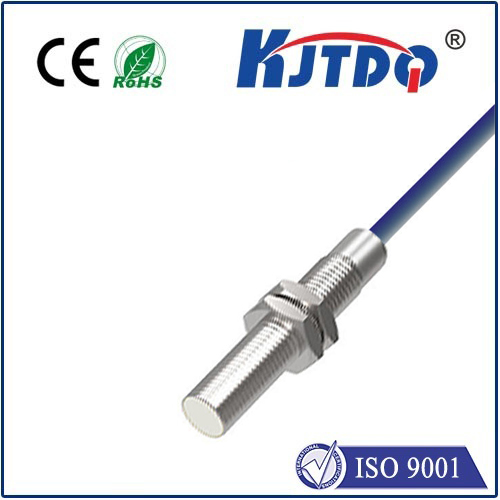
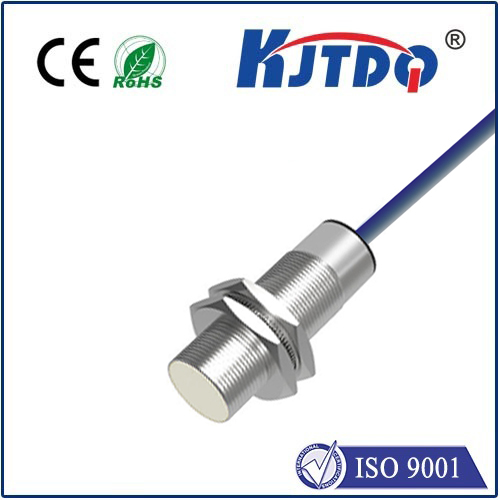
Selecting the right DC proximity sensor requires careful consideration of several technical parameters. Sensing range, the maximum distance at which the sensor can reliably detect a standard target, is paramount. Engineers must account for installation tolerances and potential target variations. The housing material, often stainless steel, nickel-plated brass, or ruggedized plastics like PBT, determines the sensor's resilience to environmental factors such as coolant, oil, metal chips, and washdown procedures. Another critical choice is between shielded (flush-mountable) and unshielded designs. Shielded sensors can be embedded in metal without affecting their sensing field, ideal for space-constrained installations, while unshielded types offer a longer sensing range but require non-metallic surroundings.
Output configuration is equally vital. The NPN (sinking) and PNP (sourcing) output types must match the input requirements of the connected controller to ensure proper circuit completion. Furthermore, modern DC proximity sensors come with advanced features like short-circuit protection, reverse polarity protection, and LED status indicators, which simplify troubleshooting and enhance system robustness. For challenging environments, sensors with increased ingress protection ratings, such as IP67 or IP69K, provide immunity against dust and high-pressure water jets, ensuring reliable operation in food processing or automotive manufacturing plants.
The practical applications of DC proximity sensors are vast and transformative. In automotive assembly, they verify the presence of components like pistons or gears before a machining operation, preventing costly errors. On conveyor systems, they count products, detect jams, and control sorting gates. Within automated storage and retrieval systems, they provide precise position feedback for shuttles and lifts. Their role in safety is also crucial; they can act as non-contact interlock switches on guarding systems, ensuring a machine only operates when a protective door is securely closed. The versatility of these sensors allows them to function as the "digital eyes" of a machine, providing the essential data that drives intelligent, automated decision-making.
Looking ahead, the future of DC proximity sensors is intertwined with the growth of Industry 4.0 and the Industrial Internet of Things (IIoT). Next-generation sensors are incorporating IO-Link communication, a point-to-point serial protocol that moves beyond simple switch functionality. An IO-Link enabled DC proximity sensor can transmit detailed parameter data and health status—such as operating temperature, signal strength, or potential contamination levels—to a central control system. This facilitates predictive maintenance, where a sensor can warn of impending failure before it causes downtime, and allows for remote configuration and calibration, reducing machine setup times. This shift from a simple detection device to an intelligent data point is redefining their value in creating smarter, more connected, and more efficient automated ecosystems.