check

check

check

check

check

check
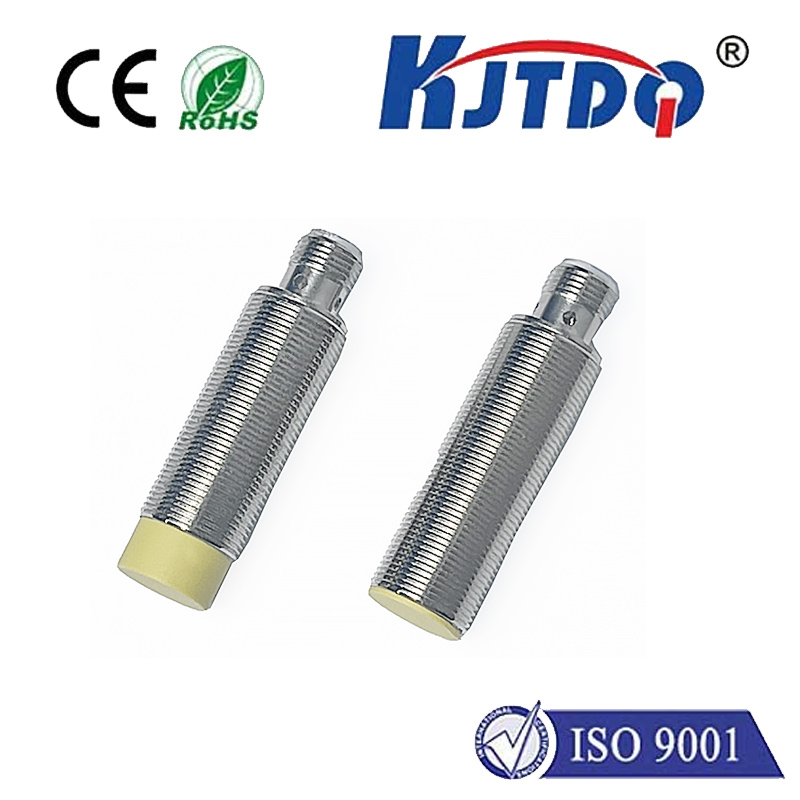
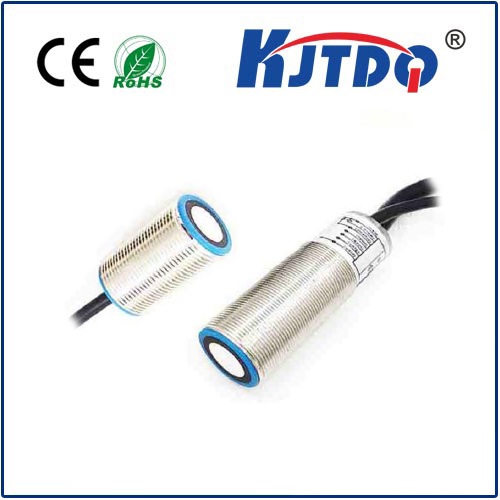
In the bustling heart of modern industry, where machines hum with relentless precision, there exists a silent sentinel. This guardian, often overlooked, is crucial for ensuring seamless operations, safety, and efficiency. We are talking about the threaded inductive sensor, a marvel of engineering that has become indispensable in automated systems. Unlike its more conspicuous counterparts, this device works quietly in the background, detecting the presence or absence of metallic objects without any physical contact.
The principle behind its operation is elegant in its simplicity. At its core, a threaded inductive sensor generates an oscillating electromagnetic field. When a metallic object enters this field, eddy currents are induced within the object. These currents cause a change in the oscillation amplitude within the sensor's coil. The sensor's integrated electronics detect this change and trigger a switching signal. The threaded housing, typically made of robust materials like stainless steel, allows for easy installation directly into machine frames, brackets, or fixtures, providing a secure and stable mounting solution. This design is not just about convenience; it offers superior resistance to vibration, shock, and harsh environmental conditions commonly found in factories.
Why has this specific type of sensor become so pervasive? The answer lies in its unparalleled reliability and versatility. In automotive assembly lines, threaded inductive sensors ensure robotic arms pick up the correct metal components at blinding speeds. In packaging machinery, they verify the position of metal lids or caps, preventing costly jams and production halts. Within the realm of material handling, these sensors monitor the position of metal pallets or conveyor chains, orchestrating the smooth flow of goods. Their ability to function reliably in environments filled with dust, oil, coolant, and temperature fluctuations makes them the go-to choice for engineers. The threaded body provides an IP67 or higher ingress protection rating, meaning it is completely protected against dust and can withstand temporary immersion in water. This durability translates directly into reduced downtime and maintenance costs, a key metric for any production manager.
When selecting a threaded inductive sensor for an application, several technical parameters demand careful consideration. The sensing range, or the distance at which it can reliably detect a standard target, is paramount. Factors such as the target material (steel, aluminum, brass), its size, and shape all influence the effective sensing distance. The thread size, commonly M8, M12, M18, or M30, must match the mounting hole. Furthermore, the output type—whether PNP (sourcing) or NPN (sinking)—must be compatible with the control system's PLC (Programmable Logic Controller). Modern advancements have also led to the development of factor-1 sensors, which can detect all metals at the same range, and models with IO-Link digital communication, enabling detailed diagnostics, parameter setting, and integration into Industry 4.0 data networks for predictive maintenance.
Looking ahead, the role of the threaded inductive sensor is set to evolve alongside smart manufacturing trends. While its primary function of non-contact detection remains unchanged, its integration into interconnected systems is adding layers of intelligence. Sensors with built-in diagnostics can now report their own health status, warning of potential failures before they occur. This proactive approach to maintenance is revolutionizing plant floor management. The humble threaded inductive sensor, therefore, is no longer just a simple switch; it is becoming a data point in a vast network, contributing to the optimization of entire production ecosystems. Its robust, threaded design ensures it will continue to be the physical anchor for this digital transformation, reliably interfacing the mechanical world with the digital one.
In conclusion, the threaded inductive sensor exemplifies how a focused, robust design can yield extraordinary reliability. It is a testament to engineering pragmatism, solving a fundamental problem—reliable metallic object detection—with a solution that is both elegantly simple and incredibly tough. For anyone involved in designing, maintaining, or upgrading industrial automation systems, understanding and correctly applying this component is not just a technical detail; it is a fundamental step towards achieving operational excellence. Its continuous presence, though often unseen, is a cornerstone of the productivity and safety that define modern industry.