check

check

check

check

check

check
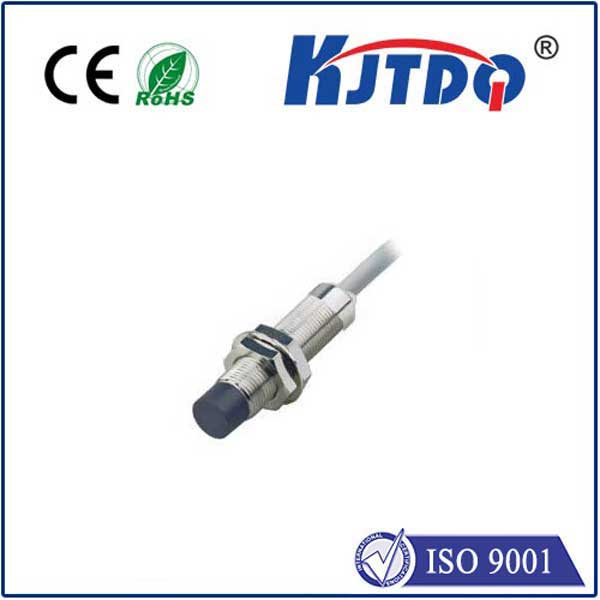
In the intricate world of industrial automation, where micron-level accuracy and unwavering reliability are non-negotiable, the choice of sensing technology becomes paramount. Among the array of options, the high precision inductive sensor stands out as a cornerstone for applications demanding exceptional performance. Unlike standard inductive proximity sensors, these advanced devices are engineered to deliver superior repeatability, minimal temperature drift, and enhanced signal stability, making them indispensable in modern manufacturing, robotics, and quality control systems.
The core principle remains based on electromagnetic induction. The sensor generates a high-frequency oscillating electromagnetic field from its active face. When a metallic target enters this field, eddy currents are induced within the target, causing a change in the oscillation amplitude within the sensor's coil. This change is detected and converted into a precise switching signal. What elevates a high precision model is its refined internal circuitry, high-quality oscillator components, and sophisticated signal processing algorithms. These elements work in concert to minimize external interference from factors like electromagnetic noise, voltage fluctuations, or ambient temperature variations, which can affect standard sensors.
The defining benefits of deploying high precision inductive sensors are substantial. First and foremost is repeatability. This refers to the sensor's ability to consistently detect an object at the exact same position, trip after trip, even at high operational speeds. For tasks like robotic arm positioning, precise part placement on an assembly line, or monitoring minute displacements, this consistency is critical. Secondly, their exceptional temperature stability ensures that the sensing characteristics and switching point remain constant across a wide operating temperature range, a vital feature in environments like foundries or outdoor applications. Furthermore, many high precision models offer analog output options (e.g., 4-20 mA or 0-10V), providing not just a simple on/off signal but a continuous measurement of the distance to the target. This capability is crucial for applications such as gap monitoring, thickness measurement, or vibration analysis.
Real-world applications vividly illustrate their value. In semiconductor manufacturing, these sensors are used to position wafers with sub-micron accuracy. Within automated stamping and pressing machines, they ensure tools are precisely aligned to prevent damage and ensure product quality. In high-speed packaging lines, they verify the exact position of labels or lids. CNC machine tools rely on them for precise tool positioning and wear monitoring. Even in the burgeoning field of collaborative robotics, high precision inductive sensors provide the accurate feedback needed for safe and delicate human-robot interaction.
Selecting the right high precision inductive sensor requires careful consideration of several parameters. The required sensing distance, often shorter than standard sensors for increased accuracy, must be matched to the application. The target material's properties (steel, aluminum, copper) significantly influence the effective sensing range and must be accounted for. The sensor's housing material, typically stainless steel or PBT plastic, should be chosen based on the environmental conditions, including exposure to coolants, oils, or washdowns. Frequency response, or the maximum switching speed, is essential for high-cycle operations. Finally, the output type—PNP/NPN digital or analog—must be compatible with the control system's input card.
Installation and environmental factors play a crucial role in achieving the documented precision. Ensuring a stable power supply with minimal ripple is fundamental. Proper mounting, avoiding excessive mechanical stress on the housing, and maintaining the recommended clearance from surrounding metal (lateral and flush mounting distances) are necessary to prevent parasitic effects. For the highest accuracy targets, the sensor should be perpendicular to the target surface, and the target should be of a recommended size and material.
Looking ahead, the evolution of high precision inductive sensors continues. Integration with IO-Link communication protocol is a significant trend, enabling digital parameter setting, advanced diagnostics, and condition monitoring directly from the controller. This facilitates predictive maintenance and seamless integration into Industry 4.0 frameworks. Miniaturization is another key development, allowing these precise sensors to fit into increasingly compact machinery and devices without compromising performance.
In conclusion, the high precision inductive sensor is far more than just a proximity switch. It is a sophisticated measurement and control component that delivers the reliability, stability, and exactitude required by today's most demanding automated systems. By providing consistent and accurate data on object presence, position, and distance, it forms a critical feedback loop that enhances process control, improves product quality, reduces waste, and boosts overall operational efficiency. For engineers and system integrators aiming to push the boundaries of automation, understanding and leveraging the capabilities of these sensors is a decisive step toward building more intelligent, resilient, and productive operations.