check

check

check

check

check

check
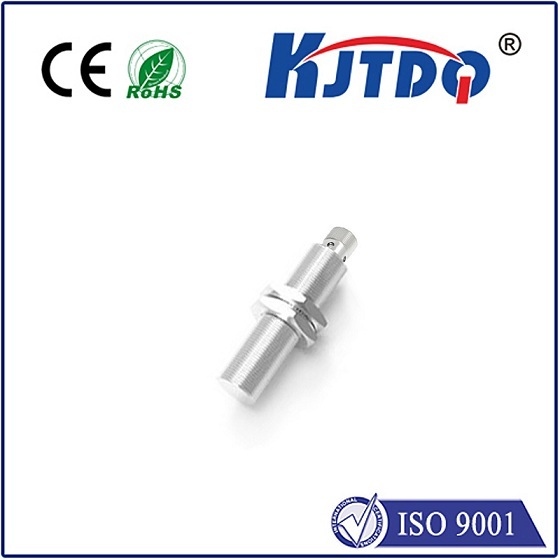
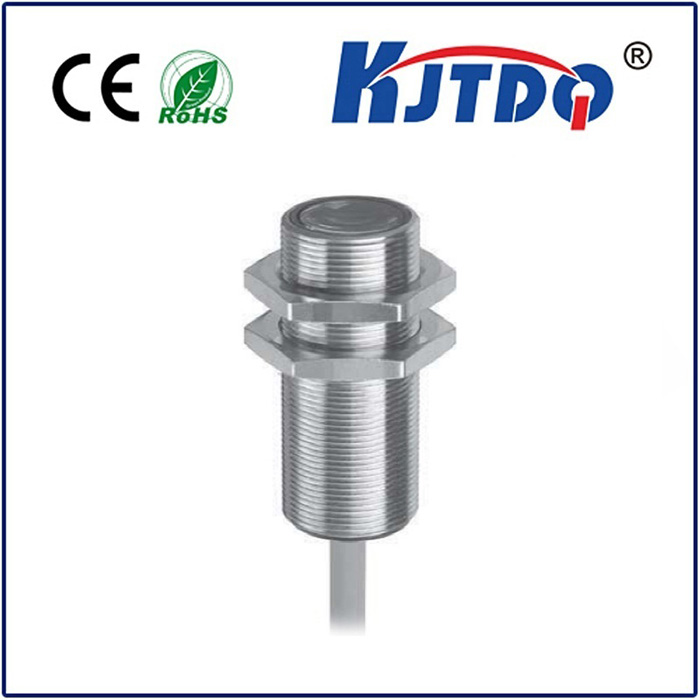
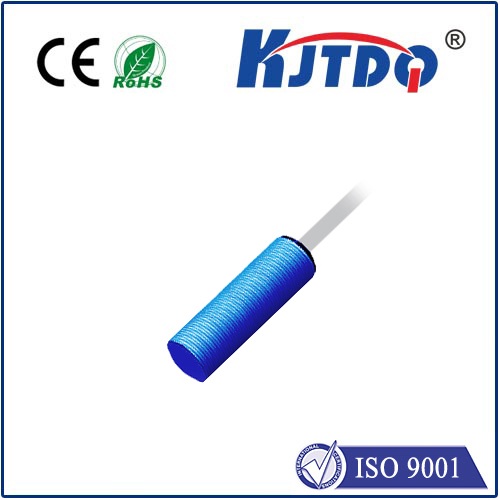
In the world of industrial automation, precision and reliability are non-negotiable. Among the myriad of components that keep production lines humming, the M12 inductive sensor stands out as a fundamental workhorse. This compact, cylindrical device, characterized by its standardized 12mm threaded housing, is a cornerstone of modern proximity sensing. Its primary function is to detect the presence or absence of metallic objects—typically ferrous metals like steel and iron—without any physical contact. This non-contact operation is the key to its durability and widespread application.
The operating principle of an M12 inductive sensor is elegantly simple, rooted in electromagnetic induction. Inside its robust housing lies a coil that is part of an oscillating circuit. When an alternating current passes through this coil, it generates a high-frequency electromagnetic field at the active face of the sensor. When a metallic target enters this field, eddy currents are induced within the target. These eddy currents draw energy from the sensor's oscillating circuit, causing a change in its amplitude. The sensor's built-in electronics detect this change and trigger a solid-state switching signal, indicating the object's presence. This entire process happens in microseconds, enabling high-speed detection crucial for fast-paced assembly, packaging, and material handling systems.
The "M12" designation refers to the international standard for the sensor's threaded cylindrical housing, which is 12 millimeters in diameter. This standardization is a significant advantage. It ensures compatibility with a vast ecosystem of mounting accessories, connectors, and pre-drilled mounting holes in machinery. Installation and replacement become quick and tool-efficient, minimizing machine downtime. These sensors are typically available in two primary form factors: shielded (flush-mountable) and unshielded (non-flush). Shielded M12 sensors can be mounted flush with metal surfaces without affecting their sensing field, offering a sleek and protected installation. Unshielded versions provide a longer sensing range but require a clearance from surrounding metal.
Why has the M12 inductive sensor become such a ubiquitous choice across industries from automotive manufacturing to food processing? The reasons are compelling. First is its exceptional ruggedness. Encased in materials like nickel-plated brass or stainless steel (often rated IP67, IP68, or IP69K), these sensors are built to withstand harsh environments. They are resistant to dust, moisture, high-pressure washdowns, oils, coolants, and mechanical vibration. This resilience translates directly to reduced maintenance costs and increased system uptime.
Second is its versatility. Available with various sensing ranges (commonly from 2mm to 8mm for standard models), output types (PNP/NPN, NO/NC), and connection methods (cable or quick-disconnect), an M12 sensor can be precisely specified for countless tasks. They are used for precise position detection of machine parts, counting metallic items on a conveyor, monitoring the end position of a cylinder, or ensuring a safety door is closed. Their inherent insensitivity to non-metallic materials like plastic, wood, or liquids makes their operation highly reliable and immune to false triggers from surrounding objects.
When selecting an M12 inductive sensor for a specific application, several critical parameters must be considered. The sensing distance, or "Sn," is the nominal range at which a standard target will be reliably detected. It is crucial to account for manufacturing tolerances and environmental factors by applying a safety factor, typically using only 70-80% of the nominal range. The target material and size also matter; smaller or non-ferrous metals like aluminum or copper require a reduced sensing range. The operating voltage (commonly 10-30V DC) and output current capacity must match the control system's requirements. For demanding environments, special variants with extended temperature ranges, enhanced chemical resistance, or weld-field immunity are available.
Looking forward, the evolution of the M12 inductive sensor continues. Modern iterations integrate advanced diagnostics via IO-Link communication, a digital point-to-point serial connection. An IO-Link enabled M12 sensor does more than just switch; it can communicate detailed status information, such as operating temperature, signal strength, and device health, directly to the controller. This facilitates predictive maintenance, remote parameter configuration, and seamless integration into Industry 4.0 data-collection frameworks, transforming a simple switch into an intelligent node on the factory network.
In conclusion, the M12 inductive sensor is far more than just a simple metal detector. It is a meticulously engineered, standardized, and robust solution that forms the sensory backbone of automated systems. Its combination of durability, precision, and ease of integration makes it an indispensable component for engineers seeking to build reliable, efficient, and intelligent machinery. From basic presence detection to smart factory data points, the humble M12 sensor continues to prove its critical value on the factory floor.