check

check

check
check
check
check
check
check

check

check
In the intricate world of industrial automation, where precision and reliability are paramount, the NPN proximity sensor stands as a fundamental component. These non-contact sensing devices are the silent workhorses on countless factory floors, enabling machines to detect the presence or absence of metallic objects without any physical touch. Understanding their operation, advantages, and typical applications is crucial for engineers, technicians, and procurement specialists aiming to optimize system performance and ensure seamless production flow.
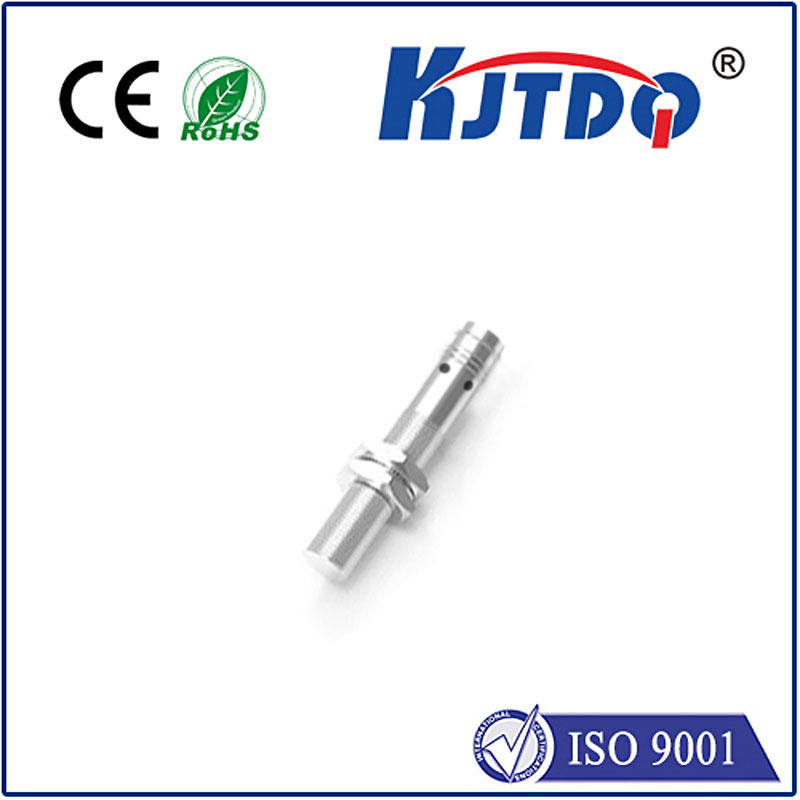
At its core, an NPN proximity sensor is a type of solid-state electronic sensor. The "NPN" designation refers to the type of transistor output it uses. In an NPN sensor, the output is switched to the negative voltage supply (often 0V or ground) when an actuating object enters its sensing range. This is commonly known as a "sinking" output. To complete the circuit, the load (such as a PLC input, relay, or indicator light) is connected between the sensor's output wire and the positive voltage supply. When the sensor detects a target, it allows current to flow from the load, through the sensor's output, and to ground, thereby activating the load.
This operating principle offers distinct advantages in various control scenarios. One of the primary benefits is compatibility with many programmable logic controllers (PLCs) that are designed to accept sinking inputs on their digital cards. Furthermore, NPN sensors are often praised for their robustness in noisy electrical environments common in industrial settings. Their solid-state construction means no moving parts are subject to wear and tear, leading to exceptionally long service life and minimal maintenance requirements. They are capable of high-speed switching, making them ideal for applications involving fast-moving parts on assembly lines or packaging machinery.
The applications for NPN proximity sensors are vast and varied. A classic example is on a conveyor system, where sensors are used to count products, detect jams, or confirm the position of an item before initiating the next process, such as sorting or labeling. In machine tools, they provide precise position feedback for robotic arms or tool changers, ensuring movements are accurate and repeatable. They are also indispensable in safety systems, acting as part of interlock circuits to confirm a guard door is securely closed before a machine can cycle. From detecting the level of metal pellets in a hopper to verifying the presence of a cap on a bottle, the NPN sensor provides a reliable and consistent signal.
Selecting the right NPN proximity sensor involves considering several key parameters. The sensing range, which specifies the maximum distance at which the sensor can reliably detect a standard target, is critical for mechanical design. The housing material, typically nickel-plated brass, stainless steel, or PBT plastic, must be chosen to withstand the environmental conditions, including exposure to coolants, oils, or washdowns. Factor in the required electrical connection style—pre-wired cable or quick-disconnect—and the output configuration to ensure it matches the control system's requirements.
When integrating these sensors, proper installation is key to optimal performance. Ensuring a stable DC power supply within the sensor's specified voltage range is essential. Adequate shielding and separation from high-voltage cables can prevent electrical interference. It is also important to allow for a small margin between the actual sensing distance and the sensor's rated range to account for mechanical tolerances and temperature variations. Regular testing as part of a preventive maintenance schedule helps catch any potential drift in performance before it leads to downtime.
For system designers and maintenance teams, troubleshooting often revolves around a few common points. A sensor failing to detect an object could be due to an incorrect power supply, a target outside the sensing range or made of the wrong material, or accumulated debris on the sensor face. Conversely, a sensor that is constantly "on" might be influenced by a nearby metallic object in the background or electrical noise. Methodically checking power, connections, and the physical environment usually resolves most issues.
In conclusion, the NPN proximity sensor is more than just a simple switch; it is a critical enabler of modern automated processes. Its sinking output logic, durability, and versatility make it a preferred choice in a wide array of industrial control systems. By thoroughly understanding its operating principles, selection criteria, and application best practices, professionals can leverage this technology to build more efficient, reliable, and intelligent automated solutions, driving productivity and quality in manufacturing and beyond.